
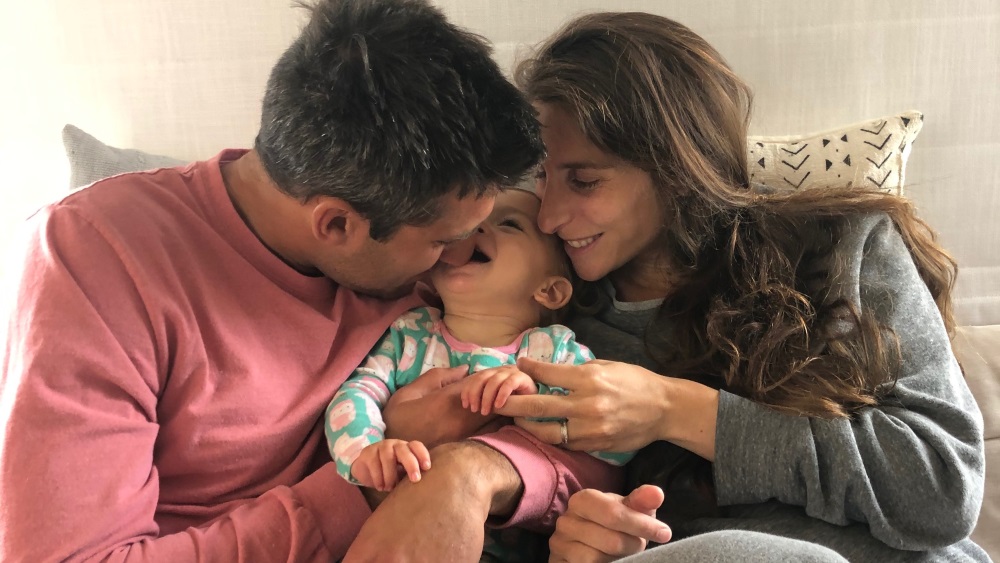
Shari Ungerleider lives in Wayne, New Jersey, a bedroom community of New York City. Myra Sack resides in Boston’s Jamaica Plain neighborhood.
But sadly, the two women share one thing in common: they both lost a child to Tay-Sachs disease. Twenty-five years have passed since Ungerleider lost her son, Evan, while Sack’s daughter, Havi, died in January of 2021.
As a result, both women are strong advocates of genetic screening and ensuring proper testing. To accomplish their goals, they have teamed up with Jscreen, a national non-profit public health initiative dedicated to preventing Jewish and other genetic diseases and educating communities about the importance of preconception genetic testing.
With September being Tay-Sachs Awareness Month, the Atlanta-based Jscreen is committed to raising awareness about genetic screening so that every family can plan for a happy new year and healthy future.
Tay-Sachs disease is a rare, inherited genetic disease primarily affecting infants and young children. There is no cure, but genetic testing and counseling allow people to determine if they have an increased risk of having a child with the disease.
One in 30 Ashkenazi (Eastern European) Jews are carriers of Tay-Sachs, and 1 in 300 people in the general population are carriers.
When both parents are carriers, there is a 25% chance with each pregnancy that a child will be affected with the disease. For the small percentage of couples who are at risk, there are many options, like in vitro fertilization with preimplantation genetic testing, to help them have healthy children.
Sack recently wrote “Fifty-Seven Fridays: Losing Our Daughter, Finding Our Way” (Monkfish Book Publishing), a memoir of Havi’s short life and her parents’ journey to help their daughter live and die.
In the years since Havi’s death, Sack said she and her husband, Dr. Matthew J. Goldstein, have found purpose in their pain. She is now certified in Compassionate Bereavement Care and serves on the board of the Courageous Parents Network. She also founded e-motion, a non-profit designed to blend bereavement-science, spirituality and sports to help people living with grief and loss.
Dr. Goldstein is now the CEO of Jscreen, which focuses on high-quality, preventative genetic care and testing.
“Losing Havi changed everything for our family,” Sack said. “It’s impossible to walk through the world unchanged after losing a child. And so as part of our transformation, we’re devoted to serving the world with grace, compassion, and courage — the essence of Havi. When we can play any part in supporting other families, it’s a tragic gift that allows us to continue to parent Havi.
“I believe deeply in the power of community to buffer suffering and keep us whole,” she said. “Jscreen is a community with compassionate leadership, cutting-edge science and most importantly, the power to save lives. It’s a community that every couple considering having children should lean on.”
Ungerleider said not a single day goes by when she doesn’t think of her son and miss him.

“I often wonder what our family would be like if he was still alive,” she said. “I wanted to find a way to honor Evan and keep his memory alive. I decided to turn our tragedy into something positive so that other families would be spared the suffering we experienced by raising awareness about the importance of genetic testing. The purpose of a carrier screening test, coupled with genetic counseling, is to identify carrier couples, preferably before pregnancy, and help them understand the impact the disease would have on an affected child, and the reproductive options available to help them plan for the health of their future children.”
Jscreen makes genetic testing simple, accessible and affordable by offering easy-to-use at-home saliva test kits. The Jscreen Reproductive Carrier Screen gives prospective parents a deep understanding of their risk of having a child with a genetic disease. Designed for individuals between 18-45, it tests for over 200 genetic diseases, including Tay-Sachs and other diseases commonly found in the Jewish population as well as diseases common in other groups.
If a carrier couple is identified, Jscreen provides them with tele-health genetic counseling to discuss their results and options available for family planning.
For information, visit jscreen.org.
Shari Ungerleider of the nonprofit JScreen writes about the importance of carrier screening with genetic counseling.

September is "Tay-Sachs Awareness Month" to promote recognition of the deadly disease that afflicts one in 20 Jews of East European descent.