

In the early years of big-league baseball in Baltimore, the best hitter on the Orioles was a first baseman named Bob Boyd. He was nicknamed “The Rope” for the “frozen rope” line drives he scattered all over the outfield. In 1957, Boyd hit a marvelous .318, which was the fourth best in the American League.
As reward for this, the Orioles signed Boyd to a new contract in 1958, worth a piddly $12,000.
I thought of this over the weekend when the Orioles signed an outfielder named Tyler O’Neill. Last year, playing 113 games for Boston with Fenway Park’s short left-field wall, O’Neill hit .241 with 31 home runs.
The Orioles signed O’Neill to a three-year contract for $49.5 million.
The same year “The Rope” signed for $12,000, the Orioles grabbed a “bonus baby” kid named Dave Nicholson to a contract so large that no one could believe it. In the Baltimore News-Post, sports editor John Steadman wrote, “Young David will never have to carry a lunch bucket, punch a time card or work for a living. He has it made. Nicholson became independently wealthy last night when the Orioles handed over a contract … that is the greatest gamble in sports history.”
The contract was for $80,000, and the money would be paid out over three years.
I thought of this over the weekend when the Orioles signed a backup catcher named Gary Sanchez, whose playing time will be severely limited by the existence of first-stringer Adley Rutschmann. Last year, playing about half the season, Sanchez hit .220.
He signed a one-year deal with the Orioles for $8.5 million.
It is widely reported that the Orioles can afford to pay such salaries now because of the new ownership coalition headed by principal owner David Rubenstein. When the Orioles signed Boyd and Nicholson to their deals, Rubenstein was a youngster attending Northwest Baltimore’s Fallstaff Elementary School. His family’s finances were reportedly modest.
Neither he nor anyone else from that early era of Baltimore baseball could have conceived of the salary numbers so routinely tossed around professional sports today. How could they?
And more to the point, how could anyone conceive of them even now?
Peter Angelos, who came from working-class circumstances in mid-century Southeast Baltimore, certainly never got a grip on them. He spent a fortune to buy the Orioles when the town felt itself drowning after the snatching of the football Colts.
But after a few years of battling with the league’s heavy financial hitters, Angelos saw the futility and flinched whenever baseball’s studs were available.
Rubenstein’s money is said to put the ballclub back into the big-time. He’s a billionaire, and his partners also have serious money. What’s also important, at least for the moment, is that Rubenstein has said he bought the team as payback to his old hometown for the way he felt embraced in his coming-of-age years.
If we’re honest about it, Angelos had the same sentimental instinct when he bought the Orioles. He’s routinely criticized these days for his lengthy (and largely unproductive) stewardship of the club.
But well-intentioned as he was, and hungry to be a hometown hero, once the numbers started piling up, Angelos repeatedly came up short.
Over the weekend, Rubenstein let Baltimoreans dream a little. Next year he’ll spend $25 million for two players, O’Neill and Sanchez, who, last year, together, played only about 200 games.
That’s big-league money in anyone’s league, especially for those O’s fans who remember a time when Bob Boyd played for chump change and Dave Nicholson’s contract made us wonder, “Where is all this big spending going to end?”
It ends where owners declare it has ended.
A former Baltimore Sun columnist and WJZ-TV commentator, Michael Olesker is the author of six books, including “Journeys to the Heart of Baltimore” and “Michael Olesker’s Baltimore: If You Live Here, You’re Home.”
Michael Olesker pays tribute to WJZ’s retiring Marty Bass, a longtime fixture on local TV screens.
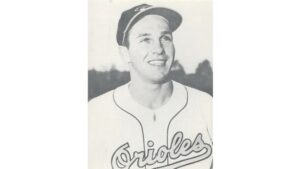
The Orioles' weak defense plays a major role in the nightly carnage, writes Michael Olesker.

Jmore Publisher Scott Rifkin, M.D., reacts to President Donald Trump's latest poll numbers and the real force behind the growing decline of the Trump movement.

Last weekend's Flower Mart once again demonstrated that there's nothing to fear about downtown Baltimore, writes Michael Olesker.