
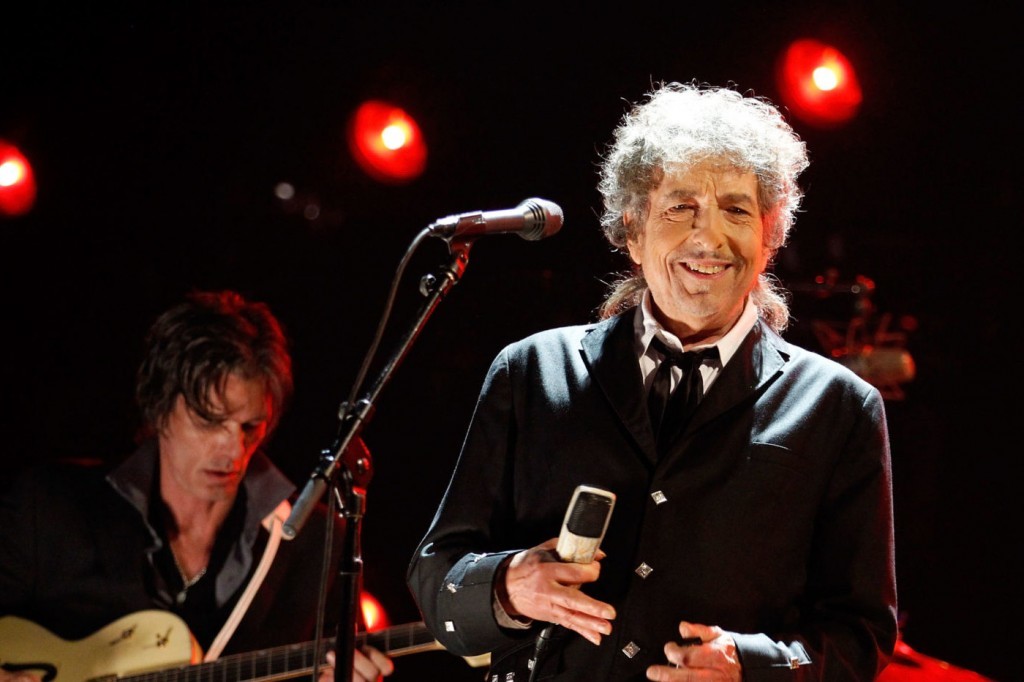
In October of 2016 when the Nobel Prize for Literature was announced, a reporter approached the great novelist Philip Roth for his reaction. Roth, inexplicably, never won the Nobel Prize. That year’s award went to Bob Dylan.
“What do you think of the prize for literature going to a folk singer?” Roth was asked.
“It’s OK,” a sardonic Roth replied. “I think next year they’re giving it to Peter, Paul and Mary.”
It was the only time the Nobel Prize for literature has ever been awarded to a writer of songs.
The other afternoon, we went to the Charles Theatre to see the new movie about Dylan, “A Complete Unknown.” The place was nearly full. Almost everyone there seemed pretty well into their retirement years, which meant they were around when Dylan burst onto the music scene in the early 1960s and changed the sound and maturity level of popular music.
For some of us, that first decade of Dylan’s career formed the heart of his Nobel Prize. He took young people’s music and gave it a conscience, and not just a beat. For a few years, he made folk music more important, vital and maybe even more popular than rock ‘n’ roll.
There were places back then, such as college campuses, where you couldn’t go for a walk without bumping into kids lugging guitars around and humming something Dylan or Joan Baez or Peter, Paul and Mary had put into the American hymnal.
But they were Dylan’s words, and not just his voice, that everybody heard.

Then, by putting an electric plug into his guitar and turning up the amp, he made folk purists crazy. Enough with lyrics about politics and race, Dylan wanted to write whatever he wanted to write. And he wanted to be a rock star. So he melted together rock and folk and never looked back.
And that’s the turning point and the dramatic hook in “A Complete Unknown.” Timothee Chalamet does a wonderful job as the young Dylan. He’s not doing an impersonation, but he’s capturing Dylan’s aura. Dylan’s 20 years old, he’s been declared the moral voice of a generation, but he’s still figuring out who he wants to be for the rest of his life. And the decision is his, and nobody’s else’s
The movie’s terrific. The atmosphere feels like the early ‘60s when Greenwich Village seemed the heart of the folk world. Dylan’s earliest music fills the air.
It’ll remind people of a certain age what it felt like the first time they heard those songs, and why they stirred something inside many of us that went beyond the music itself. It made you want to change the world.
Too bad there’s nobody around to write lyrics that would change today’s depressing world. It’d be worth another Nobel Prize.
A former Baltimore Sun columnist and WJZ-TV commentator, Michael Olesker is the author of six books, including “Journeys to the Heart of Baltimore” (Johns Hopkins University Press) and “Michael Olesker’s Baltimore: If You Live Here, You’re Home” (Johns Hopkins University).
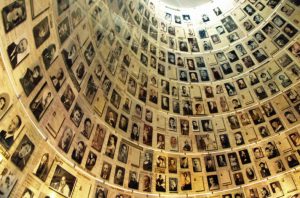
Commemorations of the Holocaust must transcend the past to include concerns about the present and future, writes Menachem Z. Rosensaft.

Someone needed to tell Donald Trump that his appearance at a UFC fight over the weekend was not a good look, writes Michael Olesker.

Journalists bear a responsibility to go beyond the headlines and social media posts to understand the past and present, writes New York University student Lucia Alonso.
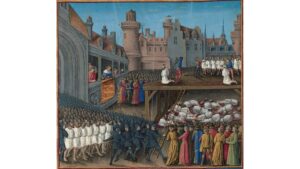
The Trump administration's invoking of religion is reminiscent of the words and actions of one of history's most brutal Crusaders, writes Michael Olesker.