
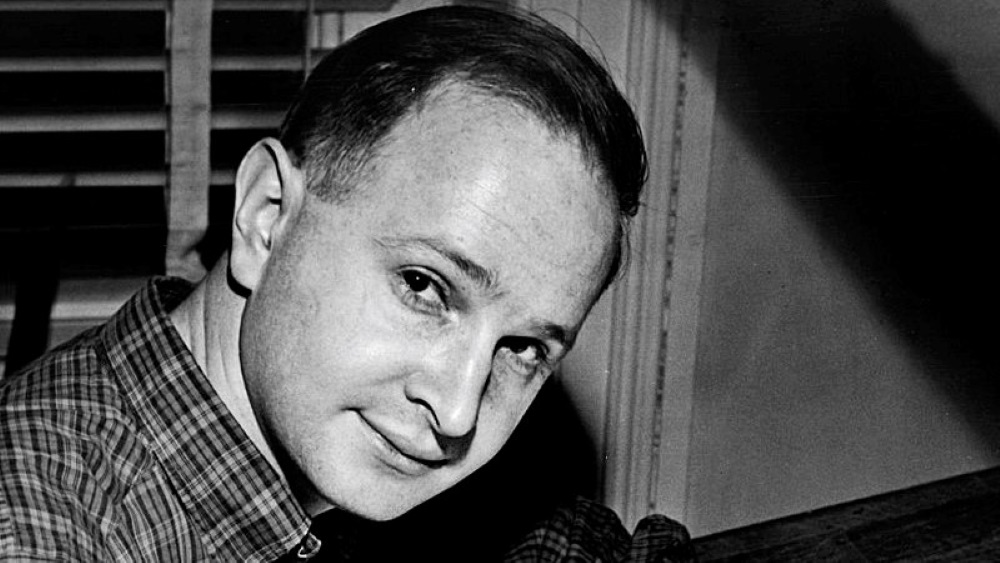
Jules Feiffer slips away, at 95, leaving behind movies, plays and thousands of cartoons mirroring a half-century of Americans’ social anxieties, political disillusionments and sexual alienation. And then he made us laugh about all of it.
Feiffer saw us for who we were, and not who we pretended we were. His cartoons ran in The Village Voice and a hundred other newspapers. His was a smart, rebellious voice running against the tide of 20th-century cultural conformity.
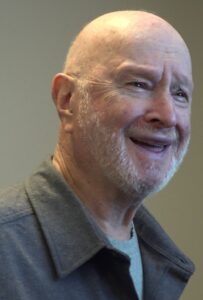
He seemed part of a tribe of post-war humorists, most of them Jewish, who helped us whistle past graveyard visions growing out of the Cold War.
Think Lenny Bruce, Mort Sahl, Nichols and May, Philip Roth, Joseph Heller, Bruce Jay Friedman. Like Feiffer, most of them seemed to have emerged from apartments in The Bronx on their way to their psychiatrist’s offices.
Feiffer’s politics were progressive, but he had a comic sneer for all of the White House occupants he observed, beginning with Eisenhower.
God alone knows what he might have made of Donald Trump’s return. Feiffer died of heart failure three days before our felon-in-chief barged his way back into power.
But Feiffer was much more than political. As Ross Wetzsteon wrote years ago in The Village Voice: “His cartoons are as good a record as we are likely to have of the social conscience and sexual consciousness [of the 20th century]. He’s brought what we’ve always known (in our hearts) to the surface of our lives.”
In a Feiffer cartoon from decades ago, here’s a fellow who ages 50 years across the span of eight panels. He declares:
“As I entered by adolescence, I was miserable, insecure and angry. At 28, I was a winner. At 40, I was depressed, insecure and angry. At 45, I was a powerhouse. At 50, I was morbid, insecure and angry. At 60, I was a patriarch. At 63, I am suicidal, insecure and angry.
“Maturity,” he concludes, “is a phase. Adolescence is forever.”
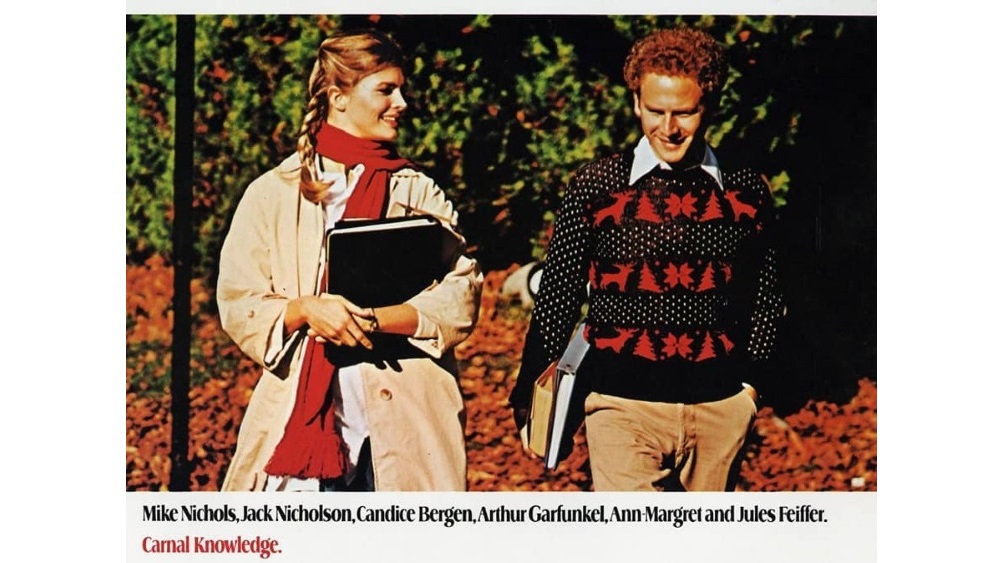
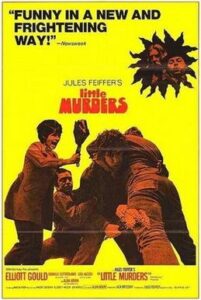
He took another look at that theme in his screenplay for the 1971 film “Carnal Knowledge,” directed by Mike Nichols and starring Jack Nicholson, Candice Bergen, Art Garfunkel and Ann-Margret. He wrote about the emotional stress of living in an America grown grotesquely violent in the black comedy “Little Murders,” directed by Alan Arkin and starring Elliott Gould and Vincent Gardina.
The great British critic Kenneth Tynan once wrote, “[Feiffer’s cartoons] explore character. He would show the shifts of mood that flickered across the faces of men and women as they tried, often vainly, to explain themselves to the world, to their husbands and wives, to their mistresses and lovers, to their employers, to their rulers, or simply to the unseen adversaries at the other end of the telephone wires. …
“His dialogue is as acute as any that is being written in America today. Dialogue aimed at sophisticated minds, usually with the purpose of shaking them out of sophistication into real awareness.”
The most enduring Feiffer cartoons are those capturing the battles inside our psyches. Who’s going to win this one life we’re given, with its endless skirmishes pitting our inner child with our cover-up grown-up?
Here’s an old Feiffer cartoon where an elementary school girl says, “I ask them, ‘How come I have to eat food that I hate?’ And they say, ‘It’s good for you.’
“I ask them, ‘How come I have to go to school that I hate?’ And they say, ‘It’s good for you.’
“I ask them ‘How come I have to belong to clubs that I hate?’ And they say, ‘It’s good for you.’
“I ask them, ‘How come you smoke and drink and watch TV all night?’ And they say, ‘Our unhappy childhoods.’”
Feiffer made us think about our pain and then offered us punch lines to make it all seem palatable. What a shame he gets away from us just when we could use him the most.

A former Baltimore Sun columnist and WJZ-TV commentator, Michael Olesker is the author of six books, including “Journeys to the Heart of Baltimore” (Johns Hopkins University Press) and “Michael Olesker’s Baltimore: If You Live Here, You’re Home” (Johns Hopkins University).

Commemorations of the Holocaust must transcend the past to include concerns about the present and future, writes Menachem Z. Rosensaft.

Someone needed to tell Donald Trump that his appearance at a UFC fight over the weekend was not a good look, writes Michael Olesker.

Journalists bear a responsibility to go beyond the headlines and social media posts to understand the past and present, writes New York University student Lucia Alonso.
The Trump administration's invoking of religion is reminiscent of the words and actions of one of history's most brutal Crusaders, writes Michael Olesker.