

In 1967, when Jill Yesko was nine years old and her brother was seven, their mother Sally disappeared from their New Jersey home.
“She was just gone,” recalls Yesko, a documentarian and journalist who lives in Mount Washington. “We didn’t know if she was coming back. Nobody told us anything. It was a sad and confusing time.”
When returning a year later, Sally wasn’t the same person, says her daughter. Formerly a “fashion plate,” she now looked heavy and bloated. Her behavior was different, too. She was frequently angry.
Yesko and her brother loved their mother but were also frightened by her. They came to understand their mother’s demeanor was caused by bipolar illness, but they still knew almost nothing about her disappearance.
After Sally’s death from COVID-19 in 2020, her daughter decided to find out why her mother left and where she went. Her documentary “Erased” – which is still in production — reveals what Yesko discovered.
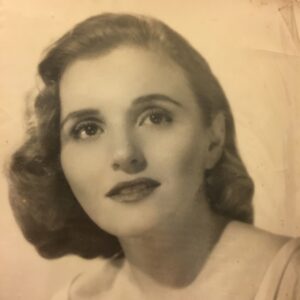
“When a parent dies, a thousand things go through your mind,” says Yesko. “For me, it was a lot of regret. Like, why didn’t I try to go down [to Florida] and see my mom? Why wasn’t I a better daughter?
“In going through this [process], I decided, ‘I’m going to try to pick up the pieces and see what I can find.’ … My thought was, if I could have some idea of what happened to my mom, I would understand everything that came afterwards better. I would feel a little more healed.”
After conducting research, Yesko discovered her mother went to High Point Hospital, a private psychiatric facility in Port Chester, New York. She learned the hospital was established by a psychiatrist named Dr. Alexander Gralnick in 1951 and closed in 1993.
Curious about the founder’s philosophy of patient care, Yesko read some of Gralnick’s books.
“It was very autocratic, doctrinaire,” she says. “’We know what’s best for the patients. They follow our protocol. We don’t shower them with love. We make our own rules.’”
Yesko’s research led her to a Facebook group of former High Point patients. She asked members to share memories.
Many of the stories were harrowing, and Yesko formed relationships with some former patients. She knew the chances of finding anyone who knew her mother at High Point were “slim-to-none,” but felt the patients’ experiences needed to be documented.
“I thought, my job is to give voice to these people who have perhaps never shared this with anybody,” says Yesko. “So many of them were young people when they were there — 11, 12, 13, 14 — and were there sometimes for years. … I realized this was going to be a much bigger project than just finding out about my mom.”
Yesko began working with the Port Chester Historical Society, and several articles about her project appeared in local publications.
One day, Yesko heard from a woman who remembered her mother at the hospital. The ex-patient recalled the day her mother first arrived there.
“The woman said, ‘She was unpacking her suitcase [as if] she was just going to have a rest. She seemed really happy and eager to be there.’ …
“I felt my mother was sold a false bill of goods,” says Yesko. “Did she know she was going to be there for over a year and not helped? I know everybody got so much Thorazine there, so I’m sure she had that. Did she have [electric convulsive therapy] there? I don’t know.”
Yesko also heard from a woman who worked as a nurse’s aide when she met Sally.
“The nurse’s aide was able to tell me more about Dr. Gralnick and how things were from the staff’s point of view in the 1960s,” Yesko says. “I’d been unsuccessful trying to connect with any of the psychiatrists who were there, but I’ve spoken to some of the children of the nurses at that time. They told me they believe their moms thought they were doing a good job and kind to the patients. I don’t disbelieve that.”
But many former patients spoke of being over-medicated, given large doses of Thorazine, an anti-psychotic that made them “zombies.”
Some ex-patients hospitalized in their teens and pre-teens complained of not receiving schooling, even when they were at High Point for as much as two years. Other patients complained about limited outdoors time, having no books or magazines, with their phone calls and letters monitored.
Others told stories of patients who tried to escape. One patient, on temporary leave from the hospital, jumped out of a window to avoid being brought back to High Point.
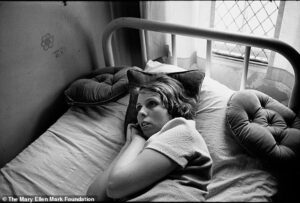
The stories from the hospital’s later years were even worse.
“One former patient said when he got to High Point, he was strip-searched and beaten up by some of the other boys or young men there, and the guards would take bets [on the fights]. It sounded like an absolute hellhole. I do not think that was the case earlier on.”
One surprising thing Yesko learned is her childhood experience was relatively common.
“When I tell people about [the documentary], I am shocked at the percentage of people who say, ‘The same thing happened to my mother or grandmother. We never talked about it.’ Most of them were in state hospitals, though. [High Point] was private and incredibly expensive.
“One thing that makes me furious is when [patients] ran out of money, all of a sudden they were [supposedly] cured. It’s absolutely unforgivable.”
Yesko says she plans to have a rough cut of “Erased” ready by the end of this year. She hopes the documentary will be “a conversation-starter. Even though we’re in a much different era now with mental health, there’s still a lot that we don’t talk about.”
To see a trailer of “Erased,” click here.

Emma Snyder, owner of The Ivy Bookshop, offers recommendations for must-read titles for adults and children.

Schwab currently serves as president of Cumberland's historic B'er Chayim Congregation.

The Jerusalem Orchestra East & West, which arranged the program for young musicians, blends Western orchestral music with Middle Eastern traditions.

Pikesville resident and entrepreneur Luna Rosendorff discusses what she's seeing these days in the world of contemporary interior design.