

By Larry Luxner
A block off Tirana’s Skanderbeg Square, Harel Kopelman brings traditional Albanian culture — in the form of wedding rituals, costumes, and wines and cheeses — to visiting foreigners.
“Albanian Night,” a medieval mix of Balkan sights, sounds and tastes, is run by Kopelman, an Israeli-born ex-yeshiva student who grew up in Sunnyvale, California.
Kopelman, 31, ended up in Albania by chance four years ago while traveling the globe.
“I fell in love with the country,” he said. “People are super-friendly, everything is accessible, and you’re close to nature. It’s an untapped market.”
For Israelis, Albania is now a lot more accessible. El Al recently launched direct, nonstop flights between Tel Aviv and the Albanian capital of Tirana through its low-cost subsidiary, Sundor.
In a press release, Sundor CEO Gal Gershon called Albania a “small, Israeli-friendly country that’s ranked as one of the safest” by Israel’s National Security Council.
“We’re witnessing increased demand for flights to Balkan countries, which are known for great food, stunning landscapes and excellent value for money — qualities Israelis love,” Gershon said.
Last year, Albania welcomed 11.7 million foreigners and ranks among the world’s fastest-growing tourist destinations.
Among the many sites being constructed to draw tourists are not one but two Jewish museums — one in Tirana and another in Vlora. It’s a remarkable number for a country that according to the World Jewish Congress is home to only about 60 Jews.
New hotels are also springing up, including one backed by President Donald Trump’s Jewish son-in-law, Jared Kushner. Albanian Prime Minister Edi Rama approved Kushner’s bid to build a five-star hotel complex on the offshore island of Sazan, the New York Times reported in January. The $1.4 billion project would turn a “former military base into a vibrant international destination for hospitality and wellness,” the newspaper said.
Israel’s blossoming romance with Albania stands in contrast to its increasingly strained relations with a number of Western European countries over the ongoing war in Gaza. It also represents a complete turnaround from the years between 1944 and 1985, when dictator Enver Hoxha — who built nearly 200,000 concrete bunkers across the Maryland-size country in case of an American invasion that never came — called Israel “the little Satan.”
Tel Aviv tax lawyer Nimrod Yaron, 46, has visited Albania five times. He got involved with the country after Albania’s former ambassador in Israel, Bardhyl Canaj, asked him to help craft a bilateral tax treaty that was signed in May 2021.
“When we advise Israelis to invest in Albania or open a company there, they’re quite surprised. I tell them it’s a very good place for doing business. The people speak English and they have a highly educated population,” he said. “To them, education is sacred, and as Israelis, we know that education is the key to everything.”
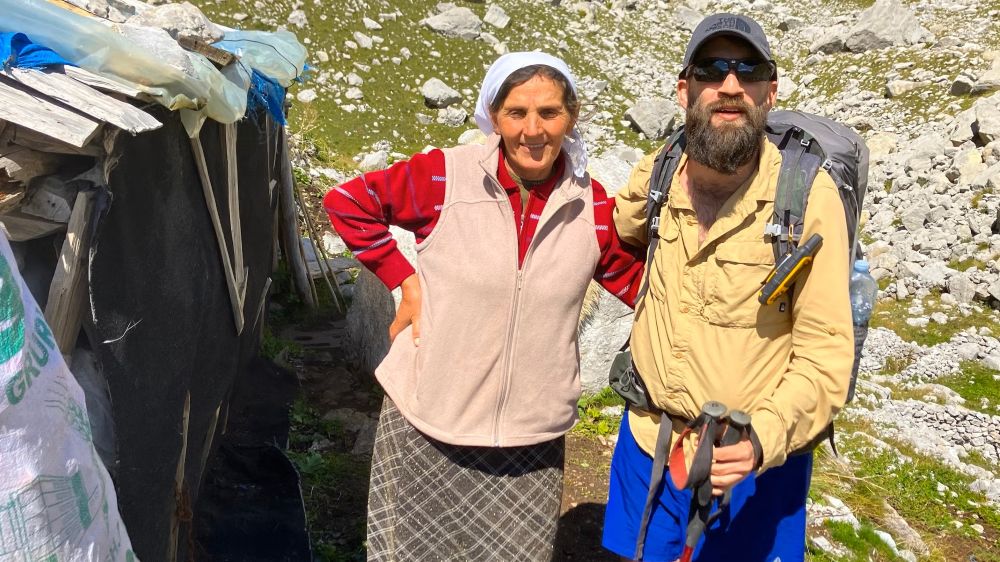
(Larry Luxner via JTA)
Harel Kopelman and his business partners opened “Albanian Night,” an interactive cultural center located in a 27,000-square-foot space in Tirana. Originally, they envisioned the project as a guest house in the northern mountain town of Valbona, which attracts trekkers, but because of its remote location that didn’t work out.
Kopelman began renovating the space in early 2024 and opened it to the public last December. His project employs 50 people and offers roughly 10,000 products made by more than 600 artisans.
An innovation grant from the European Union partially funded Kopelman’s $1.3 million venture. But to make it sustainable, he charges a little over $40 for the evening show — offered in both English and Albanian — and about $65 for the dinner package. In the mornings, he opens up the space to Albanian schoolchildren who put on costumes and join in the singing and dancing.
Linda Dervishi, an Albanian woman with Jewish roots, calls Albanian Night “the most meaningful project ever done” to promote her country’s traditions for both tourists and locals.
“It’s the first place I suggest to any Albanian who wants an authentic return to their roots,” she said. “Harel went deep into our culture and brought it all together better than anyone else.”
Kopelman said although 45% of Albanians identify as Muslim, the country has little in common with the Arab world, and the government has no tolerance for pro-Palestinian protests. In addition, Albania’s legacy as a temporary haven for foreign Jewish refugees during World War II is well-known, with the Holocaust widely taught in schools here.
Haifa-born Assaf Binder, 46, has lived in Albania since 2007. The owner of a boutique fish farm in the Adriatic coastal resort town of Himara, he first settled in Vlora to manage Albania’s biggest aquaculture operation. His wife, Shira, operated an Israeli-themed bakery and coffee shop.
Ten years later, they moved to Himara, which now ranks among the most popular destinations of the so-called “Albanian Riviera.”
“Albania is more expensive than it used to be, but compared to Israel it’s still very cheap,” he said. “I feel only love and admiration here.”
Larry Luxner wrote this article for the JTA global Jewish news source.

An ambitious new educational initiative seeks to emphasize personalized learning and strengthen Israeli society.
The Tower of David Jerusalem Museum is collecting photographs of the Western Wall ahead of an exhibition next year marking the 60th anniversary of the Six Day War.

Opposition leader Yair Lapid spoke at Thursday's Jerusalem rally, which drew 10,000 participants and 2,000 police officers.

The Jerusalem Orchestra East & West, which arranged the program for young musicians, blends Western orchestral music with Middle Eastern traditions.