

If you haven’t dropped by the Jewish Museum of Maryland since it reopened last February after an 18-month renovation project, now is a great time to check out the East Baltimore campus and its latest exhibition, “Modernisms.”
The exhibition will be on display in the Cohen-Weinberg Gallery through Feb. 15, 2026.

“Modernisms” might have never come about — at least in its current form — if not for a series of seemingly unrelated events.
“In September 2023, JMM held a meeting in the home of one of our members to inform community members about the museum’s impending capital project,” recalled executive director Sol Davis. “I noticed a Herman Maril painting in the home and later learned of materials related to Maril held in JMM’s collections.”
Davis’s discovery led to a decision to develop an exhibition featuring Baltimore-born Jewish artists such as Maril. Other artists featured in “Modernisms” include Florence Hochschild Austrian, Jacob Glushakow, Mervin Jules, Reuben Kramer, Karl Metzler, Selma L. Oppenheimer, Helen Ries, Edward Rosenfeld, Amalie Rothschild and Aaron Sopher.
Katie Andril, the JMM’s exhibits manager, welcomed the opportunity to create the show, but admitted she was initially concerned about its parameters.
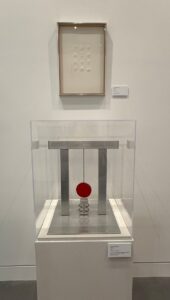
“I’d wanted to do an exhibit of artworks from the collection,” she said. “But while art is a small subset of our collection, it’s still far too much and too varied, and I’d been looking for a way to narrow it down.”
Unexpectedly, she drew inspiration while preparing for a different JMM exhibition titled “Next Generations: Turning the Page.” That exhibition, which ran from last February to July, was based on themes culled from the museum’s defunct publication Generations, which was published between 1978 and 2012.
Andril read all 30 issues of the magazine and provided an annotated bibliography from which others on the exhibition team selected themes. While reading Generations, she “stumbled upon” a 1998 essay by Jacob Glushakow describing a discreet community of local Jewish artists during the mid-20th century.
“Glushakow’s essay provided a concrete time period and list of artists that made for a great jumping- off point,” said Andril.
Once the artists were selected, Andril and Davis hired J. Susan Isaacs, a Baltimore-based artist, author, and former professor of art history and museum studies at Towson University, to curate and design the exhibition.
Initially, Isaacs said she wasn’t sure she wanted the job. “I already decided I was retired from curatorial work because in my lifetime, I have curated about 400 or 500 exhibitions,” she said.
But after learning about the artists and their bodies of work, Isaacs said she was intrigued. She also felt the exhibition’s concept was completely in her wheelhouse.
“I am a scholar of modernism,” Isaac said. “I’ve been teaching it for 40 years. I have all the background on Picasso and Matisse and the Cone sisters, and everything is already in place.”
After starting to work on the show, Isaacs discovered several other Jewish artists from Baltimore omitted from the Glushakow essay, and they were added to the show. They include Gladys Goldstein, Peter Scholleck, Perna Krick and Bennard B. Perlman. While some of these artists were represented in the JMM collections archives, other works needed to be tracked down and borrowed.
While assembling the exhibition — which includes 77 objects — Isaacs said she was fascinated by how all the artists responded differently to the Modernism movement.
“There are various forms of modern art in the show,” she said. “Whether they were working figuratively or abstractly, all these artists were modern artists, and they range from artists who were most impacted by Post-Impressionism and Fauvism to artists who were impacted by Cubism, all the way through to German Expressionism [in the case of] Peter Scholleck.
“Then, you have somebody like Amalie Rothschild who’s doing things in the ‘60s that are [extremely] avant-garde, and she becomes a constructivist and moves to sculpture. Amalie Rothschild and Gladys Goldstein — these people were doing very abstract things. There are works by Peter Scholleck from later in his career that I would not be surprised to see in an MFA studio today. At the end of his life, he was prescient. He was doing something that ultimately became known as Neo-expressionism in the ‘70s.”

The Maryland College Institute of Art plays a major role in “Modernisms.” A dozen of the 14 featured artists studied at MICA at one point in their lives.
“Some of them earned degrees,” said Isaacs. “Some were there for quite a while and didn’t earn degrees. Some were there temporarily. But they were there. And one of the reasons is that MICA accepted Jews. That’s a big deal.
“But guess what? They didn’t accept people of color until 1954,” she said. “So two of the artists in this show — Reuben Kramer and his wife, Perna Krick — formed [the Baltimore Art Center] for artists of color. Of the 17 students, I think 15 were Black.”
Sol Davis said visitors to “Modernisms” will be “inspired and energized by this stunning array of visual art. … Art helps us understand Jewish experiences and expressions at a particular time. JMM’s mission is to connect people to Jewish experiences, and the art in this show, presented across a variety of mediums, illuminates a Maryland-based Jewish experience in the 20th century through a variety of perspectives.”
The Jewish Museum of Maryland is located at 15 Lloyd Street. For information, visit jewishmuseummd.org/visit/exhibits/.
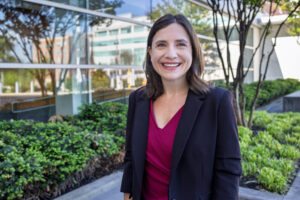
Leslie Simmons, executive vice president and chief operating officer of LifeBridge Health, will serve as interim president of Sinai and Grace Medical while a national search is conducted for Shlossman’s successor.
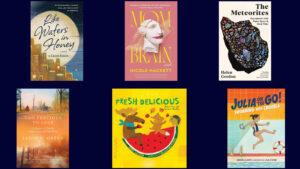
Emma Snyder, owner of The Ivy Bookshop, offers recommendations for must-read titles for adults and children.
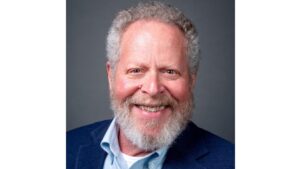
Schwab currently serves as president of Cumberland's historic B'er Chayim Congregation.
A former U. S. Marine, Pat Young has served as a Baltimore County Council member representing District 1 since 2022.