
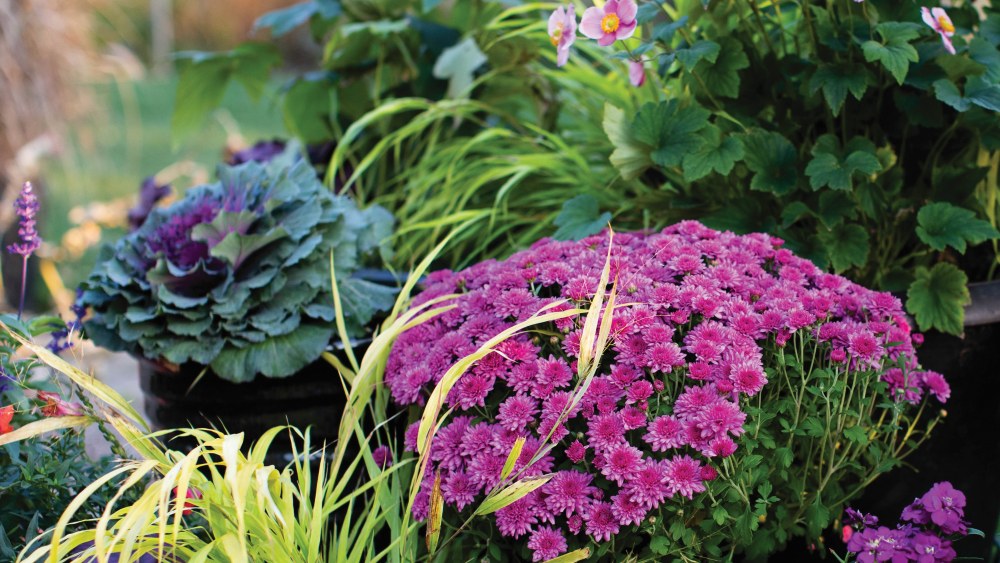
There’s something deeply satisfying about “putting the garden to bed.”
As autumn settles in and the air turns crisp, our gardens signal that it’s time to wind down. Fall chores are more than maintenance — they’re a chance to reset, refresh, and prepare both plants and tools for the next cycle.
With a little care now, you’ll have a healthier, more vibrant garden come spring.
Retiring the Summer Soil
After the first frost, vegetable potting soil served its purpose. It should only be used for one growing season, since it can harbor disease, bacteria, fungi and insect eggs. Instead of tossing it out, give it a second life: compost it, spread it in a perennial or shrub bed, or work it into the lawn.
Don’t forget the pots themselves — rinse them thoroughly and disinfect with a mild 1% bleach solution. Clay pots should be emptied and stored dry; if soil freezes inside, expansion can crack the pot.
Flower potting soil is more forgiving. You can stretch it into a second year if you refresh it at planting time with 25% new soil. After that, follow the same clean-out routine as with vegetables.
Turf Time: Testing and Feeding the Lawn
Fall is prime time to give your lawn a wellness check. A simple soil test reveals whether the pH has dipped below 6.2. If so, liming the lawn will help raise it, promoting root strength, discouraging weeds, and encouraging lush growth.
For fescue grass lawns, November is the golden window. Fertilize them once a year with a mix of 26% nitrogen, 0% phosphorus, and 5% potassium.
Vegetable gardens need soil tests every two years, and perennial or shrub beds every five. Lab results will guide what’s needed — whether it’s potassium or phosphorus for fertility, or calcium or sulfur to balance the pH levels to around 6.8.
Clay-heavy soils, especially, benefit from organic matter like composted leaves, aged manure, or mushroom compost to improve texture and drainage.
Transplanting Chrysanthemums
Those late-summer mums don’t need to be one-season wonders. Fall is the perfect time to transplant them into the garden.
Choose a sunny two-foot-square spot, enrich the soil with compost, and cut back the spent flowers and stems to about a foot. Plant the whole root ball, water well, and wait.
By mid-May, fresh growth will emerge, and you’ll have a repeat performance of blooms.
Mums can also be divided at planting time. Each division should be treated the same way, giving you more plants for the effort.
Caring for Evergreens
If your garden includes evergreens, remember that they need water even as the season cools.
A deep soaking every few weeks until the ground freezes will help prevent winter desiccation and keep their needles healthy through the cold months.
Tools: The Quiet Heroes
Before you close the shed door for the season, tend to your garden tools. Clean spades, trowels, shears, rakes, and pruners, and store them in a dry place.
A little care now prevents rust and ensures they’ll be sharp, strong, and ready when spring calls you back outdoors.
Rebecca Brown began her career as a horticulturist more than 30 years ago and studied at the New York Botanical Gardens. She has been a University of Maryland, Baltimore County master gardener for 11 years and is a backyard beekeeper.
Norman Cohen is a retired chemist. He has been gardening for more than 40 years and has been a University of Maryland, Baltimore County master gardener for 17 years. Cohen also provides gardening education to the public at local farmers markets.

The new exhibition revisits and updates a previous show about ritual hair covering in the observant community.

The Pikesville resident's latest offering "There's a Dragon in the Tree House and He Won't Come out!" was co-written with her grandsons.

A new biography captures the intensity and magic of the musical theater giant, writes Michael Olesker.

Emma Snyder, owner of The Ivy Bookshop, offers recommendations for must-read titles for adults and children.