
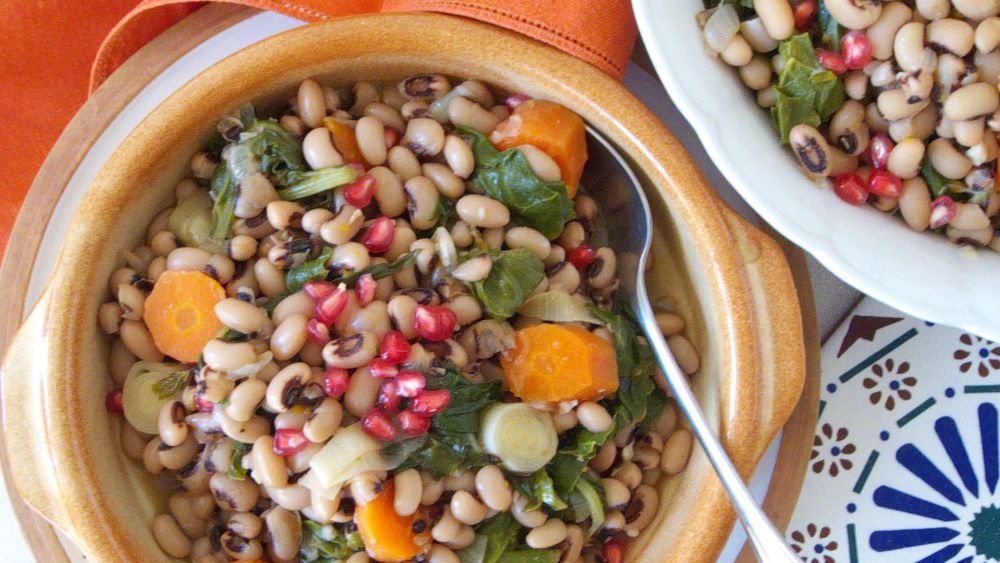
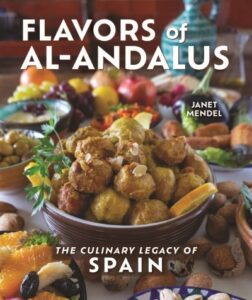
Jmore’s resident foodie Dara Bunjon recently talked with Janet Mendel, author of the new cookbook “Flavors of al-Andalus: The Culinary Legacy of Spain.”
Watch their conversation here.
Ahead of her appearance, Mendel shared this recipe for black-eyed peas, which can be served hot as a main or side dish or cold as a salad.
Recipe adapted from “Flavors of al-Andalus: The Culinary Legacy of Spain” by Janet Mendel (Hippocrene Books; 2025).
Order a copy now and get 40% off with code HIPPOCRENE40 at indiepubs.com/products/flavors-of-al-andalus
By Janet Mendel
Black-eyed Peas (Potaje de Carillas)
There were no beans in medieval Spanish cooking. No green beans, no pinto beans, no cannellini beans. These legumes were discovered by Columbus’s explorations in the New World, but did not become known in Spain until the mid-16th century.
Nevertheless, legumes were an important part of the diet in Moorish times. Chickpeas (garbanzos), lentils (lentejas), and black-eyed peas (carillas, figüelos, judías de carete, or chícharos) were cultivated and were an important part of the diet.
Interestingly, two of the words for “bean” in Spanish, alubia and judía, come from Moorish times. The Arabic name for the black-eyed pea, lubia, came to be used for all beans when they eventually became available in Spain. The word judía actually means “Jewish,” possibly because the Sephardic people favored the “beans” of the day, black-eyed peas.
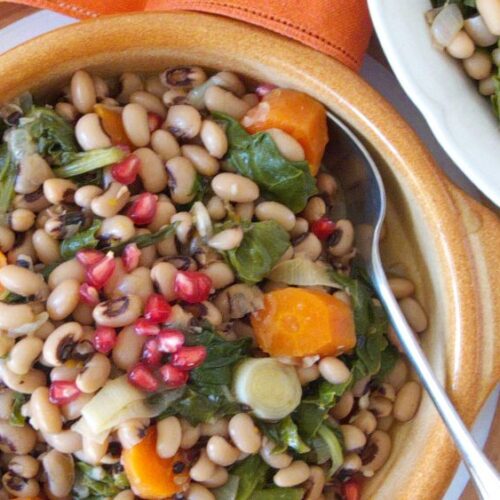
Black-eyed Peas (Potaje de Carillas)
Ingredients
- 2 cups dried black-eyed peas (1 pound) (See note below)
- 3 carrots, peeled
- 1 leek, white part only
- 1 stalk celery
- 1 to 2 bay leaves
- 1 1/2 teaspoons salt
- 1/3 cup olive oil + more for drizzling
- 1 cup chopped onions
- 1/2 teaspoon coarse salt
- 10 peppercorns
- 2 cloves
- 2 coriander seeds
- 1/8 teaspoon cumin seeds
- 1/2 teaspoon oregano
- 4 cloves garlic, coarsely chopped
- 4 cups chopped leaves and stems of chard
- 2 Tablespoons lemon juice
- Pomegranate arils, to garnish (optional)
Instructions
- Place the black-eyed peas in a bowl or pan and cover them with water. Leave them to soak for 8 hours.
- Drain the black-eyed peas. Place them in a pan and add 6 cups of water. Bring to a boil and skim off the froth that rises to the top. Reduce heat to medium, cover, and cook the beans 15 minutes. Add the carrots, a quarter of the leek, celery, bay leaves, and 1 1/2 teaspoons salt. Cover and cook the beans 30 minutes.
- While black-eyed peas are cooking, heat the oil in a skillet over medium heat. Sauté the onions until they are very soft but not browned, 6 to 8 minutes. If they start to brown, add a few drops of water and continue frying. Slice the remaining leek, add it to the skillet and continue frying.
- Place the coarse salt in a mortar with the peppercorns, cloves, coriander, cumin and oregano. Crush the spices and herbs to a powder. Add the garlic and continue crushing to make a paste. Remove the carrots from the pan of black-eyed peas. Cut one carrot in half. Add one half to the mortar mixture and mash it with the spices. (Reserve the remaining carrots.) Dilute the paste with a spoonful of the black-eyed peas cooking liquid.
- Stir the paste from the mortar into the sautéed onions in the skillet and fry for 2 minutes more. Stir the contents of the pan into the black-eyed peas. Add the chard and ½ cup of cold water. Continue cooking the beans until they are very tender, about 20 minutes.
- Remove and discard the bay leaves, whole piece of leek, and celery. Slice the reserved cooked carrots and return them to the pan. Stir in the lemon juice. Allow the black-eyed peas to sit 10 minutes before serving.
- Serve the black-eyed peas in bowls with their liquid or, to serve as a vegetable side dish, remove them from the pan with a slotted spoon. Drizzle olive oil over the top. Garnish with pomegranate arils, if desired.
Notes

Dara Bunjon talks with award-winning author Monica Saigal (Bhide) about her "Modern Spice" cookbook, "Papa's Butter Chicken" children's book, and more.
It doesn't get much easier than this cucumber and purple cabbage salad from Elite Jakob, perfect for a warm spring day.

Dara Bunjon talks sustainable farming, chocolate, and more with farmer, chef, educator and chocolatier Mark Mills of Chocolates and Tomatoes Farm in Middletown.

Dara Bunjon talks with cook, writer and television host Monti Carlo about her new cookbook, "Spanglish: Recipes & Stories," and more.