
By Rabbi Lisa Rubin
The second season of Netflix’s “Nobody Wants This” has sparked plenty of debate, much of it centering on how the show depicts Jewish women.
Critics have rightly called out the stereotypes: the overbearing mother, the controlling wife, the self-absorbed sister-in-law. These portrayals can feel dated and, at times, unfair.
When Jewish characters appear so rarely in mainstream pop culture, every depiction carries extra weight, and we should demand better.
But I also think the pile-on has missed something important. The best comedy often plays on stereotypes; not to validate them but to expose and exaggerate them in a way that subverts them.
Humor and cultural caricature have always been intertwined. In this case, I believe the show’s existence — with Jewish characters at its center, created by a Jewish convert (Erin Foster), and crafted in consultation with a rabbi (Sharon Brous) — is something worth celebrating, not condemning.
Let’s acknowledge that “Nobody Wants This” gets several things right. It is absolutely realistic for a rabbi to be single and dating. It is equally realistic that such a rabbi might meet and fall in love with someone who isn’t Jewish.
The show’s “meddling family” scenes may feel exaggerated, but anyone who has worked with interfaith couples — as I do, exclusively — will recognize the truth behind them.
There are always family expectations, anxieties and loyalties at play. Jewish parents and siblings often struggle to reconcile pride in their traditions and faith with concern about their loved one’s choices. Those tensions are real, and the show portrays them with a measure of honesty beneath the humor.
I have seen much worse in reality.
Where the series misses its deepest opportunity, however, is in its treatment of conversion. Nearly 70% of Jews outside the Orthodox community today marry non-Jews. That’s an extraordinary opportunity for growth. Interfaith relationships, approached thoughtfully, can be pathways into Judaism rather than exits from it.
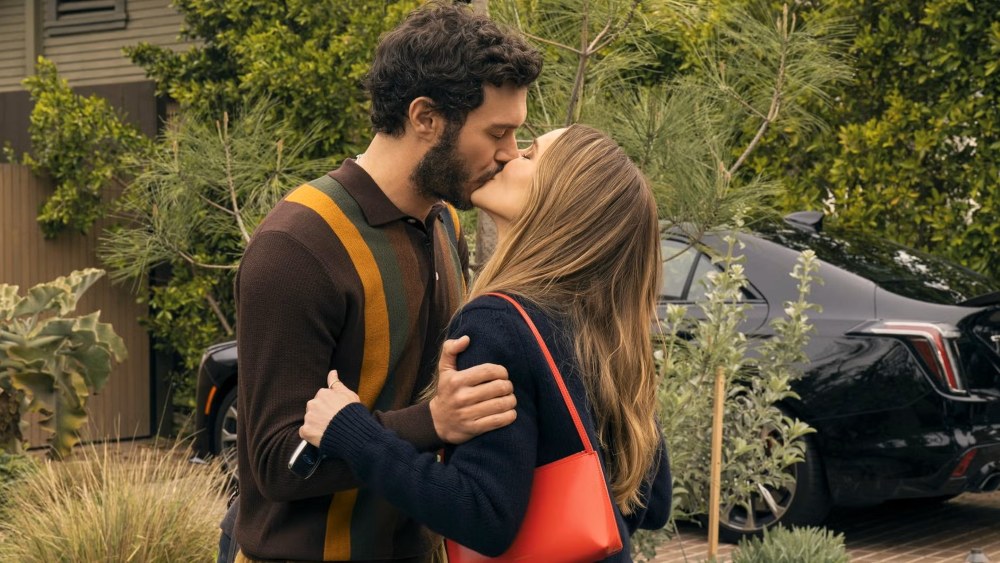
So I cannot understand, and found it hard to watch, how Noah Roklov, the rabbi portrayed by Adam Brody, knows he wants to marry a Jew and wishes his non-Jewish agnostic girlfriend, Joanne Williams (played by Kristen Bell), would convert.
Yet, he doesn’t connect her to another rabbi or to a community that could guide her in the conversion process. Instead, he takes on the task of educating her himself, randomly and haphazardly (creating some seriously awkward scenes).
In real life, conversion is never a solo act. It unfolds within a community, guided by experienced mentors, study, and experiences.
For Rabbi Noah, outsourcing that role to another colleague would not only have been more authentic, it would have modeled something beautiful: that Jewish learning and growth is relational, communal and deeply supported.
Had they found our Center for Exploring Judaism, I would have taken Joanne under my wing. I would have invited her to community gatherings, and encouraged Noah and Joanne, as a couple, to join one of our classes, where she could see that she is not alone.
I would cherish the chance to build a relationship with her grounded in honesty, warmth and patience. I would remind her, as I do with all my students, that we have no agenda. We are here simply to walk this path of discovery alongside you. And we’re thrilled by your interest!
Conversion, I’d explain, is an organic process — of learning, practicing, and thoughtfully trying things on for size. Come in. Learn. Experience. See what feels right. There is no exam, no checklist, even for those who ultimately choose to convert to Judaism.
The only true test is the one that unfolds throughout the rest of your life. Joanne, do you feel like an imposter? Or well-informed by what you’ve learned, are you living your truth?
All this said, I think the criticism that the show might be “bad for the Jews” is unwarranted. At a time when antisemitism is at a modern high, the very fact that Judaism, rabbis and Jewish families are the subjects of a major Netflix series is itself meaningful.
“Nobody Wants This” is neither ignorant nor malicious; it’s messy, human, and, yes, a little cringey — much like Jewish life itself.
And above all else, it’s a rom-com. Let’s all take a breath.
The irony of the title of the show isn’t lost on me. Because in fact, Jews should want this. We should want Jewish stories on screen, even imperfect ones.

We should want portrayals that spark discussion about how we love, live and grow as Jews in the modern world. And we should want our communities to see interfaith love not as a threat but as a chance to expand the circle.
The truth is, everybody should want this.
Rabbi Lisa Rubin is founding director of the Center for Exploring Judaism at Central Synagogue in New York City. She has facilitated 750 conversions.
The views and opinions expressed here are those of the author and do not necessarily reflect the views and opinions of Jmore.

Proposed legislation in Israel would transfer authority of the entire Kotel to the Chief Rabbinate, writes Rabbi Robyn Fryer Bodzin.

In Italy, the Jewish Brigade's flag has unfairly become a flashpoint in today’s battles over Zionism and anti-fascism, writes Dr. Ginaluca Fantoni.
At its annual meeting this year, the Baltimore Jewish Council will honor the late Harford County educator and longtime Holocaust education champion.

The former Colt, who passed away on May 25 at age 93, achieved immortality during a cold December day in 1958, writes Michael Olesker.