
By Rachel Greenwald
I take a deep breath and pick up the phone. On the other end of the line is a child who has been charged as an adult.
We have never spoken before. I’m calling to let them know I am the public defender representing them at their bail review.
They are just 16 years old. Instead of being sent to a juvenile facility, they have been processed through the adult jail at Baltimore City Booking and Intake.
It is my job to represent them at their adult bail review. The system has already decided they deserve to be treated as an adult. But in this initial phone call, it could not be more clear that they are just a child. They tell me about their parents and siblings, their school, and I can hear the fear and confusion in their voice.
Most of all, they just want to know when they get to go home.
Under Maryland’s harsh auto-charging laws, every child 16 and over is automatically charged as an adult for 33 offenses. It does not matter whether it is a child’s first offense or whether they are only charged with misdemeanor offenses. It does not even matter that at this point a prosecutor typically has not looked into the viability of the case.
Under this broad approach, Maryland prosecutes more children as adults, per capita, than every other state except Alabama.
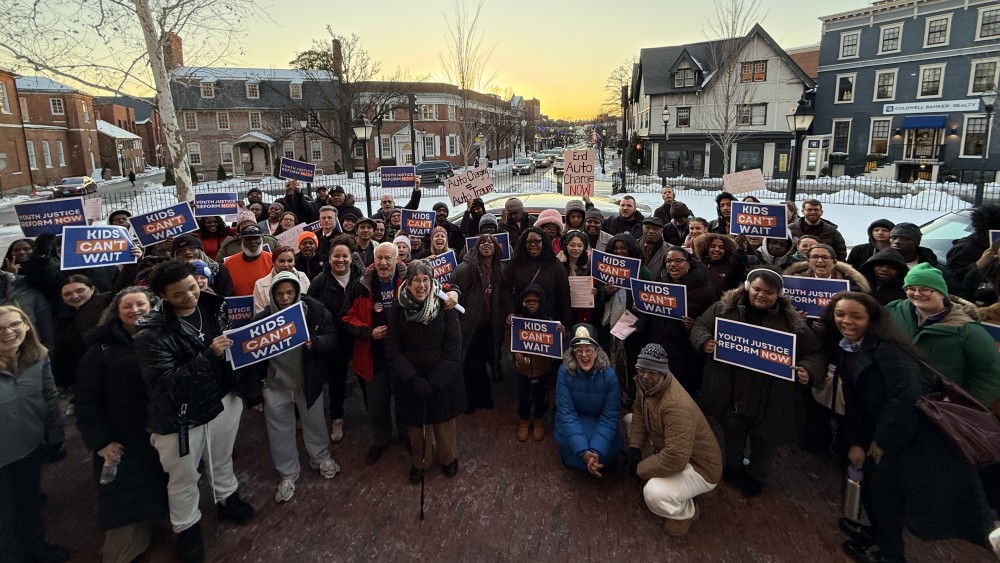
The Youth Charging Reform Act (HB 409/SB 323) aims to change this practice and begin the process of moving Maryland toward a more just and equitable system. The bill achieves this by allowing children to be treated as children from the start of their cases.
This means instead of being automatically processed through the adult system, children would have the opportunity to go through the juvenile system, which provides more rehabilitative services. Children could still be moved to the adult system, but only after a judge has considered their individual case.
This change is long overdue. And for both the children who enter our criminal justice system and for public safety in Maryland, it is enormously consequential.
Although children charged as adults are entitled to a transfer hearing to determine whether their case should be moved back down to the juvenile system, this process can take months. If they are transferred, children have often already spent significant time institutionalized in adult facilities. Due to federal laws requiring sight-and-sound separation between incarcerated children and adults, some children will spend days in solitary confinement.
These practices lead to further traumatization of children who have often already endured insurmountable hardships.
Research does not support this strategy. Children tried as adults are 34% more likely to reoffend than those that go through the juvenile system. Further, more than 77% of children charged as adults in Maryland are Black, even though they represent just 30% of the state’s population.
In the end, 85% of cases involving children charged as adults are transferred down to the juvenile system or end up dismissed entirely. But by the time the cases conclude, the damage has been done. Children have already been taken out of schools and separated from their families and communities.
Further, they have already gone months without receiving rehabilitative services available to them if the cases began in the juvenile system. These services include mentorship programs, access to mental health care, victim awareness courses and education regarding the effects of gun violence.
Given what we know about juvenile brain development, the earlier we intervene, the more positive outcomes we see.
Last Friday, Mar. 6, the Maryland Senate passed an amended version of the Youth Charging Reform Act and sent the bill to the House. This vote marks the first time in more than a decade that lawmakers have voted on the bill and represents a major milestone for the legislation.
While the bill moves this issue forward, some amendments further limit the number of charges the policy would cover.
Ultimately, Maryland should end this practice for all youth and give them the opportunity to start their cases in juvenile court. The House still has an opportunity to pass the bill in its strongest form to move us further towards that goal.
My Jewish values serve as a foundation for my career as a public defender. In particular, the idea of tikkun olam — our collective responsibility to help repair the world — has always resonated with me. The juvenile justice system is supposed to provide an opportunity for repair. Kids always deserve a chance to receive services and support and to learn from mistakes.
When we charge all kids automatically as adults, we are assuming the worst. We are telling children that they have the burden to prove they are redeemable.
The Youth Charging Reform Act provides a pathway to a more just landscape for children in Maryland. A pathway that acknowledges our collective responsibility to care for our children, and that creates healthier communities for us all.

Rachel Greenwald is a member of Jews United for Justice. She lives in Baltimore City, where she currently practices as a juvenile public defender.
The views and opinions expressed here are those of the author and do not necessarily reflect the views and opinions of Jmore.

The Orioles this season have proven that money can't buy happiness, writes Michael Olesker.

A recent experience reminded Editor-in-chief Alan Feiler of why we cannot allow the antisemites to make us cower and hide.

A Maimonides statue in the Spanish city of Córdoba was defaced last weekend, but his teachings have an answer to hate, writes Rabbi Jeffrey K. Salkin.

The narrative against Israel's legitimacy took years to build, writes Baltimore-based branding expert Sharon Nevins.