

By Stephen Silver
Marc Shaiman likes to joke that for half a century, he’s been “the funny Jewish guy at the piano,” a role as old as vaudeville.
But behind the punchline is a career that traces a distinctly Jewish path through American show business: collaborations with Bette Midler, Rob Reiner and a who’s-who of Jewish Hollywood; composing the music for Broadway’s “Hairspray,” and scoring the 1999 film “South Park: Bigger, Longer & Uncut” and co-writing its Oscar-nominated song, “Blame Canada.”
Now, in his new memoir “Never Mind the Happy: Showbiz Stories from a Sore Winner,” Shaiman reflects on a life shaped by chutzpah, fate, disappointment and the particular blend of humor, loss and resilience he credits to being Jewish.
“It’s not hard to spend your whole life with Jews when you’re in show business,” he said. “There’s no question that the Jews have been a big part of show business from the beginning of time. I’m sure the first caveman who put on a show was circumcised.”
Shaiman joined that business when he left his hometown of Scotch Plains, New Jersey, at age 16 after getting his GED and headed for New York City. He performed with cabaret acts and comedy shows.
For the past half-century, Shaiman, 66, has indeed been that funny Jewish guy at the piano, as everything from an arranger and writer in the early years of “Saturday Night Live” to a creator of musical moments for Oscar broadcasts (along with seven Academy Award nominations for films like “Mary Poppins Returns” and “Sleepless in Seattle”). Shaiman worked on music for nearly every film Reiner made, starting with “When Harry Met Sally” in 1989; he was nominated for an Oscar for scoring Reiner’s film “The American President.”
Many of those projects were written with Scott Wittman, his former romantic partner and still his songwriting partner.
The book’s title comes from an expression used by his mother. One New Year’s Day, Shaiman’s sister told her mother, “I want to be the first to wish you a happy and healthy new year,” to which their mother replied, “Never mind the happy.” Shaiman calls it “the day that my mother defined Judaism.”
One of the first Broadway shows he ever saw was “Fiddler on the Roof,” not long after its debut in 1964. A young Bette Midler was making her Broadway debut as Tevye’s daughter, Tzeitel.
“Bette Midler’s first two albums and [my] puberty both happened at the same time,” he said. “And I became obsessed with Bette Midler.”
Shaiman ended up collaborating with Midler, first as her vocal arranger and then on movies like “Beaches” and “For the Boys.” He was also at the piano when Midler serenaded Johnny Carson as his final guest on “The Tonight Show” in 1992.
As an adult, Shaiman admits he’s become more skeptical of organized religion in general.
“Having said that, I love being Jewish. I love Jewish people. I love how what’s in our blood has made us the way that we are,” Shaiman said.
He said he was inspired to write his autobiography after hearing actress Jane Fonda on a podcast talking about her own memoirs.
“She felt it was time for a life review,” Shaiman said. “That’s stuck in my head.”
The book includes both highs, like winning Tony Awards, and lows, including the countless friends he lost to AIDS in the 1980s and ‘90s. Accepting the Tony that he and Wittman won for “Hairspay” — whose ١٩٦٠s Baltimore setting he tried to infuse with the spirit of his early days in New York — Shaiman said he wished the theater balcony “reached all the way up to heaven” so their deceased friends could celebrate with them.
The book, which is full of Rob Reiner stories, was completed before the murder of the director and his wife, Michele, in December. Shaiman is still coming to terms with the loss.
“He was like my older brother, but he was also a mentor and such a mentsch,” said Shaiman, remembering “not just what he did for me for my music and lyric career, but what he did for me as a gay man. [The Reiners] were vitally a part of the fight that got all the way to the Supreme Court that ended up creating legal same-sex marriage throughout the country. …
“I really still haven’t come to terms with what’s happened.”
As the title suggests, “Never Mind the Happy” accepts the bitter and the sweet of a long, successful career with setbacks that still sting. While he’d still love to win an Oscar (despite his seven nominations, Shaiman is an O shy of an EGOT), he counts his blessings.
“I just wanted to tell these stories,” Shaiman said. “My book is a textbook example of how if you just keep putting yourself out there, that every single one of your dreams can come true.” 
Stephen Silver is a Philadelphia-based writer. This article was provided by the JTA global Jewish news source.
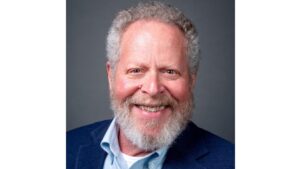
Schwab currently serves as president of Cumberland's historic B'er Chayim Congregation.

The Jerusalem Orchestra East & West, which arranged the program for young musicians, blends Western orchestral music with Middle Eastern traditions.

Pikesville resident and entrepreneur Luna Rosendorff discusses what she's seeing these days in the world of contemporary interior design.

Jewish Community Services' upcoming "Future-Ready Workplace" event will feature a keynote address from workplace expert and bestselling author Liz Fosslien.