
You’ve probably heard that old saying, credited to Benjamin Franklin: “Nothing can be said to be certain, except death and taxes.”
Hundreds of years later, many wealthy Americans still aren’t entirely convinced. While they accept the inevitability of the Grim Reaper, paying what’s often called the “death tax” feels far less certain to some people.
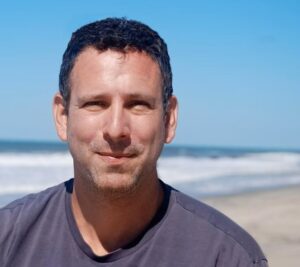
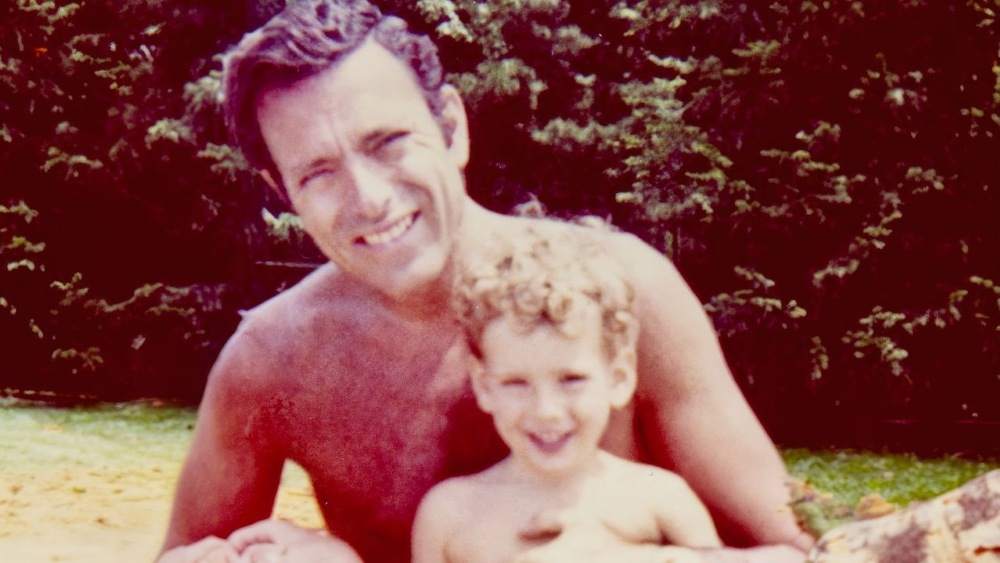
In his documentary “Death & Taxes,” veteran filmmaker Justin Schein, a 1990 graduate of Johns Hopkins University, explores the federal estate tax through interviews with family members, including his late father, Harvey — a successful recording industry executive who strongly opposed the tax– as well as with political pundits, economists and academics.
The film, which also chronicles his father’s death, ultimately becomes a vehicle for Schein to reckon with a man he both admired and disagreed with.
Originally made in 2004, the documentary will be shown in partnership with Johns Hopkins University at the SNF Parkway Theatre, 5 W. North Avenue, next Tuesday night, May 12.
Following the screening, Schein and Ruth Braunstein, SNF Agora Institute professor of sociology and author of the 2025 book “My Tax Dollars” (Princton University Press), will discuss issues such as wealth and inequality.
Jmore recently spoke with Schein about the film and the upcoming screening.
How did this ‘Death & Taxes’ come about?
As a filmmaker, I was trying to figure out how to combine this personal story about my dad’s death and this political issue [of taxation]. People ask, is it a film about family or is it a film about taxes? I’m not sure yet.
I think in some ways, the tax story gave me a reason to broach this issue of my relationship with my dad. He’s such an interesting [person] and such a wonderful character because not only was he difficult, but he could be really reflective. You really see that at the end of the film.
I didn’t start this to make a film about taxes. Actually, a lot of the footage was shot in the ‘90s when I was interested in exploring my parents’ relationship, and it kind of became about taxes when my mother put her foot down and decided not to move to Florida with him. He refused to compromise because that jeopardized his estate plan.
So your father wanted to move for financial reasons, and your mother didn’t?
Yeah. She did it for a while, and then eventually said, ‘I’m a New Yorker and I don’t want to spend the last years of my life taking care of [her husband],’ who was becoming difficult. She wanted to be in New York dancing, and she still is. She’s going to be 90 this summer.
Where did you grow up?
I grew up in New York City on the mean streets of the Upper East Side, as I like to say. It was a different time in the ‘70s and early ‘80s. My parents wanted us to be part of the diversity of the city.
There’s a moment in the film where I’m driving to school on Park Avenue and we go straight through Harlem, and I realized that between one block and the next it was a completely different world. That made me want to ask questions about why that was the case.
You went to Hopkins. What was that experience like?
I loved Hopkins. It took me a little time to get used to Baltimore and find my people, but it really grew on me. There were so many great teachers.
I tried to start a newspaper, made films. Baltimore is such a quirky, interesting place.
Did you study film there?
No, they didn’t have that back then. I think it was probably for the best. I was forced to broaden my education — took humanities, critical theory — and learned to look at how stories are told and take them apart.
For me, documentary filmmaking is less about stating a thesis and more about asking questions. I’ve been doing it for nearly 35 years. I shoot documentaries for others and have made a handful of my own. The camera is like a passport; it lets you visit places and people you never otherwise would.
How did your father help shape this film?
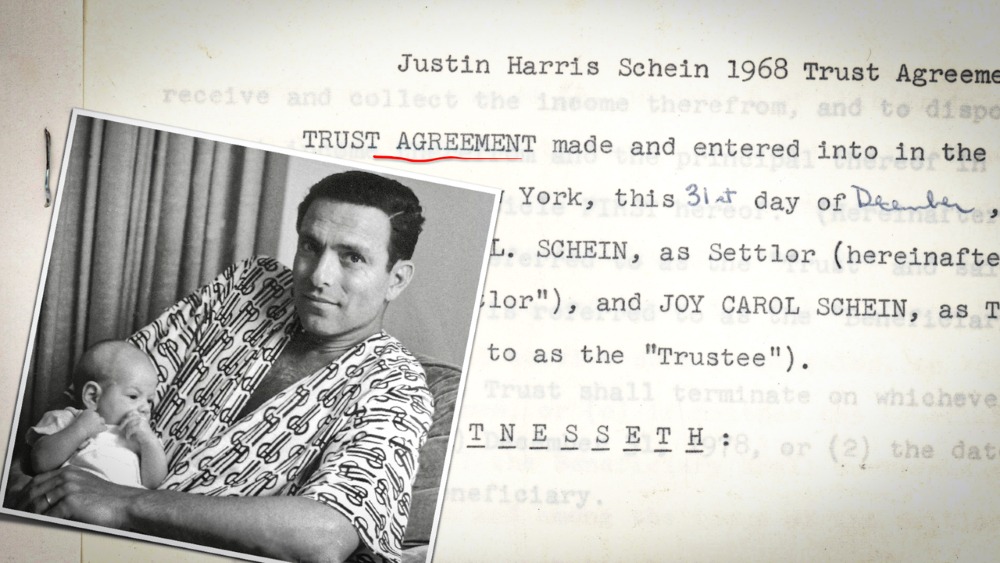
My dad was born in 1927, grew up poor in the Bronx, and that shaped him. He became very successful but as he got older, his focus shifted to holding on to what he had and passing it on.
That’s very human, and it was important for me to show that his motivations were good. But I also began to question what the well-off owe everyone else.
You initially set the film aside. What brought you back to it?
It wasn’t until 2017 — almost a decade after my dad passed — that I saw the possibility that the estate tax might be abolished altogether. I decided to investigate it and make a film.
I tried interviewing wealthy people about their estates, but no one would talk. It’s very private. So I returned to my family footage.
What was it like making something so personal?
It was difficult. I’ve made challenging films before, but nothing this personal. It was hard to talk about my own privilege and to portray my dad honestly while being fair to him and my family. But I feel it was worthwhile.
How has the film been received?
I finished it in 2004. It screened in festivals and theaters, and now we’re using it educationally, showing it in schools and universities to spark discussion about what we owe each other and why taxes matter.
Why do you think people are so resistant to paying taxes, especially at higher levels of wealth?
There’s a lot of psychology involved — a desire to hold on to what you have. For my dad, it was about his childhood and wanting security for his family, but also legacy.
At the same time, wealth now brings enormous power, especially politically. That’s where it becomes a problem for democracy.
What do you think your father would have said about the film in today’s political climate?
I think he would have appreciated the film. It’s really a love letter to him and my mom.
Even though we disagreed politically, we still loved and respected each other. That feels especially important now.
What role does your mother play in the story?
My mom really emerges as the hero. She stands up for herself and makes her own choices.
You now have two adult sons. How has being a parent influenced your perspective?
Having kids makes me understand my dad’s desire to protect and provide. But I also believe our job is to pass on more than financial security. We need to pass on a functioning society and democracy.
What values are you trying to pass on to your children?
Appreciating what you have, not taking things for granted, working hard, and questioning the world around you. My kids question me the same way I questioned my dad. That’s how it should be.
What are you working on now?
I’m developing a project about a basketball team of autistic young people. I’m also continuing to follow subjects from earlier films. There are always more stories to tell.
For information and tickets, click here.

This year’s Community Block Party at the JCC of Greater Baltimore will feature classic cars, giant inflatables, games, a rock-climbing wall and roller skating rink, and strolling entertainers.
For 35 years, the late Deborah Brodie, aka Bubbie Cookie, amassed a collection of over 200 Jewish ritual objects, which she used to teach her Hebrew school students with special needs.
In a recent talk at Beth Tfiloh, Elisha Wiesel called on Jews to cultivate joyfulness in their faith and sense of community.
Conceived by Columbia resident Benjamin Kintisch, "Life Review: The Hospice Musical" offers a thought-provoking and occasionally amusing perspective on mortality.