
Walking around town, I’ve grown accustomed to spotting graffiti expressing solidarity with the people of Gaza since the brutal Hamas attacks of Oct. 7, 2023. Usually, it’s scrawled on a lamppost, parking sign or wall, sometimes even on the sidewalk, declaring FREE GAZA or F**K The IDF.
We’re all allowed to have our political opinions, some of which I may or may not agree with. That’s America. (It’s also vandalism.)
But I do think we live in a time when sloganeering and snap judgments have taken precedence over deeper investigations of complex subjects, such as the Middle East conflict. Historical illiteracy is now so rampant that to brand it as “amnesia” would be misleading because it suggests people were historically knowledgeable in the first place.

Take, for instance, the Trump administration’s latest chapter in its cultural war against the Smithsonian Institution. Last weekend, the president issued an executive action ordering temporary exhibits or signage to be posted outside the National Museum of American History in D.C. The signs would warn visitors about the museum’s alleged “ideological capture” and “woke” extremist agenda in providing balanced, no-holds-barred views of our history.
In a recent report, the geniuses at the White House accused the museum’s leadership of foisting “a radical view of American history” on innocent, unsuspecting museumgoers.
This is all part of the administration’s ongoing battle against what most folks view as evenhanded narratives of history as researched and told by people who spend their professional lives steeped in this stuff.
In congressional hearings last week, NMAH Director Anthea M. Hartig attempted to explain to legislators that the Smithsonian’s work is based on “standards of scholarship, accuracy, independence and nonpartisanship. The museum does not take sides in America’s political debates. We preserve and document the evidence of American life in all of its breadth, so that the public can encounter the past and draw their own conclusions.”
But casting America in any kind of “negative light” has no place in federal institutions, argues the White House.
“It would benefit most Americans, especially parents bringing their children for a tour, if the Smithsonian’s flagship history museum had a label at every entrance that reads: ‘Warning: the exhibits in this museum were prepared by people who don’t want you to love your country,’” declares the executive order.
This is stupidity beyond measure. The Vietnam War era generation taught us that we can love our country even while challenging or criticizing the policies and actions of the present and past.
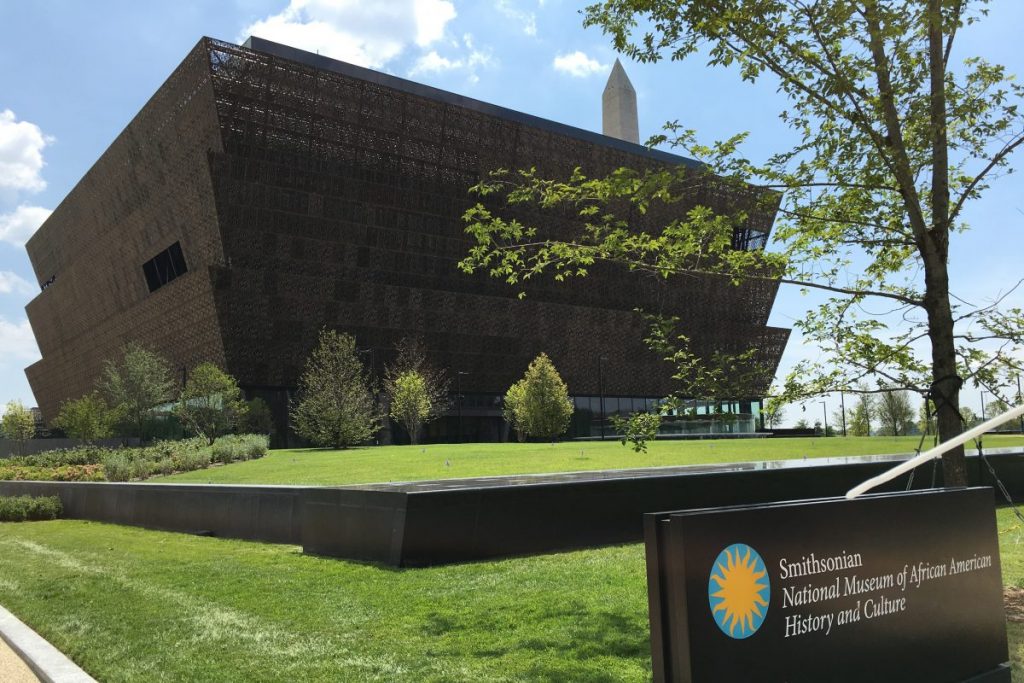
I recently went for the first time on a tour of the National Museum of African American History and Culture. For the past decade, this museum – nicknamed “the Blacksonian” — has featured groundbreaking and insightful exhibitions on African American culture, history and art.

Yes, as an unrepentant music nerd, I was thrilled to see Chuck Berry’s fire-engine red Cadillac convertible, Cab Calloway’s iconic zoot suit and Big Mama Thornton’s harmonica. But more essential was learning about the breadth and scope of the African American experience, from the earliest days of the slave trade and Middle Passage to Reconstruction to the Jim Crow era and civil rights movement.
Pointing out that the vast majority of signatories of the Declaration of Independence were slaveowners is not unpatriotic or “anti-American.” In fact, it’s an expression of our Americanness to be able to do so and what makes our country so special. Our historical narrative and national conversation should be strong and nuanced enough that we can discuss the good, the bad and the ugly without resorting to whitewashing, sanitizing or censorship.
How do we tell the history of the African American experience without discussing the cruelty of abducting and enslaving human beings and destroying families? How do we talk about the history of Native Americans without talking about displacement, broken treaties and acts of butchery?
I don’t agree with those who want to get across their political agendas by such illegal acts as defacing public monuments or tossing statues of Columbus into the Patapsco Basin, as we saw in July of 2020. But let’s let a consensus of historians tell us what went down in the eras and generations before us, not random mobs or political buffoons.
Years ago, I interviewed a frail, elderly Jewish World War II veteran who was among the first troops to liberate the concentration camps in Europe. When I asked him about the legacy of President Franklin D. Roosevelt during the Holocaust, he began weeping.
“I absolutely loved that man,” he said, “but it hurts me so much that he did so little to save our people during the Holocaust.”
Imagine if the current administration threatened the U.S. Holocaust Memorial Museum if it didn’t tone down, sugarcoat or remove a display on the lack of American military efforts and resolve to save European Jewry during the Shoah. There would be an outcry from our community, and rightly so.
We owe it to future generations to convey comprehensive, fair and accurate accounts of our nation’s history, warts and all. When it comes to history, Oscar Wilde said it best: “There is no sin except stupidity.”

The Orioles this season have proven that money can't buy happiness, writes Michael Olesker.

A recent experience reminded Editor-in-chief Alan Feiler of why we cannot allow the antisemites to make us cower and hide.

A Maimonides statue in the Spanish city of Córdoba was defaced last weekend, but his teachings have an answer to hate, writes Rabbi Jeffrey K. Salkin.

The narrative against Israel's legitimacy took years to build, writes Baltimore-based branding expert Sharon Nevins.