
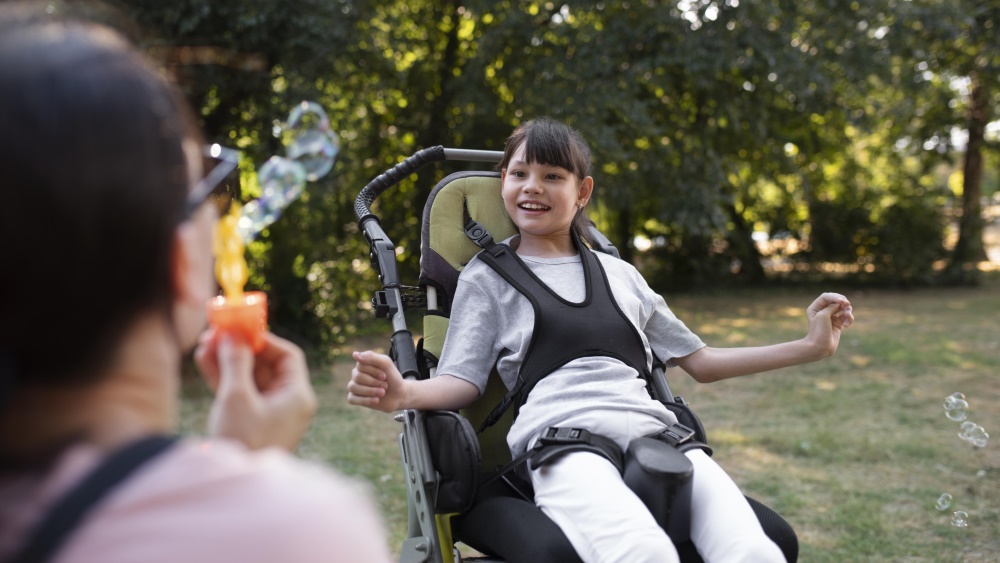
Check out the websites of most religious institutions these days and you’ll likely come across such phrases as “inclusive,” “welcoming” and “warm.” That’s because faith-based spaces intend not only to bring congregants closer to God but also provide them with a sense of community.
Yet despite the best of intentions, not everyone always feels welcome when attending a synagogue. In fact, studies show that Jews with disabilities and their families frequently feel unwelcome at synagogue services. As a result, they often avoid them.
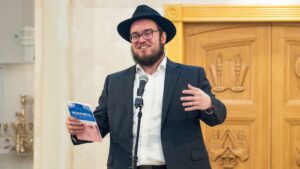
On Thursday, Sept. 7, the Faith Community Learning Collaborative of the Maryland Center for Developmental Disabilities at Kennedy Krieger Institute, and its co-sponsors, will present “Jewish Voices for Inclusion: Celebrating Our Dignified Differences.” The free program will explore the needs of disabled congregants and their families, as well as how synagogues can better meet those needs.
“Jewish Voices for Inclusion” will be held from 5:30 to 7 p.m. at the Ellicott City 50+ Center, at 9411 Frederick Rd.
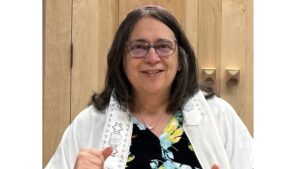
The event will feature a panel discussion with Howard County spiritual leaders including Rabbi Yanky Baron of Chabad of Ellicott City, Rabbi Craig H. Axler of Temple Isaiah in Fulton, and Rabbi Joanne Yocheved Heiligman of Columbia’s Bet Chaverim Congregation.
Also slated to participate in the discussion are Dr. Mirian Ofonedu, a local psychologist and disabilities advocate, and Matthew Plantz, a board member of the Howard County Autism Society.
“Most synagogues are [Americans with Disabilities Act] compliant, but there’s a lot more than just ADA compliancy to providing a welcoming atmosphere and culture and support for these families,” said Rabbi Baron. “Realizing that families are doing so much already to support an individual with disabilities, we should assist in trying to find out what accommodations, what can we do, to make it more welcoming of a space for them. We need to have conversations with these families.”
In addition to being a panelist, Rabbi Baron is a member/ambassador of Kennedy Krieger’s Faith and Disability Collaborative. The group was created in 2020 to increase awareness among faith leaders of the challenges faced by individuals with intellectual and developmental disabilities and mental illness.
Participants also receive guidance on how to address those challenges and reduce the stigma associated with mental illness and disabilities. Collaborative partners include the Kennedy Krieger Institute, Chabad of Ellicott City, the Friendship Circle of Howard County, the Maryland Developmental Disabilities Council, the Howard County Autism Society, and the Howard County Office on Aging and Independence.
Rabbi Baron said he hopes the Sept. 7 program will be as “enlightening” and “inspiring” for attendees and participants. He said hearing the stories of collaborative members who are parents and grandparents of children with disabilities opened his own eyes to concerns he might not have considered prior to his participation with the group.
“They spoke about children with neurodiversity, with sensory issues, autism,” he said. “When they act out in synagogue or in a faith space, the other people who are part of the service have two options. They can get all upset [at the child or their parents] about disturbing the service, and that in turn affects the parents because then they don’t feel comfortable. [Or congregants can] realize that as a faith community, it’s incumbent upon us to try to find ways to support the parents in a way that is comfortable for them. So it’s not just the parents coming in with the weight of the burden, but the community sharing that.”
Rabbi Baron said other discussions by collaborative members included a conversation about ending ableist assumptions that stigmatize neurodiverse children or grandchildren.
“It’s recognizing [that being] neurodiverse does not mean there’s something missing from this child,” he said. “An autistic child is a blessing from God, recognizing that this neurodiverse soul is a person created in the image of God and there’s something they have to offer.”

To accommodate the needs of all attendees with disabilities, the program will feature ASL interpretation; a live broadcast with closed captioning; and transportation upon request. Those requiring additional accommodations should contact Rabbi Baron at Rabbi@ChabadEllicottCity.com or 443-676-3837. A kosher dinner with vegan options will be served prior to the program.
For information or to request accommodations, visit chabadellicottcity.com/inclusion.
Duke Zimmerman and Lori Gale will talk at Towson University about their new book "People Get Ready" and the role played by Globe Posters in the civil rights movement.
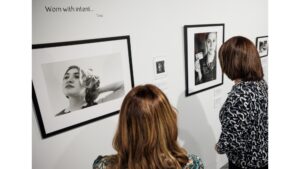
The new exhibition revisits and updates a previous show about ritual hair covering in the observant community.
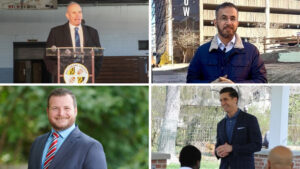
One of the most competitive local races for public office this political season is for Baltimore County Executive. Jmore recently spoke with four of the candidates about their views on how they hope to enhance life in the county.
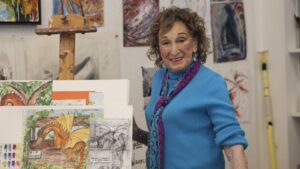
The Pikesville resident's latest offering "There's a Dragon in the Tree House and He Won't Come out!" was co-written with her grandsons.