
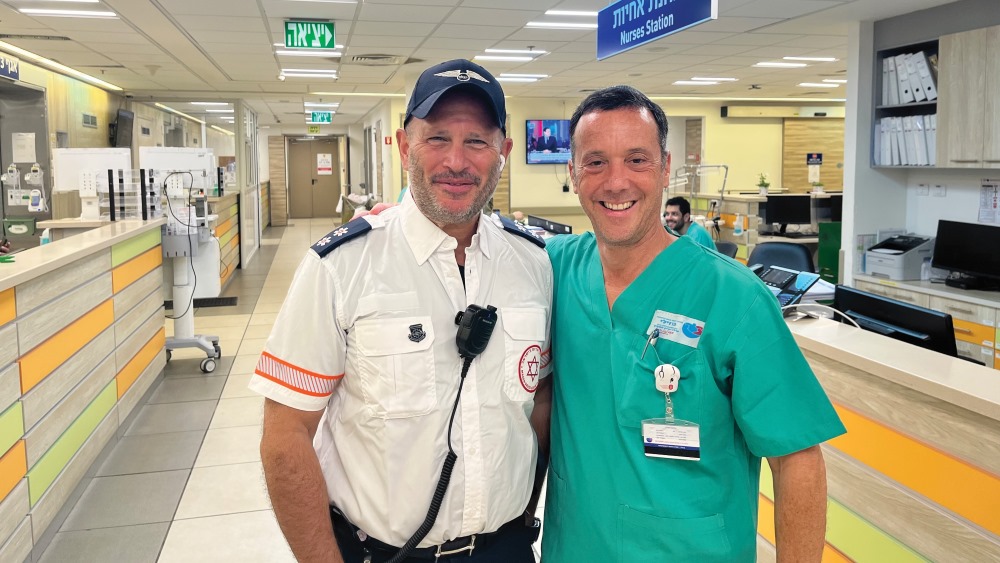
Since the terrorist attacks in Israel on Oct. 7, members of our community have stepped up in various ways to help with humanitarian needs in Israel and to address the new wave of antisemitism surging in our country. Although there are a number of amazing stories, here are four people creating change.
Dr. Steven R. David
Since the hideous attack by Hamas on Oct. 7, many of us have been alarmed by the spread of anti-Israel rhetoric and the dramatic increase in antisemitism in the United States and elsewhere. These trends have been especially prevalent among younger Americans.
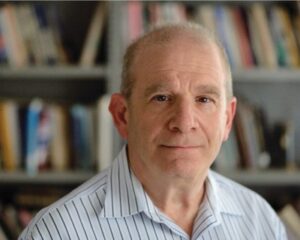
In an effort to set the record straight, Dr. Steven R. David, a professor at Johns Hopkins University who specializes in international relations and security studies, has been working with The Associated’s Jewish Library of Baltimore to bring his expertise in Middle East studies to local schools. So far, he has spoken with students at Garrison Forest School, Park School and Pikesville High School.
Dr. David says that most students seem to “welcome the opportunity to hear more about the conflict from someone who has a background in this area. I haven’t received any hostile questions. There have been some challenging questions, but you want that. People have been civil and respectful, and I think they are appreciative.”
While he recognizes he can’t provide a comprehensive history of the Middle East conflict in a 30-minute presentation, he does feel that he is making a difference.
“People have come back to me and said that I have changed their minds. At least I’m letting people know there is another side to the conflict, even if they’re not fully embracing it.”
Randi Buergenthal
Like many Jewish Baltimoreans, Randi Buergenthal woke up on the morning of Oct. 7 with no knowledge of the horrors that had just unfolded. And then she glanced down at her phone and saw a cryptic message on her WhatsApp.
“I am fine,” it said. “My family is fine. Ashkelon is not fine. I wish I was still with you.”
The message was from Noy Schwartz, the shinshin (Israeli emissary) that the Buergenthal family hosted in 2014. Since then, they had become close friends, and this past summer spent time together when Noy was visiting the United States.
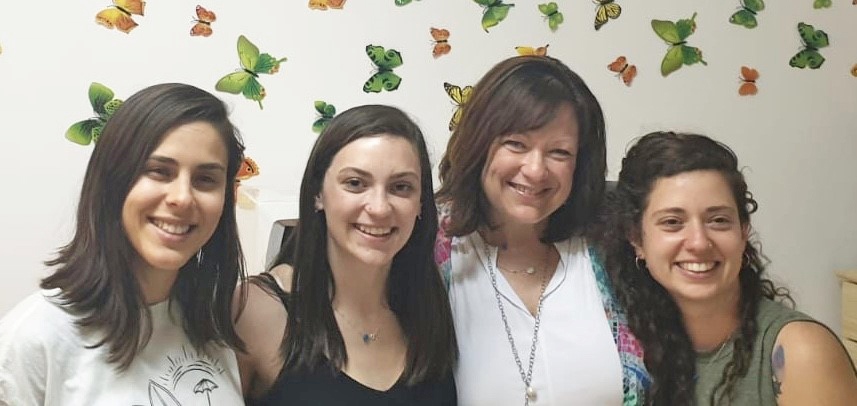
The Buergenthals also hosted Ronit Pinsky, another shinshin from Ashkelon in 2012.
Yet, on this day, something felt different. Scary. And when Randi turned on the news and learned about the horrific events that had just occurred in Israel, she was heartbroken.
Since Oct. 7, the Buergenthal family has been doing everything they can to be supportive. Just last month, at the request of Ronit’s husband, they helped coordinate the shipping of needed items to Israel for his unit. And when he asked if they would open their homes for Ronit, and their two-year-old daughter, Shira, until things were safe, Randi and her husband John didn’t hesitate. They said yes and are waiting for Ronit to work out the details.
The Buergenthals’ story is just one of many that other Baltimore host families have experienced; each doing whatever they can to be there for their extended family. And although each story is different, the enduring friendships created between the former shinshinim and their host families highlight the extraordinary bonds of this people-to-people program.
Karen Singer
When attorney Karen Singer started baking challahs in October of 2019, she admits she was not much of a baker. But after reading Dr. Beth Ricanati’s award-winning book “Braided: A Journey of 1,000 Challahs,” she was inspired to give it a try.
Karen never imagined her hobby would become a source of relief for Israelis exactly four years later, when the terrorist group Hamas brutally attacked civilians in the Jewish State.
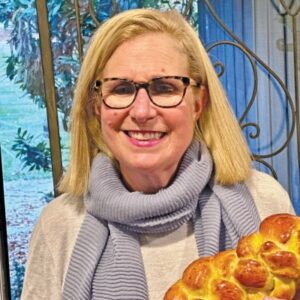
“After Oct. 7, I tried to think about how I could help people in Israel,” she says. “Then, I thought, what if I make challahs and give them to people in exchange for a $36 donation to the Israel relief organization of their choosing?”
That’s how Challah Hugs for Israel was born.
Since founding Challah Hugs for Israel, Karen has received orders for 240 challahs. She says most people who have ordered the homemade breads have donated to The Associated’s Israel Emergency Fund. While some donors have enjoyed their challahs themselves, others have chosen to donate their loaves to people in need.
During this challenging time, baking has brought comfort and community solidarity to Karen and her donors. “I’ve had people come and bake with me; I’ve taught others to make challah… it’s been so rewarding to bring a smile to someone’s face at a time like this.
Dr. Dov Frankel
On Oct. 7, Dr. Dov Frankel heard about the brutal terrorist attacks in Israel. Less than 24 hours later, he was looking to help out.
“I knew that they needed physicians,” he recalls. “So the first thing I did was sign up with Israel’s Ministry of Health.”
He soon heard from the Emergency Volunteer Project (EVP)* which sends volunteer teams to Israel during crises. They were coordinating physicians — and Dov, who is an ER doctor who also speaks Hebrew — was the perfect fit.
Soon, he found himself at the Barzilai Medical Center in Ashkelon, our partner city, where more than 20 years ago, he did his pediatric rotation in medical school.
Now, he was back. And for two weeks, he treated trauma patients while also experiencing hospitality even though approximately 30% of the Ashkelon residents had left after the attacks.
At the same time, recognizing that there was an abundance of needs in Israel, Dov volunteered in other capacities, from picking lemons at a fruit farm that lost many of its workers, to visiting Shiva homes in Jerusalem.
“Many Israelis told me how much they appreciate Americans lending their support and just being there,” he says. “So my message to you is you, don’t have to be a doctor to make a difference. Showing up and volunteering in any capacity, if you want to be there, is enough.”
* A portion of the money from The Associated’s Israel Emergency Campaign supported emergency personnel going to Israel through EVP during the war.
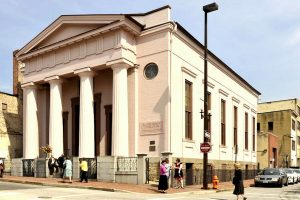
Reproductions of the murals, previously believed to have been lost, are now part of the Jewish Museum of Maryland's new permanent exhibition.
The donation will be directed to help foster research conducted by faculty at the University of Maryland School of Medicine and to advance innovative treatments.
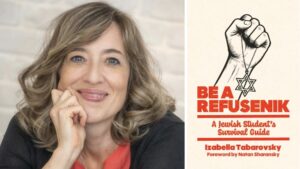
Scholar Izabella Tabarovsky will speak at the “Generations of Courage” program on Apr. 26 at The Associated's Goldsmith campus.
A Baltimore native and Pikesville resident, Freedman had the distinction of being the longest-serving employee in the history of the State of Maryland.