
Norman Jewison always maintained he got the job directing “Fiddler on the Roof” because the geniuses producing that beloved 1971 film looked at his last name and assumed he was Jewish.
“What if I told you I’m a goy?” Jewison told them.
He got the job anyway. The movie was marvelous and heartwarming, whatever religion followed by Jewison or by fans who made it an enormous hit.
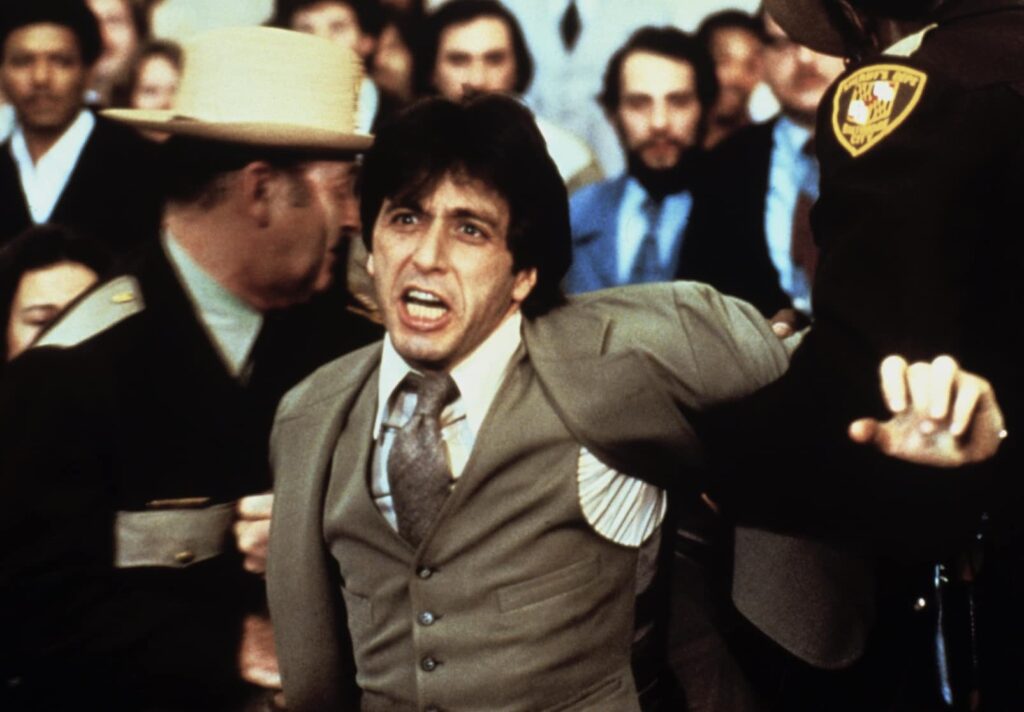
And when Jewison died the other day at age 97, “Fiddler” was part of a long roster of terrific films he directed, including “In the Heat of the Night,” “Jesus Christ Superstar,” “The Russians Are Coming, The Russians Are Coming,” “Moonstruck,” “The Thomas Crown Affair,” “The Hurricane” and a pretty good 1979 movie he shot here in Baltimore called “… And Justice for All,” which was co-written by a young Barry Levinson and Valerie Curtin.
Not to mention, it led to a moment of embarrassment for me nearly as big as those producers who thought Jewison must naturally be Jewish.
As the cast and crew for “… And Justice for All” gathered here, I was sitting in a courtroom at the Clarence Mitchell Jr. Courthouse on Calvert Street, covering the criminal trial of a high-ranking Baltimore police colonel charged with drug trafficking.
I was reporting for The Sun. I was sitting next to Ron Matz, who was then working for WFBR radio. As we sat there listening to testimony, suddenly there appeared in the courtroom doorway a diminutive, disheveled man who seemed to be a homeless person.
“You know who that is, don’t you?” Matz whispered to me, pointing to the guy in the doorway.
“Some poor soul who’s down and out,” I said.
The courtroom was big, and Matz and I were a good 25 yards from the doorway.
“Nope,” said Matz. “It’s Al Pacino.”
“Get outta here,” I said.
But it was.
In “… And Justice for All,” the great actor played an attorney who was coming emotionally unraveled. He’d come to this real-life courtroom to get a feel for a typical morning in the world of law. Why he was dressed as if he’d spent the night sleeping over an open grate, well, that was a little unclear.
Some said he was getting into character as the unstable attorney. Others who got to know him in the weeks of shooting here said he tended to look off-screen as if he’d dressed in the dark.
Of small incident, I had a tiny role in that movie. The day after Pacino’s courtroom appearance, I got a call from Jerry Levin. He was my 10th grade English teacher at City College, but he’d gone into business as a casting director here with Martha Royale.
“I want you for a scene in the Pacino movie,” Levin said. “There’s a prison riot, and a bunch of reporters gather outside the Maryland Penitentiary to cover it. We’re shooting it right here on location.”
“What do you want me to play?” I asked.
“A reporter,” said Levin.
“I don’t want to get typecast,” I said.
But I couldn’t pass up the shot at glamour. So on a frigid night outside the penitentiary, I joined about half a dozen other local reporters, including Don Scott from WJZ, Matt Seiden and Fraser Smith from The Sun, and Bob Blatchley from WBAL radio.
I was told to wear a coat and tie. I wore my brown corduroy sports coat. We shot the scene and shot it again. And again, and again.
It took a couple of hours for a scene that lasted a couple of seconds in the final cut. If you see the movie, look for a quick glimpse of my corduroy sports coat. I get all dressed up in a coat and tie, and that’s it for me.
Pacino gets most of the good scenes — no matter how he’s dressed.
A former Baltimore Sun columnist and WJZ-TV commentator, Michael Olesker is the author of six books, including “Journeys to the Heart of Baltimore” (Johns Hopkins University Press) and “Michael Olesker’s Baltimore: If You Live Here, You’re Home” (Johns Hopkins University Press).

Jmore Publisher Scott Rifkin, M.D., reacts to President Donald Trump's latest poll numbers and the real force behind the growing decline of the Trump movement.

Last weekend's Flower Mart once again demonstrated that there's nothing to fear about downtown Baltimore, writes Michael Olesker.

A junior at Roland Park Country School, Katie Grossman writes about a recent experience that spurred her to take action to fight antisemitism.
At a time when many Jews fear appearing Jewish in public, seeing Judaism depicted correctly onscreen is reassuring, writes Jewish content creator Rabbi Yael Buechler.