
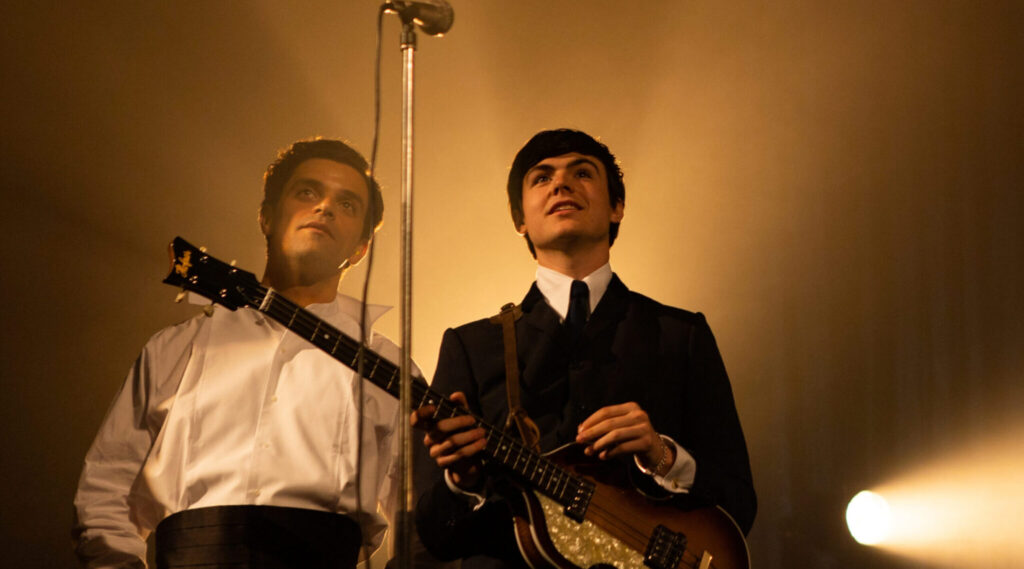
In “Midas Man,” the new biopic about the late Beatles manager Brian Epstein, an early, pivotal scene is set in a synagogue. In the scene, Brian, portrayed by British actor Jacob Fortune-Lloyd, sits in the pews of a Liverpool shul with his parents, Harry and Queenie, after services are over, with each man wearing a kippah and tallit.
They discuss Brian’s longing to be in the music business, leading an initially skeptical Harry to allow his son to sell rock and pop records as an annex to the family’s furniture and retail business.
The success of this side venture ultimately propelled Brian to become manager of a scruffy, working-class local band – known as The Beatles — and the Jew most closely associated with the phenomenon known as “Beatlemania” (along with disc jockey Murray the K, “A Hard Day’s Night” and “Help!” director Richard Lester, impresario Sid Bernstein and music publisher Dick James).
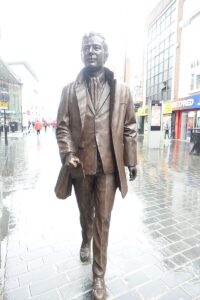
Over the years, Epstein — sometimes branded “the Fifth Beatle” because of his tireless promotion and rebranding of the band — has been the subject of multiple books and, more recently, a statue in Liverpool.
“Midas Man,” now streaming on the platform Olyn, is the first film that makes him the center of attention.
While the movie spent the last several months on the Jewish film festival circuit, Epstein’s Jewishness is not the focus of “Midas Man.” It deals more with Epstein being a closeted gay man, his career, and his complex relationships with the Beatles and his own family.
“In ‘Midas Man,’ we get glimpses of Epstein’s secret gay life in Liverpool (picking up men in the middle of the night at isolated cruising spots, at one point engaging a mugger who threatens to blackmail him),” wrote Owen Gleiberman for Variety. “And we see how uncomfortable the dawning awareness of his secret side makes his traditional Jewish parents, the adoring Queenie (Emily Watson) and the sternly resentful Harry (Eddie Marsan).”
But there are snippets of Epstein’s Jewish story in “Midas Man.” In one scene during the wedding of Epstein’s brother, non-Jewish English singer Cilla Black (Darci Shaw) praises the “food and dancing” at the simcha and suggests she’d like to have a Jewish wedding herself for that reason alone.
Later, we see Harry’s funeral, where the cantor chants the prayers and mourners perform the traditional rending of garments. At another point in the film, Epstein meets his future business partner Nat Weiss (played by James Corrigan). They toast “L’Chaim!” to each other, and Weiss addresses Epstein as “boychick.”
Brigit Grant, the film’s Jewish co-screenwriter, wrote for the British publication The Jewish News last fall about how Epstein was born on Yom Kippur in 1934 and his paternal grandfather Isaac was a Yiddish-speaking refugee from Lithuania. She also wrote she learned from an uncle that when Epstein prepared for his bar mitzvah, he initially studied the wrong Torah portion but learned quickly enough to give a “very competent” reading of the correct haftarah.
Epstein also sought out Yom Kippur services while on the road with The Beatles and resisted entreaties to change his Jewish-sounding surname, she wrote.
The film’s synagogue scenes, Grant wrote, were shot at Liverpool’s Princes Road Synagogue, since the actual Greenbank Drive Synagogue that hosted Epstein’s bar mitzvah and funeral no longer exists. In addition, Marsan wore Grant’s late father’s tallit in the film.
Fortune-Lloyd, who plays Epstein, is Jewish. Watson is not and neither is Marsan, although he’s played several Jewish characters throughout his career, including as Mitch Winehouse, father of Amy Winehouse, in last year’s biopic “Back to Black.”
In 2021, Marsan played an anti-fascist Jewish character in the BBC series “Ridley Road” and faced what he characterized as “relentless” abuse. “All I did was play a Jew, I dread to think what would’ve happened if I was actually Jewish,” he tweeted at the time, according to contemporaneous reports.
Despite the omissions of Epstein’s religious affiliation and upbringing, the Jewish elements of “Midas Man” are far more prominent than the music composed by his most famous clients, The Beatles. Variety recently reported on what it called the “nightmare production” of the film, which dragged on for years, had three different directors at various times, and was plagued by long-term uncertainty over whether the film would be allowed to use the celebrated music of the Fab Four.
It ended up being able to use covers that the band performed, such as “Money (That’s What I Want),” “Please Mr. Postman,” and the bolero song “Besame Mucho.” There are no original Lennon-McCartney compositions, although there are a couple of scenes where a character mentions that a certain song just hit number one on the charts
The movie depicts the scenes before and after the Beatles’ famous 1964 debut on “The Ed Sullivan Show,” with Jay Leno playing the TV host and impresario, but not the actual performance.
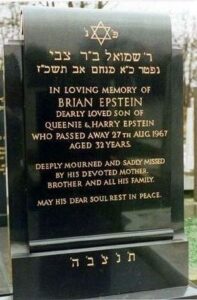
Epstein died of an accidental overdose at age 32 on Aug. 27, 1967, only six weeks after his father’s passing. Brian Epstein had both a funeral in Liverpool — famously officiated by a Rabbi Norman Solomon (who didn’t know him and disparaged him in the eulogy) — and a London memorial service attended by the Beatles and officiated by Rabbi Louis Jacobs at the New London Synagogue.
But the film shows neither service. The final image we see of Epstein is of him walking symbolically across the iconic Abbey Road crosswalk before a title informs viewers of his sudden and untimely death. It’s a rather quiet, sad ending for the man who launched a million screams.
Stephen Silver is a Philadelphia-based freelance writer. This article first appeared on the JTA news and media source.
Jmore staff contributed to this report.
"Seeing the Essential" will showcase more than 100 art works collected for six decades by the local Jewish community philanthropists.

Many of this year's new children's books for Passover portray the holiday theme of opening one's seder table to guests.
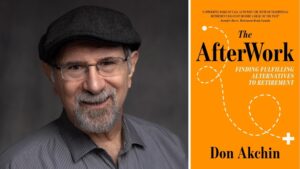
With his new book "The AfterWork," Akchin explores finding fulfilment and meaning after concluding one's professional career.

Kicking off the 38th William and Irene Weinberg Family Baltimore Jewish Film Festival will be the Israeli comedy-drama "The Ring."