

Maimonides, the 12th century philosopher and legal scholar, famously proposed a “ladder of tzedakah” model through which we might aspire to higher and better methods for supporting the poor.
Years ago, I learned the hard way why Maimonides placed the precept “When both donor and recipient know one another, but the gift precedes the request,” at only level 5 of 8 (with 1 being the highest).
There was a man from our neighborhood; let’s call him “Steven.” He was about 50, African American and a double amputee, relying on an electric wheelchair to maneuver Baltimore’s cracked sidewalks and sometimes insurmountable curbs.
Steven did some odd jobs for me, and I paid him for his trouble. They weren’t things I necessarily needed done, but I was happy to provide some modest support. When he came by or we bumped into each other around the community, we would talk about his life, which had been challenging to say the least, including struggles as a young man to escape gang life and the drug trade, mental illness and family drama.
At the time, Beth Am was renting swing office space near Johns Hopkins University during a construction project to allow our administrative and programming staff to return to Reservoir Hill. Steven lived in a high-rise, low-income housing development on the north side of the neighborhood. Druid Park Lake Drive sported a new temp-to-perm protected cycle track which made it more possible for Steven to wheel himself west to east across the 28th Street Bridge. So I suggested he and I meet one day in the middle, at the R. House food hall in Remington. R. House was fairly new but already a gathering place for a cross-section of Baltimoreans.
Steven agreed to let me take him to lunch. If you’ve been to R House, you know the food is pricey, but I was more than happy to treat Steven to a nice meal. I walked from Charles Street and met him at the front entrance so I could help with the door.
Rolling in, Steven scrutinized the scene of the buzzing urban food hall. I gestured with a sweeping hand motion and asked, “What are you in the mood for?” If I’m being honest, I felt a bit too magnanimous for my own good. Steven said, “Do they have burgers?” I gladly obliged, though I’m sure it was the first time I paid for a bacon cheeseburger since I started keeping kosher back in 1999.
I took out my credit card and paid for the meal. A few minutes later we were seated at a table, Steven with his burger and me with a vegetarian Korean bowl from a different stall. I asked him how the food tasted. He replied, “Just fine,” but I could tell something was wrong. “Are you sure?”
He paused and then spoke. “This burger cost $15.” I told him not to worry; I was happy to pay for it. But I completely missed his point. He wasn’t embarrassed I spent so much money. He was upset that I had wasted it.
“Do you know I could buy a family-sized tray pack of chicken from Save A Lot for that kind of money! Why would anyone spend $15 for a burger?”
He ate the meal, but it was clear he wasn’t really able to enjoy it. Later that week, I went to the grocery store with a shopping list Steven provided. I bought him a number of staples and a large package of chicken he could freeze.
Maimonides understood the danger of providing without being asked. Sure, in some ways it’s better than putting people in the position to beg. But it also creates a situation where the giver assumes he knows better what the recipient wants or needs. Jewish tradition has a rich literature on tzedakah, including the times and reasons it is sometimes best to provide direct charitable gifts and the ways we might also give to a blind fund to support people suffering from hunger or homelessness to provide sustainable solutions.
The highest level of giving is to provide resource development, helping someone to become self-sufficient. I tried to do that by paying Steven for the yardwork. But after our ill-fated lunch, our relationship never quite recovered. He was embarrassed. I was embarrassed. Eventually, we parted ways.
But I learned an important lesson that day: To give is a holy thing, and when we do, we must strive to give in a way that others can receive. We should take care not to step down on the ladder of tzedakah while stepping up for those in need.
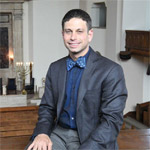
Rabbi Daniel Cotzin Burg is spiritual leader of Beth Am Synagogue in Reservoir Hill. This column and others also can be found on his blog, The Urban Rabbi.

A lifelong Orioles fan, Jmore Publisher Scott Rifkin, M.D., shares a message to Orioles owner David Rubenstein.
Attorney and Barry Levinson confidante Donald Saiontz left his mark on the world, writes Michael Olesker.

When we create a world with a warm and loving connection, even when someone beloved is gone, that relationship is carried on, writes Pamela R. Weissman.

The Orioles this season have proven that money can't buy happiness, writes Michael Olesker.