
During a recent Major League Baseball game, five players, both managers and a bench coach were thrown out for fighting. Throughout the game, there were three bench-clearing confrontations as both teams charged out of their dugouts to spar with each other.
Pitchers on both teams continued to throw pitches at the heads of the other team’s batters. And what is the penalty, besides being ejected from the game? A fine usually in the lower tens of thousands of dollars and suspension for a couple of games. Or if more severe, a couple of weeks.
The biggest losers in all this are the millions of people subjected to watching such violent shenanigans over and over again.
During televised National Football League games, cameras often catch players taking cheap shots at the other team’s players, hoping to inflict pain and injury. And what is the penalty for this unnecessary roughness? A 15-yard penalty for the guilty athlete’s team and maybe a fine, again in the tens of thousands. These fines are a joke because most professional athletes make millions of dollars annually. So until something changes, there’s no real importance or urgency for accountability.
No one can argue that violence in our country is a major problem. And most intelligent people, as well as “the experts,” acknowledge there is no one answer to resolve our violence problem.
But maybe professional sports can help. Maybe professional sports can lead the way.
Sports are an enormous part of American culture. We play sports as kids and emulate our sports heroes. We watch sports with our families. We share our passion with strangers whom are fellow fans of our favorite teams. We allow ourselves to experience the pros and cons of winning and losing.
Sports are in our hearts. We bleed the colors of our favorite teams.
As kids, we played tackle football in our neighborhoods without protective gear. Amazingly, no one usually got seriously hurt — just the normal bumps, scratches and bruises. No one wanted to intentionally hurt anybody. But that was a different era.
Sometimes, it feels like 200 years ago when I played high school football. I was also fortunate to play Division I baseball in college. Back in the day, even at the collegiate level, nothing seemed to be too serious. Losing just meant turning the page and doing better next time. There was a healthy level of respect for your competition. Even when the testosterone was flaring up, the “muscleheads” showed respect toward each other.
But somewhere along the way, our competitiveness has gone way overboard. Winning became too important, and losing became associated with failure. The old adage, “It’s the effort that counts,” is still very true, but it’s much less glorified.
It really seems our world is becoming meaner by the day. Unfortunately, sports have been part of the problem by not having accountability. Trying to injure other athletes is evil. By not properly punishing these misguided individuals is enhancing the fact that we are accepting this behavior. Since we’re now part of the ever-growing Information Age, every good or bad action is grossly overexposed. So when our adolescents repeatedly see sports violence on their cellphones, what should we expect?
We need the professional sports world to set a high standard for how to deal with negative behavior. Kids look up to professional athletes. And for the most part, these athletes set a good example. But there’s always going to be a few jerks out there, and whatever they do (or don’t do) the world will know about it in just a few minutes.
So here’s the rule: When an athlete deliberately hurts another athlete to the extent that the injured athlete can’t perform and has to sit out while their injuries heal, the offending athlete should also sit out until the injured athlete returns. And if an injured athlete’s career ends because of the injury, the offending athlete’s career is over, too.
Do you want to see violence in sports end quickly? Just institute this one simple rule. And here’s one more thought: If you think this rule is too extreme, you’re probably part of the problem, not the solution.
When our kids and adults start to see consequences for their actions, and those consequences affect something they love, there’s a pretty good chance they will think before they act.
And that’s all you can ask for.
Also see: The Art of Being a Good Sport
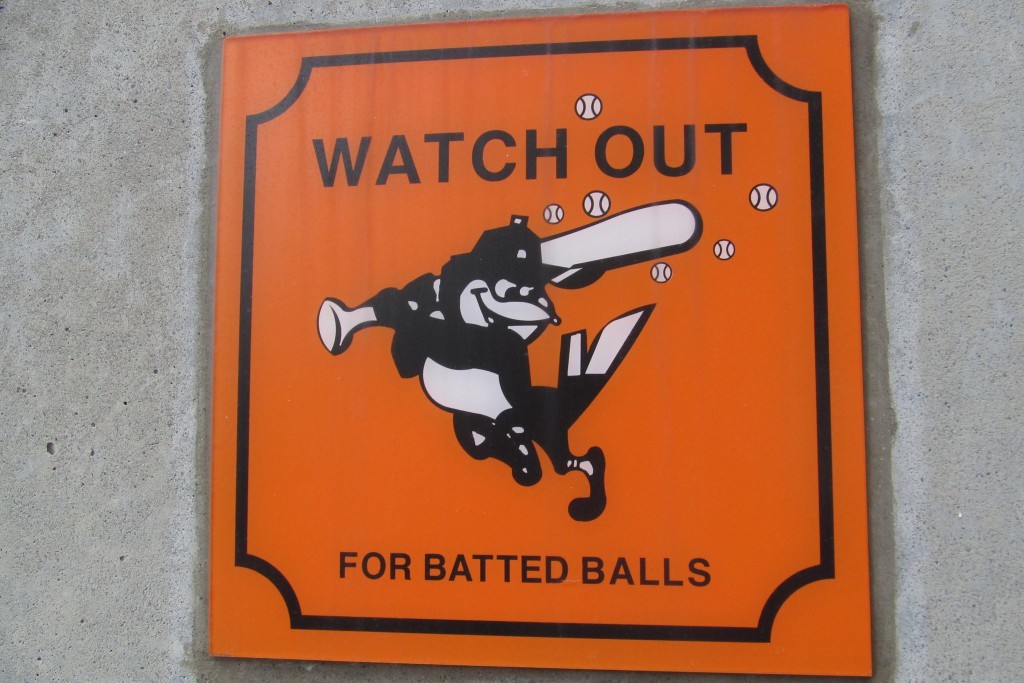
Top photo: Watch out for Batted Balls at Oriole Park at Camden Yards in 2014. (Photo by Doug Kerr, Flickr)

A former businessman with an extensive background in community service, Charlie Levine is founder and executive director of the Team Up For 1 Foundation, a nonprofit that connects children with challenges to the experience of team sports. He is also former executive director of Friends of the Israel Defense Forces.

Jmore Publisher Scott Rifkin, M.D., reacts to President Donald Trump's latest poll numbers and the real force behind the growing decline of the Trump movement.

Last weekend's Flower Mart once again demonstrated that there's nothing to fear about downtown Baltimore, writes Michael Olesker.

A junior at Roland Park Country School, Katie Grossman writes about a recent experience that spurred her to take action to fight antisemitism.

At a time when many Jews fear appearing Jewish in public, seeing Judaism depicted correctly onscreen is reassuring, writes Jewish content creator Rabbi Yael Buechler.