
Leonard Harold Zeskind, a Baltimore-born, nationally known human rights activist and author who predicted the rise of white nationalism in the United States, died of pancreatic cancer on Apr. 15. The Kansas City, Missouri, resident was 75.
For more than four decades, Zeskind established a reputation as one of the nation’s most fervent watchdogs of white nationalist, anti-immigrant and anti-government extremist groups.
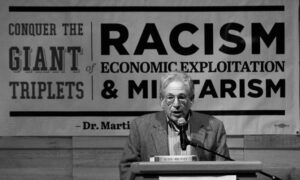
The son of Stanley and Shirley (Berman) Zeskind, Leonard Zeskin and his family moved from Baltimore to Miami, Florida, when he was 10. His parents ran a pension management business.
In interviews, he said he became interested in civil rights and activism at his bar mitzvah when a local NAACP president spoke at his synagogue.
While attending the University of Kansas, Zeskind was expelled for participating in protests against the Reserve Officers Training Corps during the Vietnam War. He worked for 13 years in the industrial sector before becoming a full-time community activist and human right advocate.
“In 1970, I started doing anti-racist work with impoverished working-class young white people who had previously been at odds with poor black people living virtually in the same neighborhood,” he said in an interview.
In 1983, Zeskind founded the Institute for Research and Education of Human Rights, a social justice and public affairs watchdog organization. He remained active with the group until his death.
From 1985 to 1994, he led the Center for Democratic Renewal, becoming well-known for his research into racist, antisemitic and extreme right-wing outfits.
In 1998, he was an honoree of the prestigious MacArthur Fellows Program, a prize awarded annually by the John D. and Catherine T. MacArthur Foundation to between 20-30 Americans working in any field who have shown “extraordinary originality and dedication in their creative pursuits and a marked capacity for self-direction.”
In the 1990s, Zeskind began investigating white supremacy groups, including the Ku Klux Klan and other racist groups.
“For a good Jewish boy, I’ve gone to more Klan rallies, neo-Nazi events and posse comitatus things than anybody should have to do,” Zeskind said in an interview
Zeskind was a lifetime member of the NAACP. He also served on the board of directors of the Kansas City Jewish Community Relations Bureau.
In 2009, Zeskind wrote the groundbreaking book “Blood and Politics” (Farrar, Straus and Giroux), about the history of xenophobia and white nationalism in American politics.
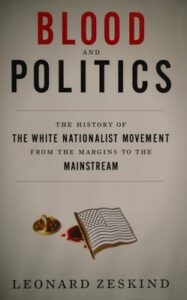
“Nobody knows more about the movements that spawned the alleged gunmen than Leonard Zeskind, who has spent most of a lifetime observing, analyzing and opposing racism and anti-Semitism in America and abroad,” wrote Joe Conason of Salon magazine in a review. “Now he has distilled those hard and dangerous decades of work into ‘Blood and Politics: The History of the White Nationalist Movement from the Margins to the Mainstream,’ a magisterial new book that explains how and why racial hatred became and remains a significant political force in American society.”
“Blood and Politics” was recently among the nearly 400 books removed from the library of the U.S. Naval Academy as part of the anti-DEI censorship endeavors of the U.S. Department of Defense.
“While he was touched to be included among such important banned writers, as always with Leonard, he never made it about him,” said Devon Burghart, president and executive director of the Institute for Research and Education of Human Rights. “For decades, Leonard had passionately warned of the white nationalist march from the margins to the mainstream.”
At a 2018 town hall meeting in Washington, D.C., organized by Rep. Jamie Raskin (D-Maryland) and Del. Eleanor Holmes Norton (D-Washington, D.C.), Zeskind said that President Trump was not responsible for the rise in white supremacy but a catalyst in its ascendancy.
“White supremacy and white privilege have been dominant elements of our society from the beginning,” he said. “It breeds a whole set of behaviors in people, and it should be deeply and widely discussed in every level of our society.”
In his final days, Zeskind remained undaunted and optimistic about overcoming racist, authoritarian and anti-immigrant sentiments, Burghart told National Public Radio.
“Rather than be pessimistic, he reminded me of a mantra he told me one of the first times we met over three decades ago: ‘Fighting fascism can be fun, and this is a great time to get to work and organize,’” Burghart said.
Zeskind is survived by his wife, Carol Smith, and his brother, Philip Zeskind.
Israeli-Americans Rachel Goldberg-Polin and Jon Polin talked about the pain of losing their 23-year-old son, who was kidnapped and later murdered in the Oct. 7th tragedy.
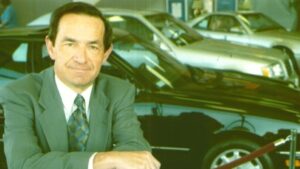
A committed philanthropist and community leader, Russel was president of R&H Motors.
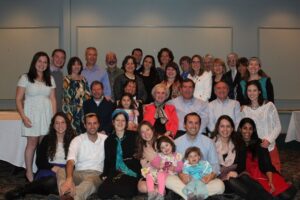
The mother of four was a native of Winchester, Virginia, who spent most of her life in Northwest Baltimore.

The remaining 6,000 members of the community are expected to immigrate by 2030.