

This week, we come to the 80th anniversary of the moment that Baltimorean Jacob Beser called the birth of “a new era in man’s inhumanity to his fellow man.”
It was Aug. 6, 1945, and Beser understood the date as well as any human being in history who wasn’t somewhere in Hiroshima when the first atomic bomb was dropped on that Japanese city.
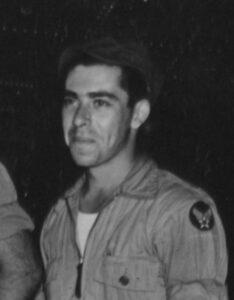
He knew because he was part of the B-29 Enola Gay crew that dropped the first bomb. Three days later, he became the only man in history on both atomic bomb runs when he flew with the crew of the Bock’s Car B-29 that pulverized Nagasaki.
In all, more than 200,000 people died in the two attacks. Many died instantly, many more in the following months, many from radiation sickness and related illnesses. Most of the victims were civilians.
Beser was right when he called those days the dawning of a new “inhumanity.”
And yet, to the end of his 71 years, in June of 1992, he defended the attacks, which effectively brought to a close the slaughter of World War II.
The war took the lives of millions — and would have taken many more lives, and months of intense fighting, if Allied troops had invaded Japan with standard weaponry instead of dropping the two atomic bombs.
The Japanese surrendered six days after the Nagasaki blast.
Eight decades later, the power of those days remains with us, newly heightened by this summer’s attacks on Iran’s nuclear power facilities and the knowledge that the bombs that leveled the two Japanese cities were puny compared to the damage that could be inflicted by today’s technology.
Beser was 24, a 1938 graduate of Baltimore City College studying engineering at Johns Hopkins University. He dropped out to join the army the day after the attack on Pearl Harbor.
He was the radar operator on the atomic bomb attacks. He called it “babysitting” electronic counter-measures available in the event that a radio signal could accidentally trigger the electronic part of the bombs’ fuses.
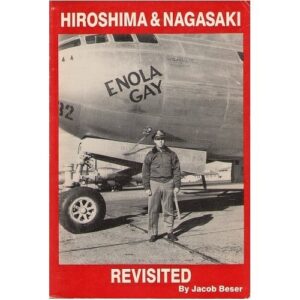
In his 1988 memoir, “Hiroshima & Nagasaki Revisited” (Global), Beser recalled, “When the bomb (called Little Boy) was dropped … it took like what seemed an eternity for it to function. … I was in the rear of the plane and not in line with any windows.
“After about 50 seconds, there was a flash of brilliant white light. Little Boy had done his job. … At the instant of explosion, crew member Bob Lewis exclaimed, ‘My God, look at that son of a bitch blow.'”
It was only then, Beser wrote, that commander Col. Paul Tibbets informed the crew “that what they had dropped and witnessed was the world’s first atomic bomb.”
Since Hiroshima and Nagasaki, the world’s military powers have so far managed never to drop another nuclear bomb in wartime.
Eighty years later, the power of those first two moments stays with us — hopefully, terrifying enough to keep anyone from using such power again.
A former Baltimore Sun columnist and WJZ-TV commentator, Michael Olesker is the author of six books, including “Journeys to the Heart of Baltimore” (Johns Hopkins University Press) and “Michael Olesker’s Baltimore: If You Live Here, You’re Home” (Johns Hopkins University).

Jmore Publisher Scott Rifkin, M.D., reacts to President Donald Trump's latest poll numbers and the real force behind the growing decline of the Trump movement.

Last weekend's Flower Mart once again demonstrated that there's nothing to fear about downtown Baltimore, writes Michael Olesker.

A junior at Roland Park Country School, Katie Grossman writes about a recent experience that spurred her to take action to fight antisemitism.

At a time when many Jews fear appearing Jewish in public, seeing Judaism depicted correctly onscreen is reassuring, writes Jewish content creator Rabbi Yael Buechler.