

By Rachel Emquies Sheff, with Sharon Gomperts
This story originally appeared on The Nosher.
Every Rosh Hashanah, my mother, Rica Bensabat, made a special and delicious simanim soup, which contained all the “simanim” (signs) — symbolic vegetables that are used in the Sephardic Rosh Hashanah seder.
Rooted in Kabbalah and with a clever play on the Aramaic names of the vegetables at the seder, Sephardim say blessings over these vegetables, which include butternut squash, zucchini and Swiss chard.
My mother and father were born in Larache, an ancient port city founded by the Phoenicians on the northwestern coast of Morocco. Providentially located where the Loukkos River meets the Atlantic Ocean, Larache is the most important city in the Tetouan-Tanger region of Morocco. Larache is also where my ancestors found refuge after the expulsion from Spain in 1492.
My paternal grandfather, Salomon Emquies, was the proprietor of a spice shop (so appropriate since Sharon and I are the Sephardic Spice Girls). My maternal grandfather, Moshe Bensabat, was the chief Rabbi of Larache. He was the mohel, the shochet and officiated at all the weddings.
One of the last wedding ceremonies that he performed before he made aliyah (emigrated to Israel) was that of my parents. Soon after, my parents moved to Casablanca, where my two older brothers and I were born.
When we emigrated to Los Angeles, my parents brought the jewelry that both sets of grandparents gifted my mother. They brought the menorah they had received as a wedding gift from her parents. And they brought with them the rich religious traditions of their childhood homes.
A treasured Spanish Moroccan custom, the simanim soup recipe has been handed down over generations. This soup includes apples for a “sweet year,” as well as beef cheek meat or beef neck bones, which symbolize the ram’s head and the fervent wish that we should be “the head and not the tail.”
In making this soup, my mother would soak the leeks and Swiss chard. She would peel the apple, carrots, sweet potatoes and turnip. She would patiently chop all the vegetables. Then everything would slowly simmer with the meat in a big pot.
After the brachot (blessings), my mother would serve this nutritious, flavorful soup as the first course of our meal, a tasty connection to the many generations that came before us, passing down the faith and the Mesorah (Oral Torah).
Over time, as more and more of my family became vegetarian, my mother started making this soup without meat. This year, I want to go back and make my mother’s original recipe. To accommodate all my guests, I will cook the meat cheeks separately in my pressure cooker, then the meat eaters can add it to their bowl of soup.
Notes:
- This recipe makes a very large pot, so you should have enough to serve this soup for two meals.
- Store soup in a tightly sealed container in the refrigerator for 5-7 days.
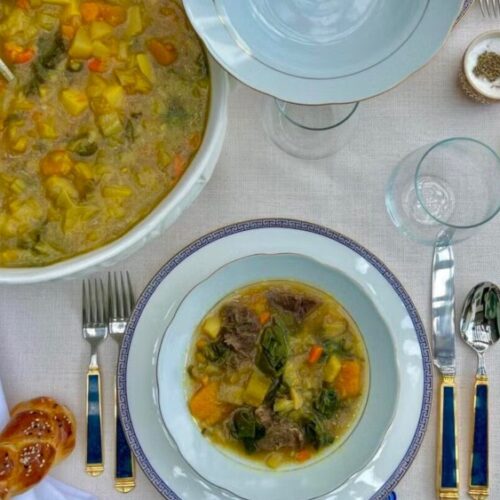
Simanim Soup
Ingredients
For the meat:
- 3–4 pounds cheek meat
- 1/4 cup olive oil
- 1 large onion, finely diced
- 2 bay leaves
- 1 teaspoon salt
- 1/2 teaspoon white pepper
- Pinch of saffron (optional)
- 1 cup water
For the soup:
- 1/4 cup olive oil
- 4 leeks, washed thoroughly and sliced thinly
- 1 bunch Swiss chard, with stem removed and chopped thinly
- 2 cups butternut squash, cubed (or acorn or Delicata squash)
- 1 large green apple or quince, peeled and cubed
- 2 large zucchini, peeled and diced
- 2 small sweet potatoes, peeled and cubed
- 4 medium Yukon gold potatoes, peeled and cubed
- 1 large turnip, peeled and cubed
- 4 celery stalks, diced
- 3 large carrots, peeled and diced
- 2 parsnip, peeled and diced
- 1/2 small cabbage, thinly sliced
- 2 Tablespoons chicken consommé powder
- 1/2 teaspoon white pepper
- 1 teaspoon turmeric
- Salt, to taste
Instructions
- For the meat: In a pressure cooker or large pot, add oil and warm over medium heat. Add onion and sauté for 5 minutes. Add meat, bay leaf and spices. Cook for 1 hour in a pressure cooker or until tender in the pot.
- For the soup: In a very large pot warm oil over medium heat, then add sliced leeks. Sauté for 5 minutes until they start to soften.
- Add all the ingredients, except Swiss chard, zucchini and butternut squash (set them aside).
- Pour enough water to cover the top of the vegetables. Bring to a boil, cover the pot then lower heat to medium and simmer vegetables for 1 hour.
- Add the zucchini and butternut squash. Simmer for another 30 minutes.
- Add the Swiss chard, continue to cook on a simmer for an additional 30 minutes. Taste and adjust seasoning.
Notes
- This recipe makes a very large pot, so you should have enough to serve this soup for two meals.
- Store soup in a tightly sealed container in the refrigerator for 5-7 days.

Sharon Gomperts and Rachel Emquies Sheff have been friends since high school. The Sephardic Spice Girls project has grown from their collaboration on events for the Sephardic Educational Center in Jerusalem. Follow them on Instagram @sephardicspicegirls and on Facebook at Sephardic Spice SEC Food. Website sephardicspicegirls.com/full-recipes

Stuffed vegetables invite creativity, but there are some "rules" when it comes to cooking. Vered Guttman shares six veggie-stuffing tips.

On this episode of "The Food Enthusiast," Dara Bunjon talks with Anne-Marie Bonneau, author of "The Zero-Waste Chef."

This roasted eggplant recipe from Elite Jakob is easy, quick and delicious, perfect as a side dish, for brunch or next to fish or chicken or meat dishes.

Dara Bunjon talks with wine aficionado Zena Polin, proprietor of Beauty Champagne and Sugar Boutique and co-host of the "When You Just Want a Glass of Wine" podcast.