
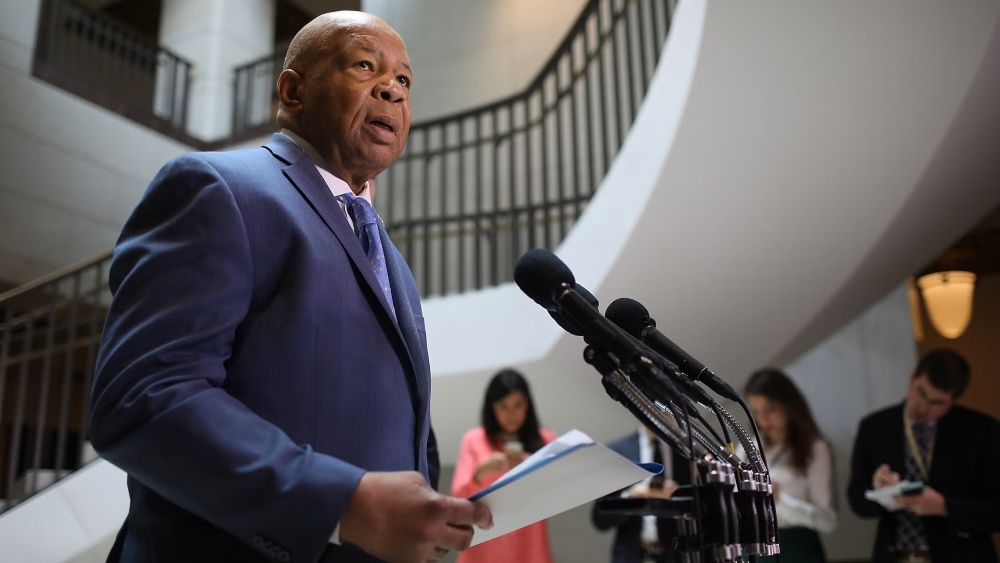
In late July, I had the honor of offering remarks at the renaming of a West Baltimore post office branch in memory of Rep. Elijah Cummings.
The event knitted together two aspects of my own life. I proudly serve on the board of trustees of the Elijah Cummings Youth Program, interviewing candidates for this life-changing annual leadership program. The congressman, who passed away in 2019, would sit in for each of those interviews and was personally invested in the growth of each young person in the program.
Today, my fellow trustees and I work to further the legacy of a storied Baltimorean and national leader (and my own congressman).
I am also the descendant of a U.S. Postal Service worker. My maternal grandfather, Harry Malk, worked nights for decades sorting mail in Chicago’s Main Post Office. When he retired at 72, the floor sagged from the sheer weight of all that mail.
The July event was joyous, attended by Rep. Kweisi Mfume (D-7th), Mayor Brandon Scott and other elected officials, ECYP fellows and Cummings family members. It was a celebration of Baltimore past, present and future.
One person who appears disinclined to celebrate American cities is President Donald Trump, who two weeks later announced he was deploying federal troops to Washington, D.C., to “reestablish law, order, and public safety.” The president also had some choice words for Baltimore, calling our city “so far gone.” But crime is substantially down in both the 7th District and Baltimore, where data-driven and community-based public safety efforts have succeeded in driving the homicide rate lower than it has been in a decade. You might wonder, what is the real goal of deploying troops in American cities?
All this reminded me of Congressman Cummings, who from his perch as House Oversight Committee chairman in 2019 vehemently challenged the first Trump administration’s immigration and border policies. For his trouble, the congressman was scolded by Trump when he called Cummings’ district (where I lived then and now) a “disgusting, rat and rodent infested mess.”
I’ll be the first to admit there are rats — big ones — in Baltimore. But of course, that wasn’t Trump’s point. This president has a long history of contempt for cities and neighborhoods he doesn’t like, a disdain expressed in thinly veiled racist language. On the other hand, January 6th rioters who imperiled law, order, safety and human lives in an attempted coup seem to elicit more compassion.
Trump’s approach to cities echoes a failed public safety strategy based on a theory called “Broken Windows,” which attempts to connect violent crime with disorder. Policies derived from this flawed theory saw thousands and thousands of innocent people (often young Black men) stopped, frisked and sometimes brutalized or even killed.
When the uprising began in Baltimore in April 2015, it was a response to the arrest, mortal injury and then death of Freddie Gray, a 25-year-old man chased, arrested and shackled in the back of a police van without a seatbelt. What was Gray’s presumed crime? He made eye contact with police — and then ran.
Author and journalist Malcolm Gladwell helped popularize “Broken Windows” and “Stop-and-Frisk” policies in his 2000 book “The Tipping Point.” Last year, Gladwell reexamined his previous assumption and offered a mea culpa. “I was wrong,” he said.
In my own writing, I have highlighted some similarities between the Jewish tikkun olam paradigm and “Broken Windows” theory. While I hardly think typical proponents of tikkun olam are likely to support these public safety solutions, both frameworks suggest brokenness and repair as a lens through which we might view the world in its challenges. It’s my contention that improvement, growth and fulfillment of our divine calling are better ways to foster necessary societal change. I call this takhlit olam, an alternative model based on the Genesis narrative from Torah.
Elijah Cummings was famous for saying, “Our children are the living messengers we send to a future we will never see.” The congressman understood that to believe things can get better is not simply to look to our next generation. Instead, he understood working for justice is insisting (with chutzpah) the future not only can but will be better than our current circumstances. “If you have built castles in the air,” said Thoreau, “your work need not be lost; that is where they should be. Now put the foundations under them,”
Trump is declaring war on cities like Washington and Baltimore, actions which may unmake much of the progress since “Broken Windows” was debunked. What can we do in response? Maybe we channel Elijah Cummings, vociferously challenging injustice and unfairness when we see it, while asserting with equal passion the very real possibilities of tomorrow. 
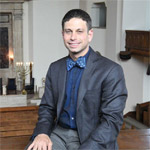
Rabbi Daniel Cotzin Burg is spiritual leader of Beth Am Synagogue in Reservoir Hill. This column and others also can be found on his blog, The Urban Rabbi.
A lifelong Orioles fan, Jmore Publisher Scott Rifkin, M.D., shares a message to Orioles owner David Rubenstein.
Attorney and Barry Levinson confidante Donald Saiontz left his mark on the world, writes Michael Olesker.

When we create a world with a warm and loving connection, even when someone beloved is gone, that relationship is carried on, writes Pamela R. Weissman.

The Orioles this season have proven that money can't buy happiness, writes Michael Olesker.