
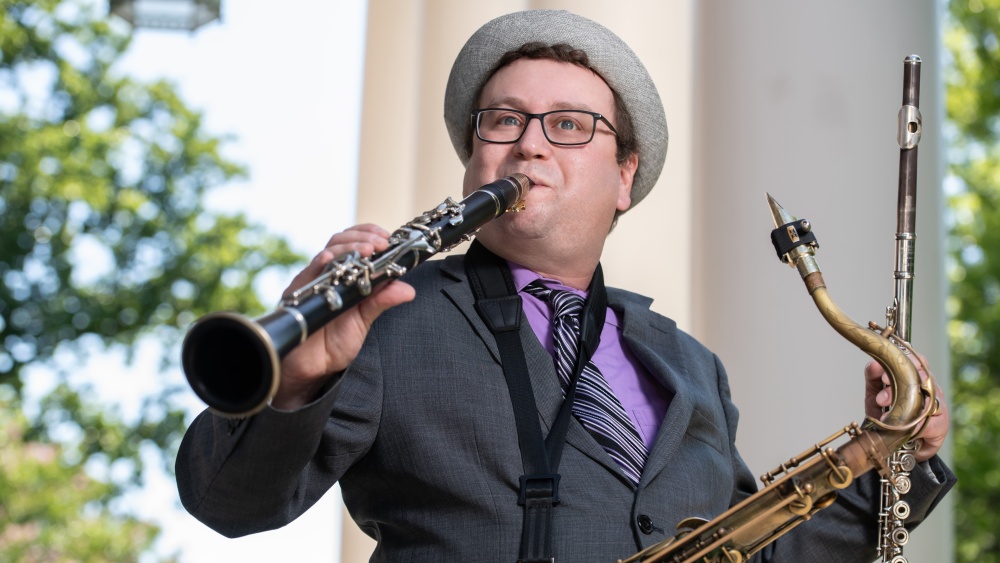
Seth Kibel is fond of a famous quote reportedly uttered by Duke Ellington. “There are simply two kinds of music,” said the legendary “Sir Duke,” “good music and the other kind.”
And according to Kibel, a veteran full-time musician who lives in Pikesville’s Sudbrook Park community, the genre known as Tin Pan Alley definitely falls into the “good music” category.
On Wednesday night, Jan. 7, Seth Kibel & Friends will present the show “The Jews of Tin Pan Alley” at Keystone Korner Baltimore, at 1350 Lancaster Street near Fells Point.
Once a physical location in Manhattan as well as a cultural construct, Tin Pan Alley influenced and dominated American music from the late 19th century to the middle of the 20th century. Among the best-known Tin Pan Alley songs are “Stardust,” “God Bless America,” “Take Me Out to the Ballgame” and “Happy Days Are Here Again.”
Kibel, a clarinet, flute and saxophone player, will be accompanied by vocalist Flo Anito, pianist Sean Lane, Bob Abbot on double bass, and drummer Joey Antico. (Last Saturday night, Dec. 20, Kibel performed at the annual Chanukah concert at An Die Musik, 409 N. Charles Street, with the Baltimore Klezmer All-Stars.)
Jmore recently caught up with Kibel, 51, a Yorktown Heights, New York, native and father of two, to talk about his passion for Tin Pan Alley.
How did this particular show come about?
I developed the show last year. We did it at the Edlavitch DC JCC, at the Washington Jewish Music Festival, and at Blues Alley in D.C. I’ve always loved the Great American Songbook and reinterpreting it. And I like doing theme shows and talking to the audience, giving them historical context and anecdotes.
I call it ‘edu-tainment.’
Edu-tainment?
I don’t like going to concerts where the performer only plays and doesn’t engage with the audience. A theme show allows me to talk and engage. I take my role as an entertainer seriously. Sometimes, there’s an aloofness with a performer and their audience. I don’t want to fall into that trap. I want to talk about the different genres and give context, and invite the audience into the music.
Have you performed at Keystone Korner before?
Yes, many times. It’s a very nice place with great acoustics and great staff, and good food, too. I did a Gershwin and Benny Goodman show there. This is the first time I’ve done this show there.
Why a show on Tin Pan Alley?
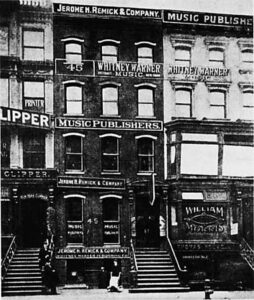
Tin Pan Alley was literally a block of [midtown] Manhattan. The name came from a feature article written by a Jewish writer named Monroe Rosenfeld about the noise levels of the music publishing companies on that block [around the turn of the 20th century]. There was no soundproofing in buildings back then, so you could walk down the street hearing 60 or 70 songwriters playing the piano at the same time. He said it sounded like the banging of tin pans in an alley.
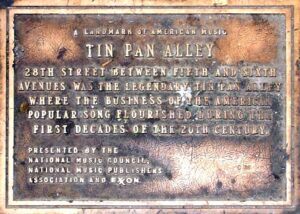
But it’s become a catchall term for popular song, and it’s some of the greatest music this country has ever produced. And most of its writers were Jewish.
These songs are timeless, and people are still recording them. You hear them everywhere, on TV and in movies. They’re now part of the American musical DNA.
But isn’t Tin Pan Alley associated with … schlock? Don’t its detractors consider the genre antiquated and rather corny?
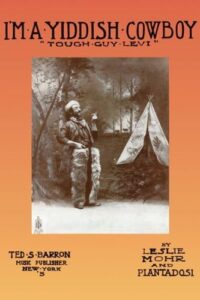
There was a lot of schlock and some terrible songs that came out of it. Plenty of offensive of songs as well, including ‘Heeb songs.’
But history is the ultimate critic for musical quality, and with every era there’s been good music and dreck. Over time, it’s the quality music that survives. What’s lasted for a hundred years will last another hundred years, while the others are forgotten.
Not all of the Tin Pan Alley songs were chart-toppers, but they have legs. Take ‘Blues Skies’ by Irving Berlin. That was a number one hit for Willie Nelson 50 years later. Harold Arlen’s ‘It’s Only a Paper Moon’ was from a Broadway show [‘The Great Magoo’] that closed after only 11 performances. But everyone knows that song.
How did Tin Pan Alley start and evolve?
In the decades following the Civil War, there was a rise of the American middle class. Every home had an upright spinet piano, and every child took piano lessons. Not everyone could play Bach or Chopin, but there was a great need for sheet music. In the 1890s, there was an insatiable demand for easy-to-play music – ragtime, the blues, Tin Pan Alley — and that’s when music first became big business.
What was the Jewish influence on Tin Pan Alley and American music in general?
We live in an era where music is very decentralized. But back during this time period, the entire music industry was situated in Manhattan — record companies, music publishing houses, radio stations, songwriters, artists. So there was a lot of cross-fertilization between Tin Pan Alley and Vaudeville and the Yiddish theater.
A lot of the Tin Pan Alley songwriters were brought up in Jewish homes with Jewish music. I don’t want to overstate it, but a lot of these songwriters had Jewish consciousness in their DNA. Jewish music is part of the American DNA, but it’s only one ingredient and part of the American musical tapestry.
Who are some of the best composers of that genre and era?
Obviously, people like Gershwin, Berlin, Arlen, Jerome Kern, Yip Harburg. But there’s also lesser-known people like Ann Ronell, who was born Ann Rosenblatt. She wrote a lot of great songs, including ‘Willow Weep for Me,’ but her biggest money-maker was ‘Who’s Afraid of the Big Bad Woolf?’ And Dorothy Fields, who later in her career wrote the musical ‘Sweet Charity.’
In the show, we highlight the songs that bridge the gap between Tin Pan Alley and Jewish music, like of course ‘Bei Mir Bistu Shein’ and ‘And the Angels Sing,’ which was a hit for Benny Goodman that had its roots in klezmer music.
Why were Jews so attracted to Tin Pan Alley?
One reason is that many professional and educational opportunities were shut off to Jews during that era. When Jewish parents saw their child had any musical talent, it was viewed as an avenue of escape from poverty. Parents actually encouraged careers in music because it was actually seen as a realistic path for success.
Also, whenever you have a marginalized group, arts and culture tend to be viewed as a potential future opportunity.
‘White Christmas.’ ‘Rudolph the Red-Nosed Reindeer.’ ‘Silver Bells.’ Why were so many Christmas classics penned by Tin Pan Alley writers of Jewish backgrounds?
When you were a Tin Pan Alley writer in that time, you wrote music that you thought could sell. So every holiday and every geographic place got a song. If you were a professional songwriter, you were definitely going to write a Christmas song.
In your mind, is there an archetypal Tin Pan Alley song?
I always go to Gerswhin, even though he transcended the genre. I think ‘I Got Rhythm’ is one of the most transcendent songs of all time. I’ve also always loved ‘Blue Skies.’ It shows off Irving Berlin’s gifts as a lyricist.
When was the golden era of Tin Pan Alley?
During the 1920s, the music industry was growing by leaps and bound, much like AI today. The Depression slowed it down but didn’t snuff it out.
When did it all end?
Things really changed after World War II when the music business became decentralized and people moved to Nashville and L.A. The Brill Building scene was a descendant of Tin Pan Alley and modeled after it, but it wasn’t anywhere near where Tin Pan Alley was located in Manhattan. It was uptown.
Bob Dylan once famously declared that he personally killed off Tin Pan Alley. Is that true?
Tin Pan Alley had a slow decline. Then in the ‘60s, there was an expectation that performers were authors of their own songs. No one before expected singers to sing their own songs about their own lives. Dylan didn’t start all of that, but he was the embodiment of it. The emphasis was on singer-songwriters, and that still largely exists today.
Your feelings on the Great American Songbook and its connections to Tin Pan Alley?
It reintroduces these songs to new audiences and keeps it alive. There are so many wonderful young performers out there, like Samara Joy, who are keeping it alive.
Do you tend to draw older audiences with your Tin Pan Alley show?
The audiences do tend to skew older, but we get young people as well. We get a diverse audience, age-wise and background-wise.
This isn’t just our music but American music. It’s all great American music. That’s why a lot of young people like it and rediscover it.
Do you think even hip-hop was influenced by Tin Pan Alley?
No genre of music exists in a vacuum. The connections might be tangential, but I think it’s fair to say that if Tin Pan Alley never happened, all popular music wouldn’t exist in its current form. Tin Pan Alley is where American music took flight and the Jewish community became part of American music DNA.
For information, visit keystonekornerbaltimore.com.
Duke Zimmerman and Lori Gale will talk at Towson University about their new book "People Get Ready" and the role played by Globe Posters in the civil rights movement.

The new exhibition revisits and updates a previous show about ritual hair covering in the observant community.

One of the most competitive local races for public office this political season is for Baltimore County Executive. Jmore recently spoke with four of the candidates about their views on how they hope to enhance life in the county.

The Pikesville resident's latest offering "There's a Dragon in the Tree House and He Won't Come out!" was co-written with her grandsons.