
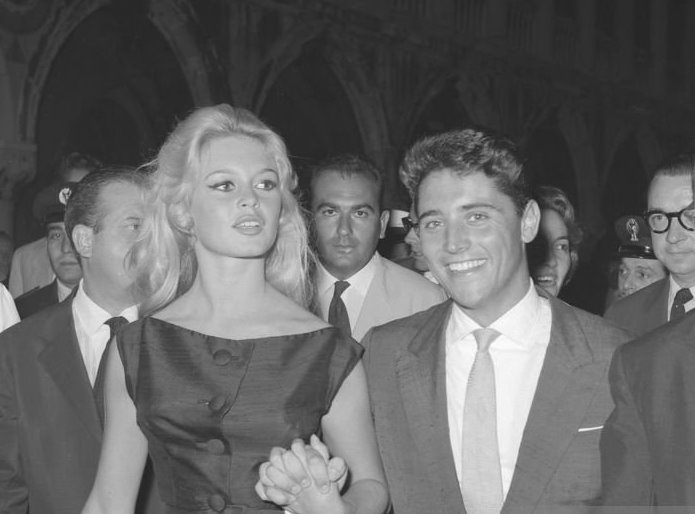
For those of us who were beginning to discover our male hormones in mid-20th century America, we only had to look toward France to gaze upon the very essence of sensuous possibilities, for it was there we found the luscious Brigitte Bardot wearing naught but a come-on smile.
Bardot died over the weekend, at 91, but for millions she remains the sultry, pouting, tousle-haired and, most importantly, naked movie star of a post-war era otherwise remembered as a sexual Sahara.
To be honest about it, I never saw any of her movies, which had names like “And God Created Woman” and “Crazy for Love.”
I was too young to get admission into those flicks, but just old enough to sneak a peek at her in the pages of Playboy, where she appeared many times throughout the years and no doubt juiced its then-massive circulation.
She also infuriated, then and now, legions of women and other human beings who saw her as emblematic of a time when women were objectified sexually and treated as second-class citizens in a variety of ways.
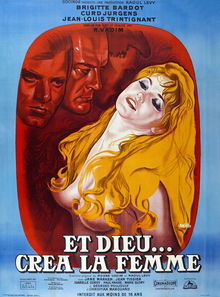
What makes Bardot so memorable, all these years later, is not only her stunning looks. It’s also the contrast between this movie goddess daring to show everything and the overall sexual uptightness of those years.
She seemed to come to us from some other world, more distant even than France.
Back then in Baltimore, for example, on that notorious string of neon bars and semi-strip joints known as “The Block,” we had ladies named Blaze Starr, “Irma the Body,” and Virginia Belle and her Twin Liberty Bells.
They were considered risqué. Yet they never got much racier than wearing low-cut theatrical bras and fishnet stockings. But they were up against the head of the city police vice squad, Captain Alexander Emerson, who once arrested an entire burlesque troupe. He confiscated their lingerie as evidence.
When the case came to Criminal Court, Emerson demonstrated how flimsy the lingerie was by holding it up — and reading a book through it.
All first-run movies arriving in Baltimore had to navigate their way through the so-called Maryland Censor Board, a group of three blue-nose citizens who decided which scenes were suitable for adult audiences.

“They’re doing things up on that screen that I wouldn’t do in my bedroom,” cried board member Mary Avera.
In one year, 1954, the board deleted scenes from more than 50 first-run movies, including such classics as “On the Waterfront.” (They didn’t like a remark Marlon Brando made to Karl Malden, who was playing a priest.)
On Baltimore television, girls on The Buddy Deane Show” back then modeled strapless outfits for Etta Gowns commercials. A Catholic priest protested their bare shoulders, citing “rampant sexuality.”
The bare shoulders were thereafter covered with a piece of net.
In such an atmosphere, Brigitte Bardot baring her breasts for a few seconds at a time seemed fantasy come to life. Even the sight of her in the pages of Playboy felt revolutionary.
Back then, millions of baby-boom boys still weren’t finding much real-life action. But Bardot was our promise that better days might yet be on the way.
A former Baltimore Sun columnist and WJZ-TV commentator, Michael Olesker is the author of six books. His most recent, “Front Stoops in the Fifties: Baltimore Legends Come of Age,” was reissued in paperback by the Johns Hopkins University Press.

Jmore Publisher Scott Rifkin, M.D., reacts to President Donald Trump's latest poll numbers and the real force behind the growing decline of the Trump movement.

Last weekend's Flower Mart once again demonstrated that there's nothing to fear about downtown Baltimore, writes Michael Olesker.

A junior at Roland Park Country School, Katie Grossman writes about a recent experience that spurred her to take action to fight antisemitism.
At a time when many Jews fear appearing Jewish in public, seeing Judaism depicted correctly onscreen is reassuring, writes Jewish content creator Rabbi Yael Buechler.