
The ongoing case of Kilmar Abrego Garcia is not just about a single individual, says Sen. Chris Van Hollen (D-Maryland).
“It’s about all of us,” he said, “because if you can go after one man, you can go after any of us.”
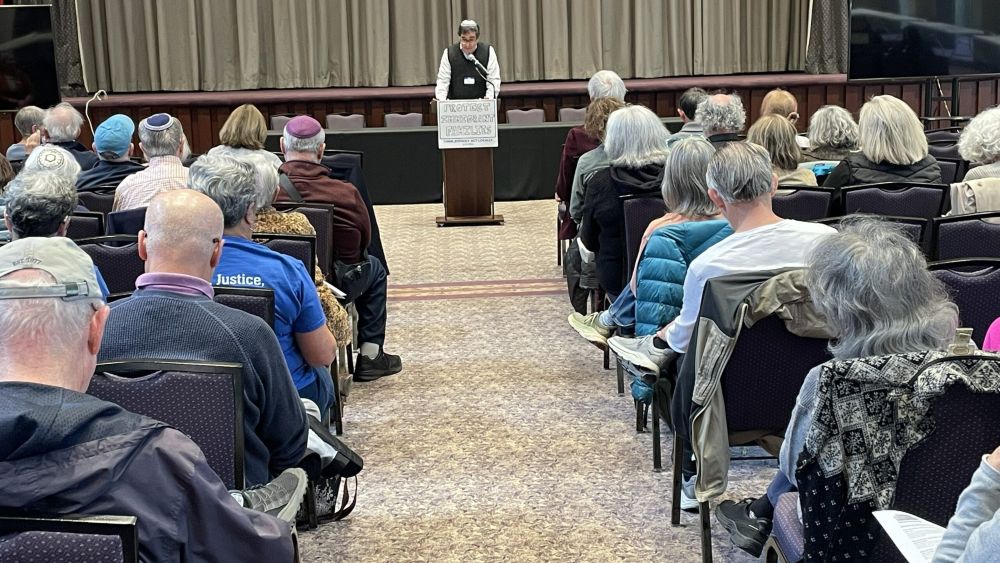
Van Hollen referenced the Salvadoran-born Maryland resident — who has been the center of a high-profile detention and deportation case with the Trump administration — while speaking at the “Beyond Welcoming the Stranger: Taking Action for Our Immigrant Neighbors” event last Sunday afternoon, Apr. 26, sponsored by Jews United for Justice.
Held at Har Sinai-Oheb Shalom Congregation in Pikesville, the symposium was co-sponsored by Baltimore Hebrew Congregation’s Justice Team, the Baltimore Jewish Cultural Chavurah, Beth Am Synagogue, Beth Israel Congregation, Bolton Street Synagogue, Chizuk Amuno Congregation, Hinenu, HSOSC and Kol HaLev Congregation.
The two-hour gathering, which was attended by approximately 100 people, was designed to help participants learn how to assist and advocate for immigrants, particularly those targeted by U.S. Immigration and Customs Enforcement agents.
The event provided a grounding in shared Jewish values and an overview of the current landscape faced by immigrants, followed by sessions on how to take effective action, from community care to advocacy and legal support.
In his talk, Van Hollen said the community needs to stand up to ICE officers in a manner “as exemplified by the people of Minneapolis, blowing whistles when ICE agents were in the area, etc. …
“[The government is] absolutely lying to the American people when they say they’re only going after the worst of the worst,” he said “For example, the wife [Guatemalan native Zoila Guerra Sandoval] of one of the victims of the Key Bridge collapse, someone with absolutely no criminal record, someone who’s been living here for over 20 years, is [in the process of] being deported.”
Interwoven throughout all the sessions was the Jewish concept of tikkun olam, the imperative of repairing the world.
“Beyond Welcoming the Stranger” included several workshops, including about the intricacies and mechanisms of U.S. immigration law, legislative advocacy and the need for synagogues to implement policies for addressing ICE-related issues.
“We recently commemorated Yom HaShoah [Holocaust Remembrance Day], remembering the painful losses of our people at the hands of the Nazis,” said Joan Roth, an Har Sinai-Oheb Shalom congregant. “These were exacerbated, in part, by the refusal of many countries, including the U.S., to open their doors [to Jews attempting to flee Europe]. Today, members of the Baltimore area immigrant community face the threat of displacement by our government, sometimes without due process. They cannot protect themselves alone.
“We Jews cannot ignore the plight of others in our midst,” she said. “As Jews, as a community born of immigrants, we must support the fair and compassionate treatment of today’s immigrants.”
Ioana Stoica, the Maryland community organizer for JUFJ, said her organization promotes economic, racial and social justice issues in the region by educating and mobilizing local Jewish communities.
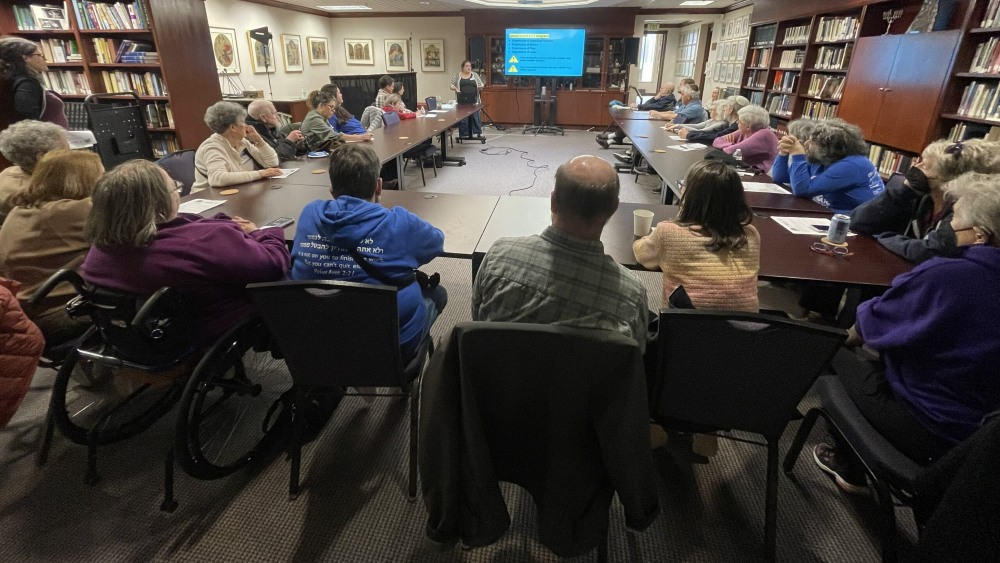
“JUFJ always works in coalition with its member organizations and other advocacy groups, and follows the lead of organizations led by impacted folks,” she said. “Partnerships and coalitions allow us to share civic and moral values across society, amplifying the messages from people who are most materially affected by unjust policies.”
During the 2026 Maryland General Assembly session, JUFJ officials worked closely with We Are CASA of Baltimore, an organization dedicated to providing court-appointed advocates to speak for the interests of abused and neglected children in Baltimore’s juvenile court system, said Stoica.
She said JUFJ and We Are CASA also worked on the passage of immigration bills to ban formal agreements between ICE and local law enforcement agencies; to curtail and regulate informal collaboration between ICE and local law enforcement officers; and the Data Privacy Act, which prevents state and local agencies from sharing personal information with federal immigration enforcement agents.
In addition, she said the two groups worked together for the passage of the Baltimore County Trust Act, which prohibits the construction of ICE detention centers in the county.
“We’re not against ICE doing their job,” Stoica said. “But we want to make sure that they’re following the law. For example, we advocated for a bill that required ICE to have the appropriate warrants before entering businesses or people’s residences.”
Van Hollen praised the efforts of groups such as JUFJ and We Are CASA . “What gives me hope are rooms with people like all of you,” he told the audience.
JUFJ’s next local event will take place on Sunday, May 24, from 2-4 p.m. at downtown’s Hopkins Plaza to “demonstrate our collective resistance to the ongoing ICE attacks on immigrant communities here in Maryland and beyond. We will daven, hear an update on upcoming anti-ICE activities and discuss next steps.”
For information, visit jufj.org/where-we-work/baltimore-md/.
Jonathan Shorr is a local freelance writer.
A junior at Roland Park Country School, Katie Grossman writes about a recent experience that spurred her to take action to fight antisemitism.
John Singer wants to help Marylanders of all economic backgrounds to afford ankle foot orthoses.

At Krieger Schechter Day School, joining in the later elementary or middle school isn’t a setback -- it’s a launch pad.
Steve Hofstetter, who will perform at Soundstage next week, recently made headlines for his social media post ridiculing some fans' warnings about Charm City's safety.