
Bet you didn’t know that Baltimore native Frank Zappa – arguably best known for his satirical, avant-garde work with the rock band the Mothers of Invention in the ‘60s and ‘70s — also wrote classical music.
If that piques your interest, you might want to check out the Baltimore Chamber Orchestra’s “Best of Baltimore” concert on Sunday night, May 31, when it makes its debut performance at Joseph Meyerhoff Symphony Hall.
Founded in 1984, the BCO will perform Zappa’s provocatively named “G-Spot Tornado,” as well as works by Grammy Award-winning composer, DJ and curator Mason Bates and Karena Ingram, a Baltimore-based composer.
And if that’s not enough, the BCO will also perform Beethoven’s “Symphony #7.”
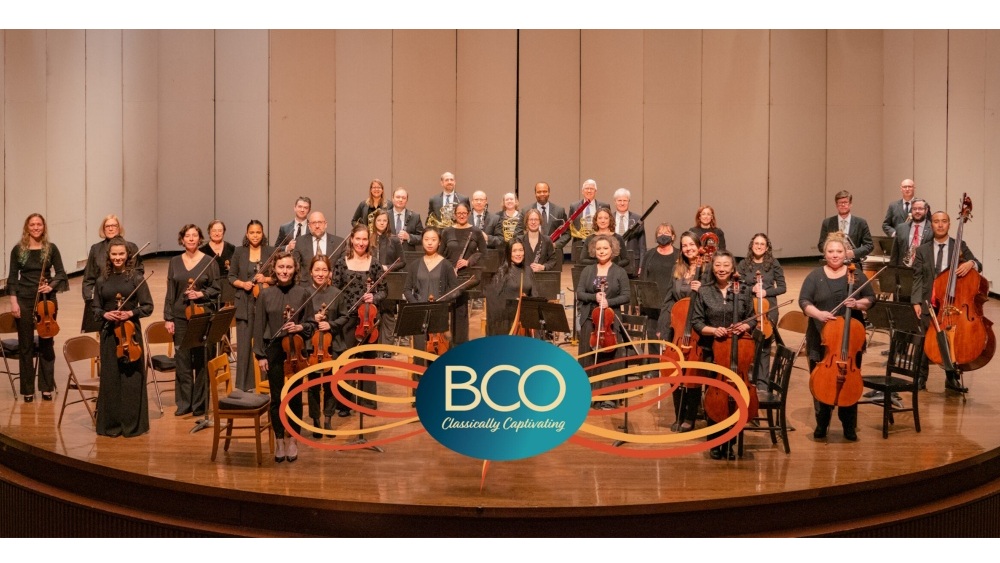
Jmore recently spoke with Detroit native Ben Newman, the BCO’s executive director, about the orchestra and its upcoming concert.
What is the BCO’s origin story?
The orchestra was founded in 1984 by Anne Harrigan [music director of the Battle Creek Symphony Orchestra and Billings Symphony]. She was a student at Peabody, and after she graduated, she and her friends still wanted to have a chance to perform together and still be in that sort of community.
She decided to start an orchestra. Pretty quickly, people wanted to support that, and they formed a 501(c)(3). The next thing they knew, the BCO was born.
What’s the difference between a chamber orchestra and a symphony orchestra?
A chamber orchestra is smaller. We have between 35 and 40 musicians. What makes it special is we are the size that composers such as Mozart or Beethoven or Haydn were writing their works for.
In the U.S., there are about 15-20 chamber orchestras, so it’s very special that Baltimore has been able to sustain a professional chamber orchestra for more than 40 years.
What should audience members expect from your May 31st concert?
We’ve got four really great pieces. Our music director, Robert Moody, curated a fantastic program. He really wanted to highlight what the orchestra does best but also nod the hat to Baltimore and the city’s roots.
What brought you to Baltimore?
During the pandemic, I reconnected with a lovely gentleman I had met when I was living in Denver. We were dating long-distance and supporting each other through the pandemic. He’s an ICU nurse. We decided we both wanted to relocate so we could be together.
I said, ‘Let’s check out Baltimore. I’ve heard good things.’ We came for a weekend and we liked it. We moved here in June of 2022, and I started with the Baltimore Chamber Orchestra that November.
What’s your family background?
I’m Jewish on my dad’s side and Armenian on my mom’s side, so it’s a complicated legacy because it’s one of double genocide. It’s also complicated because my mother converted to Judaism to marry my father. This all happened in the Detroit metro area.
My dad was born in Israel and his parents brought him over to the Detroit area when he was a baby.
Were you raised Jewish?
[His parents] became Zen Buddhist, macrobiotic, hippie draft dodgers. They moved to Toronto, Canada. They were there for 11 years and had five children.
In that period, my mother had a crisis of faith and felt their five children were being raised without any sort of moral foundation or upbringing, so she started taking them to church. My father said he was either going to have to divorce my wife or become a Christian. They both become evangelical Christians.
They moved back to the United States, they had five more children, and they homeschooled all of us. I was the second oldest [of the 10 children].
And you were involved with the Deaf community?
My mom’s parents were both deaf. We were part of a homeschool co-op. So one day, I would be wearing my homeschool hat or mask. Then the next day, I’d be wearing my evangelical Christian hat. Then, the next day I’m putting on my yarmulke to go to shul. The next day, my grandfather is taking us to the Armenian church for basketball practice and for ice cream afterwards and teaching us sign language.
Sounds like a lot for a child to process.
Literally every day was like wearing a different hat as part of a different community in metro Detroit. On top of all this, I’m being raised with this very crazy, eclectic background, but it was also very conservative.
I knew I was gay at a very young age, but I was very closeted for a long time. Within each of these communities, it was as if I was wearing two masks at the same time because I was always hiding that part of myself until I became an adult.
How did you become involved in music?
Growing up, my parents had a rule in the house: We were only allowed to listen to classical music six days a week. The only day we were allowed to listen to non-classical was Saturday because it was chore day.
There was this great series of tapes in the 1980s and ‘90s. One was called ‘Beethoven Lives Upstair’and one of them was about Antonio Vivaldi. I really loved that tape. I would listen to it over and over again, and I became convinced that I wanted to play the violin.
At six years old, I start asking my mom, ‘Can I get a violin and start violin lessons?’ At first, she kind of blew it off. Well, I kept asking for two-and-a-half years. Finally, I apparently stormed into her office and said, ‘When are you getting me a violin?’ And she went, ‘OK, he’s serious about this.” I started violin lessons at 8 and continued through high school, went to music camp, and was a violin performance major in college.
Were you planning to become a performer?
I quickly realized I wasn’t going to be pursuing a performance career. Even at a small private liberal arts college, I wasn’t the best violinist there. Pretty soon after graduation, my teachers said, ‘So what else are you looking at? Because it’s not going to be this.’
What did you do then?
After college, I started waiting tables at a Brazilian steakhouse in downtown Detroit. But I really missed music in my life. I remember thinking, ‘Aren’t there people that run orchestras and opera companies and ballet and performing arts centers?’ And of course there are, but the field of arts management or arts administration was not even mentioned at any point during my undergrad.
I basically discovered it on my own by doing research online. I realized if this is something I really wanted to do, I needed to be at the center of where arts and culture happens. I decided I was going to move to New York and started to wait tables at a restaurant called Union Square Cafe while trying to figure out some sort of internship or something to get me into this field.
How did you finally land a job in the field?
I spent about six months writing formal emails and letters of inquiry. Then, as I was starting to lose hope, I sent one last email to a woman at a company called OPERA America. Instead of the usual formal thing, I just wrote, ‘Hi. I’ve got a flexible schedule if you give me enough notice. If that works for you, let me know and we can talk. Thanks. Bye.’
Within six hours, I got a phone call from one of her staff who said, ‘Could you come in and help us with this event? And then we’d like to talk to you about an internship.’
What do you most want people to know about the BCO?
We’ve been in existence for more than 40 years, but a lot of people don’t know about us. We hope people will come check out our concerts. Though the concert on the 31st is at Symphony Hall in the evening, our usual performances are at Goucher College on Sunday afternoons at 3 p.m. It’s a great way to spend a Sunday afternoon.
For information, visit theBCO.org.

For more than 130 years, Sol Levinson & Bros. has been woven into the fabric of Baltimore’s Jewish community.
Led by local Israel-American cellist Amit Peled, the Mount Vernon Virtuosi aims to inspire people beyond musical enjoyment.

A former college campus activist, Veksler will speak at Chizuk Amuno on June 8 at the Ruth and Jay Lenrow Visiting Scholar-in-Residence for Combating Antisemitism.
A lifelong Baltimorean, Judge Rosenberg served as a U.S. magistrate judge from 1973 to 1998.