
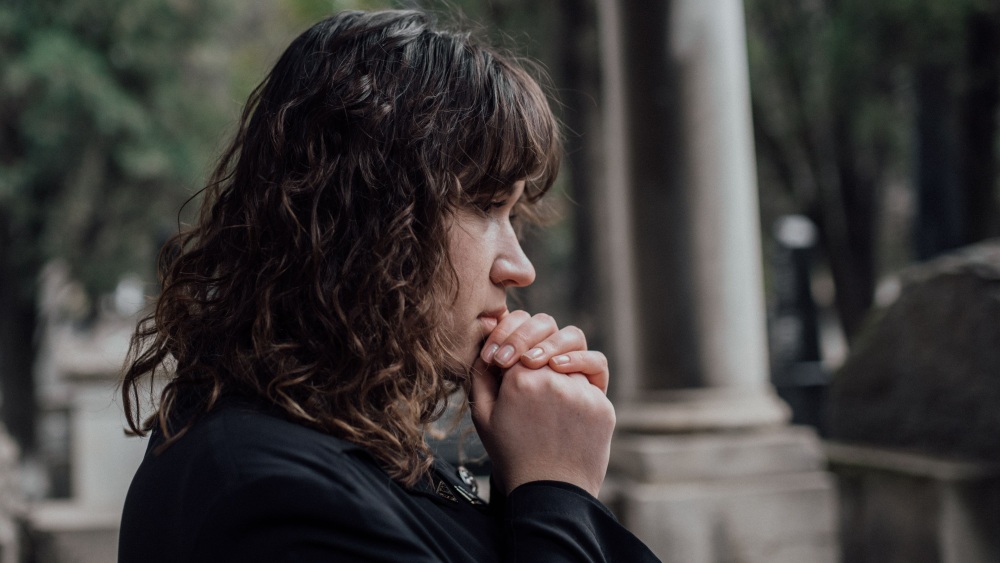
Every year, thousands of people walk into a house of mourning and instinctively look for the low chairs.
In Jewish tradition, the architecture of grief is brilliant in its specificity. We look for the people sitting close to the floor, wearing the torn garments, kriah, or laden with grief upon the death of those closest to them.
This includes mourning the loss of a parent, sibling, child or spouse. The community knows exactly what to do for them. We bring them food, we do not greet them until they speak, we pull up a seat directly across from them to ask about their loved one and offer comfort.
Finally, we recite a formulaic prayer that they will find solace among the mourners of Zion and Jerusalem.
But if you look closely at any shiva house, you will notice a second, quieter choreography: Someone standing in the kitchen, organizing the food. Someone at the front door, gently telling guests where to hang coats and pointing the way to the mourners. Someone taking care of young children, and a fourth person coordinating the prayer service (minyan).
These are people in the ‘other chair.’ They might be a son-in-law, a sister-in-law, stepchild, long-time partner or even an ex-spouse tied to the family by decades of shared history.
None are aveilim, mourners, according to halakhah, Jewish law. They do not tear their clothes or sit low to the ground. Visitors rarely look them in the eye to ask how they are holding up and offer them comfort.
They are performing an essential role, a role for which they may not have volunteered and may not be suited for. While the mourners are directed to sit, receive comfort and process their grief, the ‘other chair’ is managing logistics, leaving little room for personal reflection.
This role can quite naturally stir feelings of resentment and anger that can be aggravated by challenging family dynamics or complicated feelings toward the deceased.
The Emotional Complexity of the Other Chair
To sit in the other chair is to navigate a psychological landscape that is as complex and layered as grief itself.
Love does not neatly follow the clean boundaries of legal or biological categorization, for the human heart feels what it feels. Because there is no formal ritual container for the secondary circle, those individuals carry an invisible, intensely private burden that is compounded by the dissonance between what they are feeling and the role they are inhabiting.
On the one hand, they are supporting the entire logistical and emotional weight of the shiva house. On the other hand, they, too, are processing the death of a loved one.
Often, those in this other chair understandably feel overlooked and disregarded. With the focus on the mourners’ grief, the other chair’s personal mourning process often occurs in the shadows. The other chair isn’t just witnessing the pain of those they love. They may be genuinely mourning their relationship with the deceased; the sudden loss of a specific version of their family; or grappling with echoes of their own family of origin — confronting past losses, generational dynamics, or the stark reminder of mortality.
Yet, right alongside the anger and the sorrow, there is often a profound sense of gratitude. The other chair can feel immensely appreciative of the opportunity to play a tangible role — a physical way to channel the helplessness that death elicits into action.
Standing in that space can evoke a deep reverence for a tight-knit family, for a protective community that shows up in full force, or for a tradition that respects the process of grief. It is an exhausting, sacred and deeply confusing place to sit.
I learned the heavy layout of this geography firsthand over 20 years ago.
In November of 2003, my brother, Eliezer z”l, died tragically. The shock was total, ripping through the fabric of our family just 41 days before my wife, Aviva, and I were to stand under the chuppah. Suddenly, our wedding preparations were replaced by the rituals of burial.
I was dropped into the low shiva chair, entirely broken, while Aviva sat in the other chair. She became my anchor, holding me up as my world collapsed, all while quietly processing her own grief over losing a future brother-in-law and over the recognition that the joy at our wedding that we had planned and dreamed about would inevitably be overshadowed by the reality of Elie’s absence.
Forty-one days later, we stood under the chuppah, our joy forever tempered by loss.
But the universe was not done shifting the chairs. Just five months later, my father, Rabbi Gershon Schwartz z”l, died suddenly.
Once again, the low chairs were set out. I was navigating the sudden loss of a beloved father and a mentor. And there, right beside me, was Aviva — once again stepping into the invisible space of the other chair, managing the logistics, absorbing the community’s well-wishes on my behalf, and holding my hand through a second wave of devastation.

In those months, we realized that the person in the other chair is the unsung survival mechanism of the Jewish family.
Why does our contemporary communal structure leave the other chair so lonely? Interestingly, it wasn’t always this way.
Deep within ancient Jewish law, there is a fascinating, almost forgotten precedent for this exact dynamic. The Talmud discusses a concept known as avelut reshut — optional or sympathetic mourning.
Historically, halakhah dictated that if a person’s spouse lost a parent or a sibling, the husband or wife was traditionally expected to take on partial, public mourning practices alongside them. They would refrain from grooming, avoid festive gatherings, and match the somber posture of their partner.
The rabbis of the Talmud understood a profound psychological truth: when your partner is suffering, you cannot simply go about your day. You are “one flesh.”
To the rabbis, living normally while the person you love is in agony felt like a desecration of the marital covenant.
Over the centuries, rather than extending this principle to other unofficial mourners, this requirement faded into disuse, leaving only the traditional framework that views mourning strictly through the lens of individual biological relationship.
In doing so, our tradition unintentionally isolated the supporting presence of those in the other chair. Because they have no formal ritual, the community assumes they are a neutral party. We ask them, “How is your husband holding up?” but we rarely stop to ask, “How are you doing?”
Widening the Circle of Comfort
Comfort is not a finite resource. Extending comfort to the person in the other chair does not diminish the depth of consolation owed to the person in the low chair.
If we want our communities to be truly empathetic, we must shift our consciousness in three distinct ways:
- See the Supporting Circle: When you walk into a shiva home, do not offer your words only to the official mourners. Seek out the spouse, the partner, the in-law, stepchild, grandchild, aunt, uncle, cousin, college roommate or childhood friend. Look them in the eye, use their name, and validate that their pain — and their support — is seen.
- Relieve the Relievers: The community can proactively offer to assume more logistical control, so the people in the other chair don’t have to carry it all. If we manage the food, coordinate the minyan, and clean the counters, take young children out for a few hours, we free those in the other chair to actually sit down, hear some of the stories being shared about the deceased, process their own feelings, and be emotionally present for their partner.
- Honor the Second Ring: Recognize that the entire ecosystem of mourners needs our embrace of love and support and we must provide it to all of them.
The low chair and the other chair do not exist in isolation; they are deeply interconnected. By widening our gaze to include those standing just behind or to the side of the low chair –holding the tissues, wiping the counters and quietly weeping into the shadows — we truly fulfill the ultimate mandate to comfort all the mourners of Zion and Jerusalem.

Rabbi Moshe Schwartz is Head of School at Krieger Schechter Day School in Northwest Baltimore.

A lifelong Orioles fan, Jmore Publisher Scott Rifkin, M.D., shares a message to Orioles owner David Rubenstein.

Attorney and Barry Levinson confidante Donald Saiontz left his mark on the world, writes Michael Olesker.

When we create a world with a warm and loving connection, even when someone beloved is gone, that relationship is carried on, writes Pamela R. Weissman.

The Orioles this season have proven that money can't buy happiness, writes Michael Olesker.