
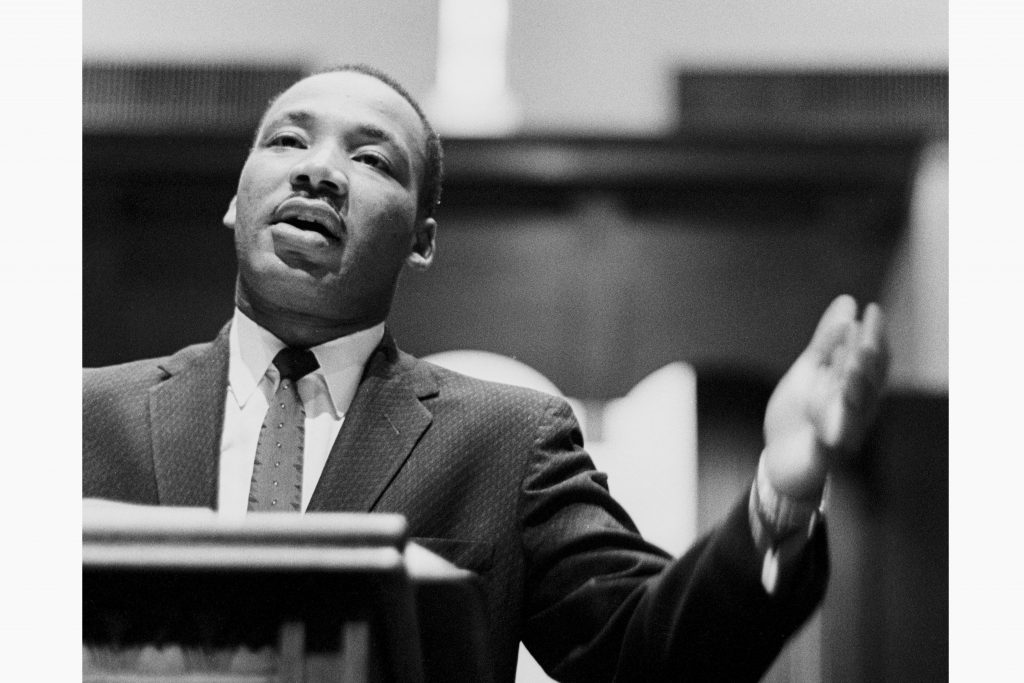
On April 4, 1968, in the very hour that changed American history, the mayor of Baltimore, Tommy D’Alesandro III, was eating dinner with Louis Azrael, the veteran columnist of the Baltimore News-American, when they were informed of the assassination in Memphis of Dr. Martin Luther King Jr.
“Tommy, you’ll have trouble now,” said Azrael.
D’Alesandro imagined otherwise. He was a racial progressive who’d reached into African-American neighborhoods the way almost nobody else at City Hall ever had. He’d won 93 percent of the black vote. He’d gone to scores of political gatherings where he was the only white person in the room.
He’d appointed the first black city solicitor, the first black on the board of estimates, the first black fire commissioner. He considered Dr. King a personal friend.
The two of them had met a few years earlier, at the Lord Baltimore Hotel. D’Alesandro had given King the keys to the city. The civil rights leader embraced D’Alesandro affectionately and called him “Tommy.” They spoke for two hours. D’Alesandro remembered King had asked for nothing more than fairness.
On the evening King was killed, D’Alesandro felt he’d lost a friend. He also thought this would count for something, that black people in Baltimore would understand the pain he shared with them and would stay calm.
He was wrong. This was the moment for entire lifetimes of grief and anger to express themselves volcanically.
First came news that Washington was on fire, and then reports that dozens of American cities were ablaze. Baltimore stayed eerily calm, but only for 24 hours.
“If we can make it to Sunday morning, when the ministers can talk in church, we’ll be OK,” D’Alesandro said.
This was a Friday. The calm never reached Sunday.
D’Alesandro was in the war room at police headquarters when reports arrived of hundreds of fires along decayed, impoverished inner-city blocks around East Baltimore’s Gay Street. It was the start of four days and nights of intense rioting and arson.
For the city of Baltimore, it was also the heart of the great change-over.
In the aftermath of the riots of 1968 came years where downtown Baltimore after dark was a ghost town. The exodus to suburbia that began in the post-war years, and picked up steam with school integration in the 1950s, now accelerated dramatically.
For years, the city became a place where many people kept a distance from each other simply by skin color. The tensions eased as the years passed, but the exodus continued. And a municipal population that once reached nearly 1 million has now dropped to barely 600,000.
Tommy D’Alesandro, the son of a mayor, raised from childhood for a life in politics, chose to retire from the game when his first term at City Hall was over. He spent the rest of his career practicing law and is now, at 88, retired.
The city of Baltimore continues to evolve. Underlying racial tension expressed itself three years ago this month, in the aftermath of Freddie Gray’s death. The public schools are largely re-segregated. And a homicide rate among the nation’s highest continues to be overwhelmingly African-American both in victims and assailants, a reflection of ongoing poverty and frustration.
And many still ask, how far have we come in the half-century since the riots of 1968?
A former Baltimore Sun columnist and WJZ-TV commentator, Michael Olesker is the author of six books. His most recent, “Front Stoops in the Fifties: Baltimore Legends Come of Age,” has just been re-issued in paperback by the Johns Hopkins University Press.
In Italy, the Jewish Brigade's flag has unfairly become a flashpoint in today’s battles over Zionism and anti-fascism, writes Dr. Ginaluca Fantoni.
At its annual meeting this year, the Baltimore Jewish Council will honor the late Harford County educator and longtime Holocaust education champion.
The former Colt, who passed away on May 25 at age 93, achieved immortality during a cold December day in 1958, writes Michael Olesker.

A new biography on the creator of "Doonesbury" misses the mark, writes Michael Olesker.