
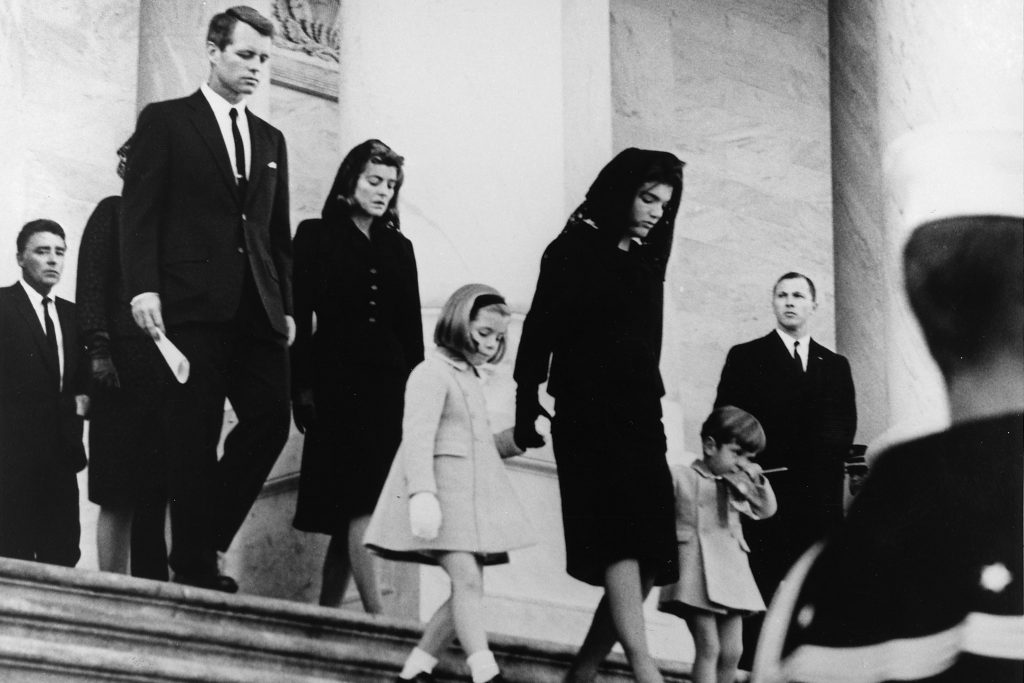
When it comes to matters of fashion, I yield to everyone. It is widely accepted, by my family and friends, that I have no taste at all in matters of attire. Once, years ago, I was named to a list of the 10 worst-dressed men in Baltimore, with a pungent assessment that I dressed “like Humphrey Bogart — in ‘The African Queen.’”
So I don’t have the greatest taste in clothes. And yet, how much expertise does it take to point out the American drift from formality to informality to a kind of slovenliness in places once deemed bastions of firm fashion rules?
I mention this because of something that happened a week ago, when I attended a memorial service for a friend and found myself, against all odds, to be arguably the best-dressed person in attendance.
And I was wearing a blue dress shirt, tan slacks – but no coat and tie.
The service was held in one of our local churches. I will not mention the specific church, nor even its denomination. Nor do I wish to draw comparisons between the unwritten dress codes of gentile versus Jewish religious attendance.
It’s been my experience that outfits have gotten less formal at Sol Levinson & Bros. funeral home over the years – we’re a long way from a time when everybody dressed in formal black — and at synagogues, too. And I was aware that church attire has gotten increasingly casual, where coats and ties are sometimes the exception, rather than the routine.
But I wasn’t prepared for the outfits at my friend’s memorial service. The church, old and stone and replete with stained-glass windows, seated roughly 900 people, though only about a hundred mourners showed up. I didn’t see any male in a coat and tie, nor any female in formal dress.
But there were far more than a score of men in shorts, mostly shorts with T-shirts (including two brothers of the deceased), with sneakers and no socks, or with flip-flops. One man’s black T-shirt had lettering on the back that said, “Johnny Dee’s Lounge. Licensed to Serve Food and Beverage.”
Some of us could use a good drink at such a sight.
But I’m still trying to figure out what all of this means. I’m certain no one intended disrespect by their choice of outfit. But where is the line drawn between casual and unacceptable?
And I know we live in a nation where houses of worship – all religions, all houses – are struggling to hold onto dwindling congregation membership. But does there come a time when clergy need to tell their flocks, “This ain’t no day at the beach! Dress it up a little – as you’d want it for your own time of earthly departure.”
 A former Baltimore Sun columnist and WJZ-TV commentator, Michael Olesker is the author of six books. His most recent, “Front Stoops in the Fifties: Baltimore Legends Come of Age,” published by the Johns Hopkins University Press, is now in paperback.

In Italy, the Jewish Brigade's flag has unfairly become a flashpoint in today’s battles over Zionism and anti-fascism, writes Dr. Ginaluca Fantoni.

At its annual meeting this year, the Baltimore Jewish Council will honor the late Harford County educator and longtime Holocaust education champion.

The former Colt, who passed away on May 25 at age 93, achieved immortality during a cold December day in 1958, writes Michael Olesker.

A new biography on the creator of "Doonesbury" misses the mark, writes Michael Olesker.