
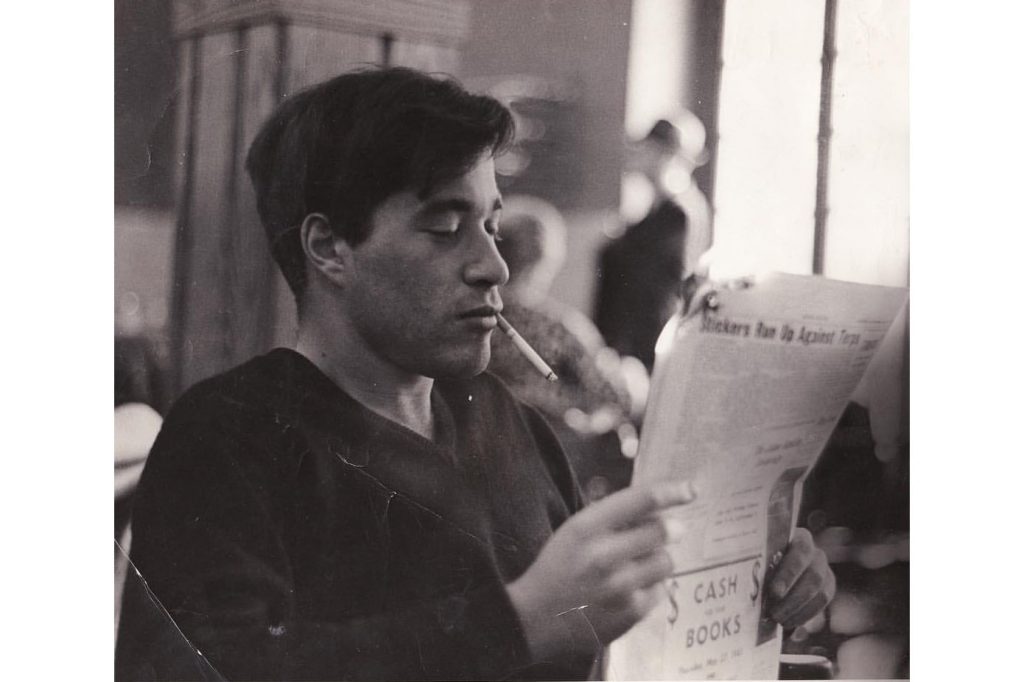
“I never charged anybody unless I was convinced they were guilty.” –Peter M. Semel (1944-2017)
Peter Semel, who landed in Baltimore by way of Brooklyn, N.Y. (where he saw Jackie Robinson play ball), was a hard-nosed attorney who sought convictions in some of the more fascinating cases in the annals of Crabtown crime.
As a prosecutor for Baltimore City and the feds, Semel’s four decades in court encompassed the vainglory of Dr. Paul Geshelin, a narcotics-evangelizing physician at University of Maryland Hospital responsible in the overdose death of his girlfriend, to the shanda of the 1985 Tulkoff scandal, when the Baltimore company pleaded guilty to failing to list potatoes as an ingredient in its horseradish products.
In with the big headlines were scores of run-of-the-mill homicides — who remembers when a kid getting shot for his sneakers was front-page news? — and in 1979, the most dramatic case of Semel’s career: the murder trial of Mary Rose Robaczynski, a young nurse who pleaded innocent to removing patients from life support at Maryland General Hospital.
Semel said those three cases – the dope zealot doctor, a horseradish hustle and a self-appointed angel of death – “were in my top 10 all-time cases.”
Geshelin, who pleaded guilty to drug distribution in the 1979 death of Becky Keller, a teacher at the Baltimore Experimental High School, committed suicide instead of reporting to prison. The Robaczynski trial ended in a hung jury and a new definition of “death” by the State of Maryland. And Tulkoff Foods continues to do a booming business with the hot stuff from a plant in Dundalk.
I met Semel twice – one time to discuss the Geshelin case as it related to the current opioid epidemic, and once when he attended a literary reading I organized near Johns Hopkins University, where he graduated in 1966 before attending law school.
“I miss the courtroom,” he said when we met for coffee near his Bolton Hill home. He also missed tennis and scuba diving, passions lost to him after spinal surgery.
Not long ago, I sent an email to Semel to hear more stories from both sides of the aisle — he became a defense attorney in 1998 — and was answered by his wife of 50 years, the former Mary Helfer.
“I am sorry to have to tell you …” said Mary. Semel died of bladder cancer last August, the month of his 73rd birthday. When talking about his career a few years ago, we hadn’t gone much into his private life, which included his passion for Bob Dylan and the Grateful Dead as well as the 1991 death of his 17-year-old son Alexander in a car accident.
Neither of us remembered that I had covered that fatal crash – young Semel at the wheel when his speeding car hit a tree, also killing Pikesville High School student Eric Morstein – for the Baltimore Sun.
“My father became a nicer person after Allie died, less irritable around other people,” said Hilary Semel, director and counsel general at the New York City Mayor’s Office of Environmental Coordination.
Hilary believes the tragedy led her father to defend people after decades of putting them in prison. “He became more empathetic with criminal defendants,” she said. Also, in 1998, Mary Semel co-edited and published a book called, “A Broken Heart Still Beats: When Your Child Dies.”
Peter Semel was the son of a textile merchant. The two great historical events of his 1940s Brooklyn childhood were the ballgame at age 5 when he watched the man who broke baseball’s color line play the national pastime, and the creation of the State of Israel. Soon, the boy was collecting international postage stamps celebrating the Jewish state, which led to stamps featuring prominent Jews the world over. The margins were used for handwritten notes on the significance of each stamp.
Hilary said her father came to regret not spending more time with his family – especially his son — when he was out in the world making a name for himself. The acerbic prosecutor began to soften, she said, with the brutal lesson of how brief our time is.
And very often, time harshly skips a beat, like the needle skipping across Peter Semel’s large collection of vinyl LP records that Hilary’s friends would gleefully rifle through for gold, as her old man held forth on the blues roots of the Rolling Stones.
In this way, a septuagenarian’s 60-year-old collection of stamps honoring famous Jews will skip a generation when it returns to Gotham and Hilary’s son. “My inclination,” said Mary, “is to save it for my grandson.”
Rafael Alvarez can be reached via maconstreetbooks.com.
Attorney and Barry Levinson confidante Donald Saiontz left his mark on the world, writes Michael Olesker.

When we create a world with a warm and loving connection, even when someone beloved is gone, that relationship is carried on, writes Pamela R. Weissman.

The Orioles this season have proven that money can't buy happiness, writes Michael Olesker.

A recent experience reminded Editor-in-chief Alan Feiler of why we cannot allow the antisemites to make us cower and hide.