
The other day, I participated in that rite of passage that virtually every dad of a college student enjoys – picking up their kid from school and schlepping ‘em home for winter holiday break.
I’ve been spoiled because my daughter – now in her junior year — goes to school in Philadelphia. Not too far away, depending on traffic. This year, I stopped in Wilmington along the way, just to poke around that fair Delaware city while waiting for my daughter to wrap up finals.
I also stopped off somewhere else to kill time – jail.
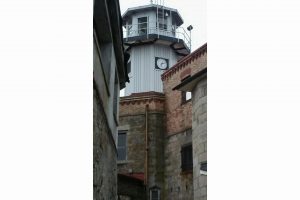
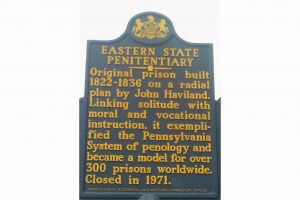
Or to be more precise, Eastern State Penitentiary, which might be considered Philly’s version of Alcatraz. It’s not situated on a rocky, scenic bluff in the middle of a sparkling bay, mind you, but ESP (as it’s known) is still an endlessly fascinating place.
Opened in 1829 and closed in 1971, the former prison – now a museum — is an intriguing slice of American history and considered the world’s first true penitentiary. Arguably, its greatest claim to fame is it once was the temporary “home” of such infamous criminals as Al Capone and “Slick Willie” Sutton, as well as the primary setting for the Dead Milkmen’s video of their classic 1988 anthem, “Punk Rock Girl.” (It’s also known now for what’s purportedly a kick-ass Halloween haunted house fundraiser for ESP, which is on the National Register of Historic Landmarks.)
The penitentiary is massive and byzantine, located on about 11 acres, featuring an imposing, gothic fortress with foreboding battlements and 30-foot stone walls, all in the middle of Philly’s bustling, gentrified Fairmount neighborhood.
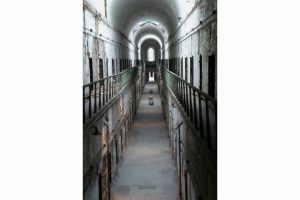
While there, you learn about how inhumane and soul-crushing prison conditions were in the United States in the 19th and 20th centuries. And because the museum is so well conceived and executed (no pun intended), you’re forced to contemplate the high price of human warehousing and the legal and sociological injustices of today’s penal and incarceration systems.
The hour-long audio tour, narrated by actor Steve Buscemi of “Boardwalk Empire” fame, offers a wealth of knowledge and information about the prison’s rich history. I can tell you that stepping into those ramshackle cells is a profoundly moving, humbling experience (and don’t think I didn’t whip out my harmonica at times and play a few tunes while there).
I strongly recommend a visit to ESP. You could spend days there and still not see everything, and it will make you think.
But naturally, like everywhere else I seem to go, Judaism and Jewish culture managed to creep in during my visit. Turns out there was plenty of Jewish life in the old prison yard, going all the way back to ESP’s origins. Yes, we had our share of bootleggers, organized crime figures, embezzlers, thieves and downright murderers.
The heyday of Yiddishkeit at the Philly slammer seems to have been in the mid-1920s when – believe it or not – a shul was built on the premises. Who knew? Jewish inmates – about 80 of them at any given time — went there to daven on Shabbat and holidays, and there was a wooden ark and prep kitchen for Sabbath meals.
Volunteers from Philly’s Jewish community even dropped by fairly regularly, according to newspaper accounts, to help their landsmen simply feel and be Jewish in jail and participate in worship services. ESP’s shul is believed to be the first synagogue ever in a U.S. prison.
After ESP was finally shut down, the synagogue was abandoned and suffered extreme water damage, rotting the ark’s timbers and destroying the room’s plaster work, including the gold, inlaid Star of David adorning the ceiling.
But today, that space is known as the Alfred W. Fleisher Memorial Synagogue. Named after a prison reformer and president of ESP’s board of trustees from 1924 to 1928, the synagogue was restored to its former glory in 2009. The yearlong renovation cost approximately $230,000, with donations coming from the City of Brotherly Love’s Jewish community.
With a tour guide named Jenna, a nice Jewish gal from Long Island who relocated to West Philly a decade ago, I walked around the small synagogue – which was reinstated to its appearance, circa 1960 — and its companion William Portner Memorial Exhibit on Jewish Life at Eastern State Penitentiary.
Jenna told me about how an elderly Jewish former ESP inmate – a lifer now incarcerated at another Pennsylvania prison – recently visited the shul there (a field trip?) and shared anecdotes and memories. She said he looked around at the original ark, reading table and bench seats in the room, as well as the restored Star of David on the ceiling, and was overwhelmed by the experience.
“He said this was the place where he and the other Jewish prisoners felt a connection to the outside,” Jenna said, “and it made them feel alive again. It made them feel Jewish again.”
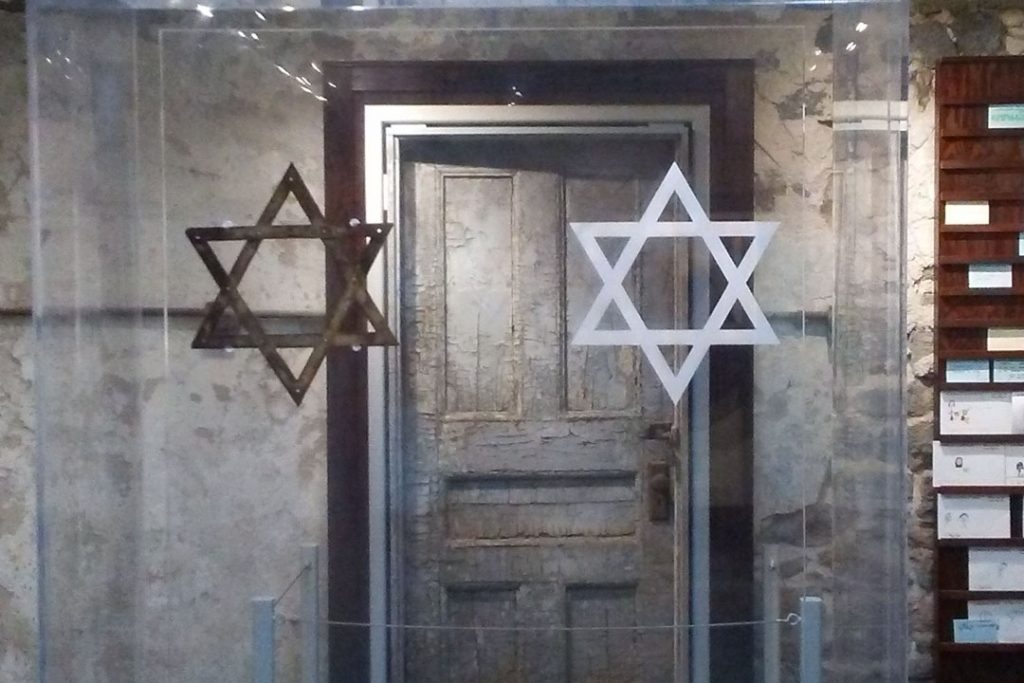
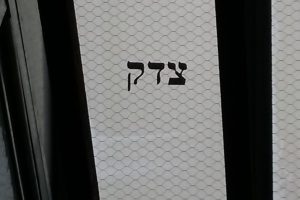
I strolled around the shul and accompanying exhibit, featuring panels with photos, enlarged newspaper clippings and descriptions of Jewish life at ESP. You see sepia-toned photos of “Hebrew” inmates and community members smiling and standing by the Passover seder table and Chanukah menorah, ironically celebrating freedom. You read about the first Jewish clergyman who visited ESP in 1845, and about a baby born to a Jewish female inmate there six years later. And you see the shul’s original, battered door and ceiling windows engraved with meaningful passages from the Book of Prophets and such Hebrew words as tzedek, or justice.
Most of all while there, you think about the prayers and petitions for mercy that must’ve been whispered in that room, the desperate need for contemplation, connection and redemption that must’ve been felt by those Jewish inmates who passed through. That feeling in there is still palpable.
“When Jewish people come to Philly, they always come to the museum,” Jenna said, alluding to the National Museum of American Jewish History. “That’s an amazing place, but not many people know about this place, too. More people need to see what we have here. It’s a pretty special, sacred place, and it’s an important part of our history.”
I couldn’t agree more.
For information, visit easternstate.org.
As he gets ready to leave for California, Rabbi Daniel Cotzin Burg looks back on his time in Baltimore and his 10 years writing for Jmore.

Michael Olesker pays tribute to WJZ’s retiring Marty Bass, a longtime fixture on local TV screens.
The Orioles' weak defense plays a major role in the nightly carnage, writes Michael Olesker.