
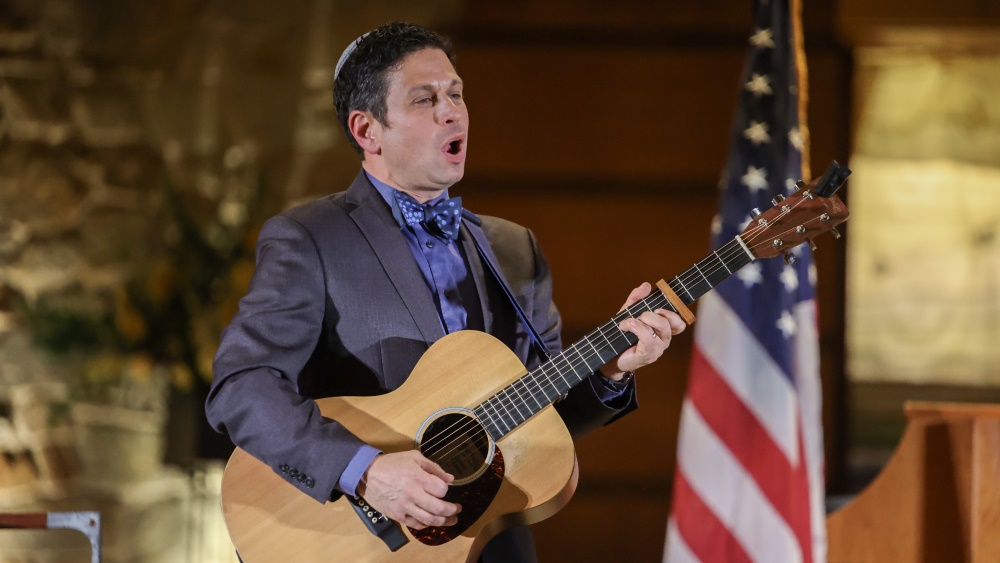
My first Baltimore Justice column appeared in the second issue of Jmore in late 2016. Editor-in-Chief Alan Feiler had asked if I would be willing to share some reflections in the new monthly publication.
Frankly, I was surprised. What value would a column about Jewish views on urban-oriented social justice hold in a glossy lifestyle publication geared mostly to a Pikesville crowd? Circumstances in America were changing rapidly, though. Donald Trump had just been elected. Many of us were grappling with what this new reality would mean — for the Jewish community, the city of Baltimore, indeed for the nation.
And less than two years prior, Freddie Gray’s arrest and subsequent death had unleashed rage, reflection and a reckoning here in Baltimore. I had gained some national attention though my writing as an urban rabbi proximate to the uprising, with perspectives on both the history and legacy of Black-Jewish relations and with thoughts about what our robust Jewish textual heritage might have to offer as guidance. I told Alan I was honored to be asked. Thus began my new adventure as a regular columnist for Jmore!
Over the course of 10 years and more than 80 columns, I’ve done my best to uplift local stories and challenge conventional wisdom on contemporary topics such as intersectionality, #MeToo, allyship and America’s reckoning with Confederate statues. I’ve also written about Baltimore City’s relationship with the racism that defined its antebellum and Jim Crow eras to new possibilities in Druid Hill Park. My interest in what I call relational justice also has meant a strong conviction that we Jews need to stand up for who we are (from Baltimore to Israel) and our essential place in American society — and resist the othering that too often comes with the majority Christian culture.
The greatest throughline, however, has been my belief that Beth Am’s historic neighborhood of Reservoir Hill should flourish as what I’ve called The New Jewish Neighborhood, mindful of our history while working to soften artificial and counterproductive boundaries in favor of pluralism, inclusion and mutual esteem. This approach also has meant reminding our broader Jewish community at times that love for and investment in the city is both a sacred obligation and a win-win proposition.
Where to begin? I’ve humbly suggested it all begins with relationships!
In June, I’ll be completing my time at Beth Am and in Baltimore. Miriam, our family and I depart with abiding love for our adopted home, many enduring relationships and great pride in what our synagogue, neighborhood and city have accomplished. Rabbi Tyler Dratch will be taking over as senior rabbi of Beth Am. I leave our work of advancing urban Jewish Baltimore in his capable hands; the shul has never been stronger and more vibrant!
I wish to convey my abiding gratitude to Alan Feiler and Publisher Scott Rifkin for creating space for conversations about justice in the pages of Jmore. I am humbled to have penned this column for so long and hope that my doing so has contributed meaningfully to our discourse around some of Baltimore’s and the Jewish community’s thornier and most pressing issues.
A decade on, much has changed, but unfortunately, much remains to be accomplished. The forces that divide, minimize and dehumanize are even more ascendant and persistent than when I began. So, I’ll leave you with this message with which I started. The equation (and my related hope for you, dear readers) is the same: an honest accounting of who we are, what we stand for and who we’ve been plus a compassionate and curious approach to our fellow human beings equals a more just society. Here’s how I concluded that first column back in late 2016:
“To better inhabit our Jewishness, we must be expansive in our concept of community. Baltimore’s greatness, like America’s greatness, is in its people. We Jews have flourished in this country and city because, despite real obstacles, here we have found a place to call home. So, let’s start at home. Making the world better requires making our neighborhoods better. And, wherever you live, city or county, making your neighborhood better requires making mine better, too — and vice versa. Why? Because making Baltimore great means also identifying the parts
of it that never were.” 
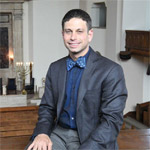
Rabbi Daniel Cotzin Burg has served as spiritual leader of Beth Am Synagogue in Reservoir Hill since 2010. In July, he will become senior rabbi of HAMAKOM, a modern, egalitarian Conservative synagogue located in the West San Fernando Valley in Los Angeles.

Michael Olesker pays tribute to WJZ’s retiring Marty Bass, a longtime fixture on local TV screens.
The Orioles' weak defense plays a major role in the nightly carnage, writes Michael Olesker.

Jmore Publisher Scott Rifkin, M.D., reacts to President Donald Trump's latest poll numbers and the real force behind the growing decline of the Trump movement.