

For parents of graduating high school seniors, this can bean emotional and stressful time of year. While excited for their children, theyare also faced with the realization that their kids will soon be leaving thenest to move on to college and the next phase of their lives.
Having made it through the college application process, theattention now shifts to finding a compatible roommate, attending collegeacceptance days, planning fall move-in and organizing college schedules. And,of course, parents need to find time to squeeze in important conversationsconcerning alcohol and drug abuse, college hazing, roommate conflicts, classattendance…basically all the wisdom and advice they can impart to ensure theirchild’s safety and happiness.
But today, for parents of Jewish students who have observedthe rise of anti-Semitic incidents throughout our country and the world andwatched the BDS (Boycott, Divestment and Sanctions) movement permeate collegecampuses, there is now a need to address these issues as well. According to aBrandeis University study, titled “Hotspots of AntiSemitism and Anti-IsraelSentiment on US Campuses,” overall, 15% of respondents agreed that there was ahostile environment toward Jews on their campus compared to over a third who agreed that therewas a hostile environment toward Israel.
The Associated: Jewish Federation of Baltimore works closelywith local and international agencies and community partners to establish programsthat keep teens safe whether on campus or at home. The Israel High LeadershipProgram, offered by The Louise D. and Morton J. Macks Center for JewishEducation (CJE) and funded by The Associated, seeks to educate students aboutthe complexities of Israel and provides a historical background as well as anunderstanding of current day issues. Facilitators recently held two parlorsessions with parents and teenagers alike to help students prepare for life oncampus through a Jewish lens.
“CJE has curated and developed a range of resources to helpprepare students for possible anti-Israel and anti-Jewish sentiment on campus,”explains Sam Hopkins, Israel Program Coordinator at CJE. “We hope to empowerour Baltimore students with the tools and knowledge so that they feel confidentto engage in an intelligent, mature way when confronted with these issues incollege.”
According to Hopkins, Israel High’s curriculum provides astarting point for thinking through real-world experiences on college campusesand an understanding of when criticism of Israel crosses the line intoanti-Semitism. The program is designedto give students the knowledge and confidence to talk about Israel.

“Many of our high school students, although aware of theupsurge in anti-Israel protests, simply are not used to being challenged onthese topics in their day-to-day lives,” explains Liz Minkin-Friedman,Co-facilitator of Beth Am Congregation’s Time to Uproot program.
Minkin-Friedman, who hosted one of the Israel High sessionsin her home, is also the parent of a high school senior. The Time to Uprootprogram closely explores the change in the parent-student relationship duringthe college transition time. Seeing that many parents and students hadquestions surrounding the climate around Israel and being a Jew on campus,Minkin-Friedman approached CJE to help facilitate this discussion.
“I really think the climate on campus is so different thanwhen I was in school. We teach our children to love Israel and embrace theirJewish identity. It is important to me that my son chooses a college where he feels safe to explore hisJudaism without feeling uncomfortable or endangered. Israel High is helpingteach the proper language in which torespond,” Minkin-Friedman adds.
In an effort to make the program content more relatable aswell as provide an accurate perspective, CJE invited Lior Navon, Israel Fellowat Johns Hopkins Hillel, to share her perspective about what actually happenson college campuses.
“The climate on campus isn’t black and white when it comesto dealing with Israel conversations. In addition to having more Israelknowledge and master the facts, our students also receive the support when itcomes to dealing with emotions and opinions of others and learn how to create aspace for conversations of all kinds in a constructive way,’’ Navon explains.
CJE works closely with local educators and receives supportand materials from international organizations such as Stand With Us, Makom,JerusalemU and Emory University’s Center for Israel Education.
“The truth is, it’s a complicated subject. It’s a complicated world. We will continue tolearn and explore the role that Israel plays as part of our students’educational and personal growth and to provide families with the guidance theyneed to feel comfortable and well-supported living as Jews on campus,” Hopkinssays.

The recently renovated campus at 5700 Park Heights Avenue will now serve as headquarters of the federation and several of its constituent agencies.
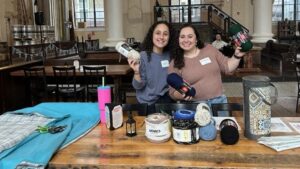
At Knit & Nosh, one of several VolunTeams run by the Macks Jewish Connection Network, young adults get together to knit scarves and hats for neighbors experiencing housing insecurity.

In honor of Women's History Month, The Associated talked with Pam Platt, Stephanie Baron and Leah Schottenstein Schulman about what drives their giving and the values that guide their leadership.

February is Jewish Disability Awareness, Acceptance and Inclusion Month (JDAIM). Supporting individuals with disabilities is a year-round priority for The Associated network.