
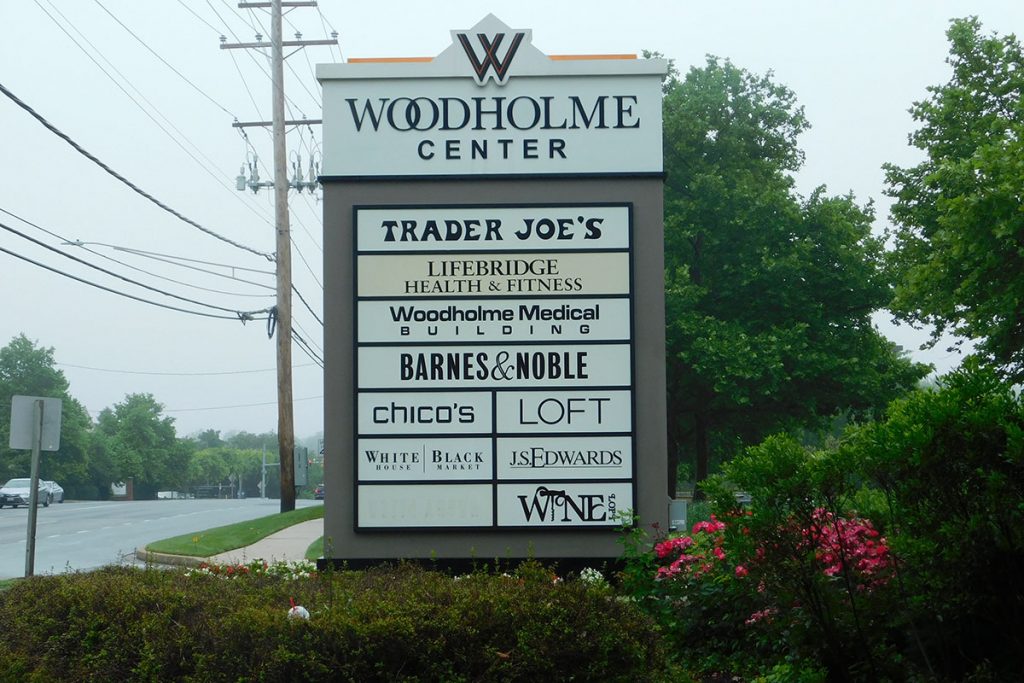
The people who work at my favorite Barnes & Noble book store, at the Festival at Woodholme, are breathing a collective sigh of relief this week. I asked several of them how things are going. They said things were suddenly looking up.
But maybe we were talking aboutdifferent kinds of things.
They’re talking about keeping theirjobs. I’m talking about the future of all book stores, and the future ofreading itself. They’re talking about the fresh money poured into their companyroughly a week ago, when the hedge fund Elliott Advisors bought Barnes &Noble — the biggest book store chain in the nation — for a reported $638million.
In the modern, post-literate world,it’s nice to see somebody still has confidence in the future of reading andwriting.
We live in a time when Americanspurchase about 700 million books a year. If that sounds like a lot, remember thatthere are about 350 million of us. That’s a piddly two books a year per person.And the 700 million includes many books purchased by college students as partof their night-before-the-test panicky speed reading, and millions more purchasedby libraries, where they collect dust on shelves.
Millions of Americans report theyhaven’t read a book in years.
That’s why book store peopleeverywhere are so nervous. Around here, we’ve watched the appearance — anddisappearance — of such behemoths as Borders and Bibelot, plus the vanishingof countless small, independent book stores.
(Remember Abe Sherman’s legendary oldbook store, at Park and Mulberry? The place was always so crowded, theirascible Abe would throw people out if he caught them browsing too long.Today, book stores are thrilled if people come in just to duck out of therain.)
Across generations, books have yieldedground — first to TV, then to a succession of modern video gizmos far easierto process than reading.
“I’ll be honest,” said MichaelBrown, a book seller at the Barnes & Noble at Festival of Woodholme. “Igrew up sitting three inches from the TV set, watching ‘Gilligan’s Island.’But, somewhere along the line, I discovered it’s not the same as reading ‘Warof the Worlds.’”
He’s talking about the value ofliterature itself, and the affect it has on a nation’s culture — and on thehuman mind. In a world that seems to speed past us each day, reading allows usto slow things down, to ponder the details of things, to feed our hungry brains.
That’s what’s being lost.
As Kurt Vonnegut wrote, in “PalmSunday,” “Reading is sacred. It far surpasses any dream experience by a Hinduon a mountaintop. By reading well, you can think the thoughts of the wisest andmost interesting human minds throughout all history. When you read, even if youhave only mediocre intellect, you do it with the thoughts of angels. What couldbe more sacred than that?”
Some would answer: Money. Barnes& Noble has closed more than 150 stores (down to 627) over the past decade.
But the new purchase, by Elliott Advisors, has not only given the company a jolt of fresh money, but fresh optimism. Local Barnes & Noble employees were quick to point out that Elliott last year purchased the British book store chain, Waterstones, and sales there have gone up significantly.
They’ve done it by tailoring eachstore’s inventory to the interests of its local community — making it morelike a collection of independent stores than a homogeneous chain.
Will it work in America? That’s the long-range question. But, in the short run, they’re breathing a little easier at Barnes & Noble these days.

A former Baltimore Sun columnist and WJZ-TV commentator, Michael Olesker is the author of six books, most recently “Front Stoops in the Fifties: Baltimore Legends Come of Age” (Johns Hopkins University Press).
As millions mourn the passing of Stephen Colbert from the airwaves, Michael Olesker looks back on the "institution" of late-night TV.

As he gets ready to leave for California, Rabbi Daniel Cotzin Burg looks back on his time in Baltimore and his 10 years writing for Jmore.

Michael Olesker pays tribute to WJZ’s retiring Marty Bass, a longtime fixture on local TV screens.