
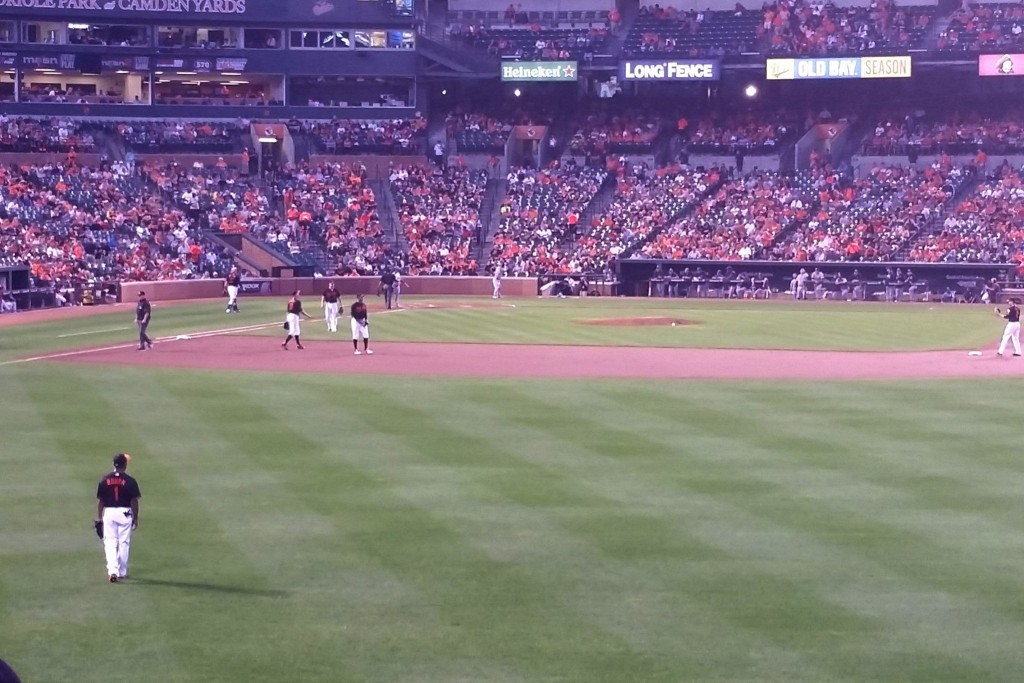
Every timeI’ve been excited about the beginning of a new chapter of Orioles baseball, Ihave never once considered that Peter Angelos wouldn’t fund the team withenough dollars for the team to contend. Now, how he and his baseball peoplehave chosen to spend the money is a vastly different story.
When PatGillick strode into town in advance of the 1996 season, off of his back-to-backworld championships in ‘92 and ‘93 in Toronto, I was convinced we had the manwho would build the Orioles of the future into a powerhouse.
After two exciting and contending seasons in ‘96 and ‘97, the Gillick relationship with the owner soured. When he left with his cadre of scouts, it wasn’t long before Mike Mussina was allowed to escape as a top free-agent pitcher, and the team spiraled into a 14-year oblivion that was turned around in midstream by some heavy lifting from Andy MacPhail when he took over in 2007 as president of baseball operations.
But whileMacPhail was an important player in Orioles front office history, the win-lossrecord never showed the extent of his good auspices. The new spring training homein Sarasota, the signings of Matt Wieters and Manny Machado, along with theacquisitions of Adam Jones, J.J. Hardy and Chris Tillman, helped build up abase of onsite talent that allowed Dan Duquette to shrewdly add just enoughpieces to help Buck Showalter develop a clubhouse culture based on fundamentalsand self-belief.
However,during the Duquette years, Dan and Buck hardly ever presented ownership with aunified front to battle for ways to make the success that was maintained from2012 to early 2018 truly a sustainable environment.
What trulyhas this Orioles follower and fan excited by the new regime is they arebuilding this thing from the ground up. The emphasis will never move away fromdevelopment in general manager Mike Elias’ world.
Despite thepresence of Chris Davis’ $23 million annual price tag (OK, I know a chunk ofhis $161 million is deferred) on the books, along with Alex Cobb’s $14 millionand Mark Trumbo’s $13.5 million, the other 27 players on this roster are makingpeanuts. And that is the way this ship will sail for the next few years.
Get used toit and just pray that when the next turn of the screw arrives and the Oriolesare good enough and on the verge of winning once again, that management will beexceedingly careful about who it lavishes with the next big O’s free-agentcontracts.
Think about this amazing factoid: After Adam Jones‘ highly successful five-year contract, the next five major free-agent signings the Orioles have made in attempts at winning, once their real window had closed, cost the club $336.5 million.
You readthat last sentence correctly — that is $336,500,000 for Chris Davis ($161),Mark Trumbo ($37.5), Darren O’Day ($31), Ubaldo Jimenez ($50), and Alex Cobbhas two remaining seasons that bring his total cost up to $57 million.
The currentactive Orioles payroll — with Davis included for 2019 — is just over $50million at $50,018,367. While they owe both Cobb and Trumbo all their money,the money doesn’t show up as current. So if you remove Davis, which the clubwill most assuredly do before the 2020 season takes off, you see the payroll willcome in next year at around $26 million. Trumbo is off the books after thisseason, and Cobb — if healthy enough — will show up as a $14 million additionnext season.
So the 2020payroll will probably show up as about $45 million to $50 million. The time forspending more isn’t now. There will come a time when this franchise will be poisedto win again, and at that time, we’ll just hope that this regime, headed byMike Elias and Sig Mejdal, and guided by the best analytical information at thetime, won’t make a series of such head-scratching and breathtakingly expensivelong-term free-agent deals.
Stan “The Fan” Charles is founder and publisher of PressBox.
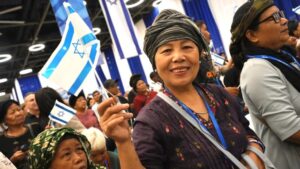
The remaining 6,000 members of the community are expected to immigrate by 2030.

Israel is increasingly reliant on foreign workers, hundreds of whom moved into the dilapidated building during the Iran war.

Colorectal cancer rates are climbing among young people and Ashkenazi Jews.
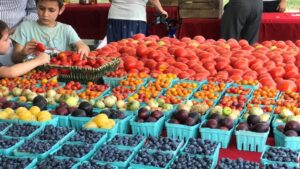
Now celebrating its 25th season, the farmers market will be located on the grounds of the historic Pikesville Armory, at 640 Reisterstown Road.