
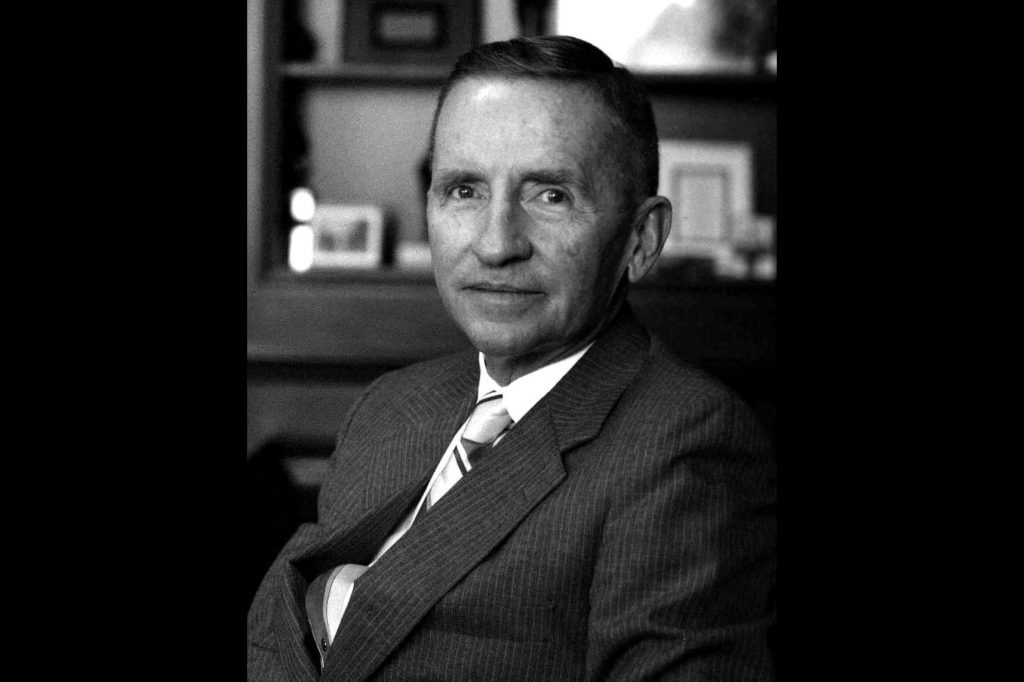
As Ross Perot goes to his grave, I think back to the summerof 1992 when the Texas billionaire ran for president and came to Maryland, andtried to pull a fast one on everybody.
In other words, Perot, who died July 9 at age 89, tried thesame con as every other candidate who runs for national office, then and now.
One night on national TV that summer, a reporter asked Perota question he didn’t like. So Perot decided to undress the poor guy in public.
“That’s a soundbite question,” he said in that squawky voiceof his. “You want an easy, six-second answer, and America needs more thansix-second answers.”
I described the moment – and its ironic fallout – in a bookI later wrote called “Tonight at Six: A Daily Show Masquerading as TV News.”
A piece of me liked Perot’s answer. Although I didn’t likePerot embarrassing the poor reporter, and I didn’t like him dodging a perfectlylegitimate question, he was making us think about soundbites, those tiny littlemoments snipped, edited and then spliced into the body of some superficial 60-secondTV story.
Perot seemed to be saying the issues were too important, andtoo complex, to treat voters like a bunch of idiots. So on that basis, I gavehim a few respect points.
But then came a phone call a few days later from Perot’sMaryland media coordinator, a nice fellow named David Green who was involved inlocal political circles for a lot of years.
He said Perot was bringing his presidential campaign toAnnapolis, and it was going to be “a spectacle.” I was doing my nightlycommentaries at WJZ-TV’s “Eyewitness News” back then, and I guess Green thoughtthe word “spectacle” would appeal to TV’s endless hunger for pretty pictures.He mentioned boats in the Annapolis harbor tooting their horns. Big deal. Ilooked for an excuse to get off the phone.
Then, Green pulled me back.
“I can get you a one-on-one interview with Perot,” he said.
I thought about Perot’s remark from a few nights earlier –about the need to go beyond six-secondsound bites, to talk about meaningful issues.
“An interview?” I found myself saying. “Great.”
“Well, we think you’re an important guy to tell the Perotstory,” Green said, really piling it on now.
“Thank you,” I said. “How much time can you give me withhim?”
“Four minutes,” said Green, quite specifically.
“Four minutes?” Isaid. “Isn’t that a little brief?”
Green seemed surprised by my response, as though brevityhadn’t crossed his mind. His man was running for the most important job in theworld. Who was I to ask for more than four minutes?
“Look,” Green said, “I’ve got four people I want to giveone-on-one interviews, but I’ve got to divide up 12 minutes among you. I’m atthe mercy of the schedulers from Dallas. I know what you really want. What youreally want is, like, half an hour.”
Fat chance. Theman who decried soundbite journalism was also living by it. They all do it. They flatter the local mediatypes with access, and then finesse TV news and its severe time limits. Youdon’t like the question, you duck around it until the clock ticks you out ofdanger.
What matters is the look of things. For TV reporters, theyget to look important enough to talk to a presidential candidate. For thecandidate, it’s the wide-audience exposure that counts.
Perot dies now but the practice lives on, even as we enter the newest presidential campaign. Watch for it. If they ever campaign in Maryland, it’s coming to a TV set near you.

A former Baltimore Sun columnist and WJZ-TV commentator, Michael Olesker is the author of six books, most recently “Front Stoops in the Fifties: Baltimore Legends Come of Age” (Johns Hopkins University Press).

A lifelong Orioles fan, Jmore Publisher Scott Rifkin, M.D., shares a message to Orioles owner David Rubenstein.
Attorney and Barry Levinson confidante Donald Saiontz left his mark on the world, writes Michael Olesker.

When we create a world with a warm and loving connection, even when someone beloved is gone, that relationship is carried on, writes Pamela R. Weissman.

The Orioles this season have proven that money can't buy happiness, writes Michael Olesker.