
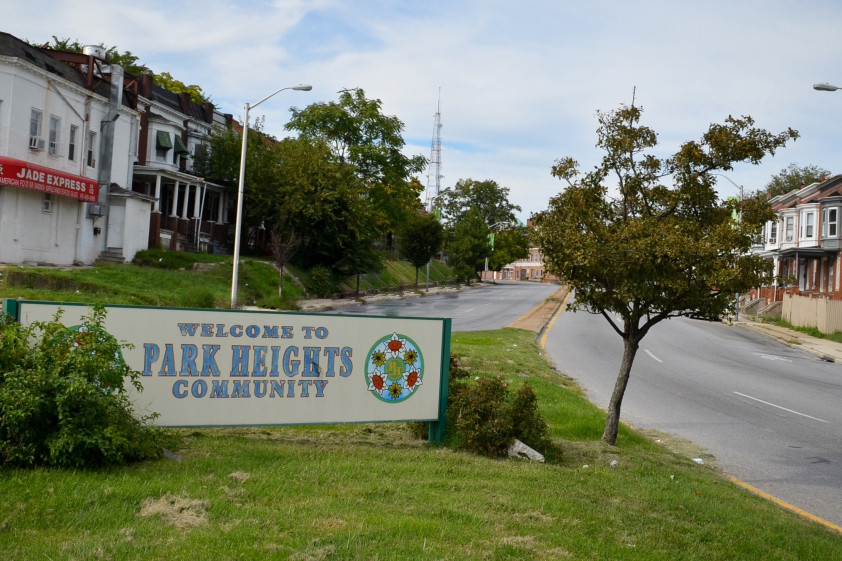
When Baltimore City Council President Brandon M. Scottannounced his intentions last week to run for mayor of Baltimore, all the newsreports described him standing in front of the Park Heights home where he grewup.
Sentimental journeys are nice. They’re nice for thetender-hearted wanderer connecting with childhood roots, and they’re nice forobservers making the connection between any calculating political pro and agenuine connection to a community.
I only wish Scott would have connected that community – Park Heights – to something he’s witnessed his entire 35 years on earth, and older Baltimoreans have witnessed for more than half a century.
That’s the sheer, heartbreaking decay of a lower Park Heights community that once stood for middle-class striving but has long since stood for municipal decay.
I wish he’d have talked about that in ways that neither the president of the United States has done nor have a series of Baltimore mayors. And that is, to say: here is a community drowning in problems, and I’m here to lend as much help as I can.
President Trump finds it easy to mouth the first part ofthis – callously tossing out craven insults about this city, without offering theslightest hint of wanting to help.
But this series of mayors we’ve had over the past half-century, they’ve been good about mouthing platitudes when it comes to undernourished, decaying areas like lower Park Heights. But over that entire half-century, the neighborhood’s done nothing but fall into further catastrophe, and each mayor’s words have counted for nothing.
As a native son, it might have been nice if Scott had takenthe opportunity to say a few words about what’s happened to Park Heights –particularly that area from Garrison Avenue by the old library, down to ParkCircle – and what he’d like to do about it.
Over the last year or so, I’ve made three different tripsalong that route, driving up and back Park Heights, driving slowly to countcarefully. And each time I’ve counted more than a hundred vacant, abandonedhouses and over-run yards over that roughly one-mile stretch.
You have one such house on a city street, and it sends amessage loud and clear: no one cares about this place. You have a hundred ormore, and the message is: All hope has been abandoned.
But don’t take my word on the numbers. Two years ago, theBaltimore City Health Department’s extensive Neighborhood Health Profile Reportdeclared lower Park Heights home to 14,931 people.
And also declared the number of vacant buildings per 10,000housing units — at 1,374.
As everyone knows, we have a city with a considerable numberof vacant houses, but the Park Heights rate is nearly triple the overall cityrate of 562 vacancies per 10,000 units.
That same Health Department study said the median lower ParkHeights household income was $26,015, the poverty rate 46.4 percent, thejobless rate 23.6 percent.
Figures move and shift over the years. But on lower ParkHeights, they’ve moved and shifted strictly downward for the past half-century.Every mayor has watched this happen. Every mayor has expressed great intentionsto make things better.
It would be nice to hear Brandon Scott, who has suchsentimental feeling for his old neighborhood, tell us how he’s going to makethings better if he becomes mayor.
If he’s like every other mayor we’ve had, the words willdrift away and mean nothing. But at least he could have offered a statement ofgood intentions.
A former Baltimore Sun columnist and WJZ-TV commentator, Michael Olesker is the author of six books, most recently “Front Stoops in the Fifties: Baltimore Legends Come of Age” (Johns Hopkins University Press).
A new biography captures the intensity and magic of the musical theater giant, writes Michael Olesker.
Melinda Michel pays tribute to the longtime Jewish community leader and volunteer who passed away on June 8 at age 68.
Jmore Editor-in-Chief Alan Feiler remembers Temple Emanuel's longtime spiritual leader, who passed away earlier this week at age 91.
Camp and youth group experiences have the ingredients for true, deep, lifelong transformation, writes Rabbi Jessy Dressin.