

This article is part of Jmore’s “Innovation in Health Care” special section.
Known for its professional level of care and state-of-the-art facilities, Greater Baltimore Medical Center has one of the state’s busiest labor and delivery units. Now, the Towson hospital is working to enhance patients’ C-section recoveries through its new Early C-section Discharge Program.
“Typically with a vaginal delivery, the mother and baby are discharged after two nights, and with C-sections it’s after three or four nights,” says Melanie “Lanny” Dowell, GBMC’s parent education and doula manager. “Now, we are encouraging mothers who have C-sections to recover at home and be discharged after night two if they so choose. Statistics show that for mothers who meet the criteria, they will recover better at home, and mom and baby will be exposed to less germs.”
Started in April of 2018, the Early C-section Discharge Program allows mothers, who meet doctors’ criteria, to leave the hospital two days post-C-section. As part of the program, a nurse from Johns Hopkins Home Care Group visits the mother at her home on day four or five to remove sutures, provide wound care and conduct a head-to-toe infant care assessment. Also included in the program is a four-hour gifted window of postpartum doula support that the mother can use within a two-week period.
Included in that support is anything from doing laundry and dishes to helping with any concerns regarding the infant or C-section recovery, to just having a second set of hands so the mother can nap.
“We help with anything the mother needs, which gets the family off to a great start, making this a win-win all the way around,” says Dowell, who has worked at GBMC for 25 years. “On the third or fourth day post C-section, there isn’t much medical interactions needed to be performed, it’s just time for healing. The ease and comfort of the program is phenomenal and patient-friendly.”
Currently, GBMC is the only hospital in the area offering an early C-section discharge option. The decision to implement the program was made by a panel of doctors led by Dr. Victor Khouzami, GBMC’s obstetrics chairman and director of Women’s and Infant Health Services.
“Our goal at GBMC is to provide the best customer service for our patients, and if this is a way to get mothers home to their other children and/or new routine, that’s great,” says Dowell, who was certified as a birth doula and postpartum doula through GBMC. “Unless a doctor deems it necessary or there is a pre-existing health condition, there is no reason for a perfectly healthy mother and baby to remain in the hospital longer than two nights. In fact, statistics show overall recovery for a mother who goes home sooner is a much more positive experience.”
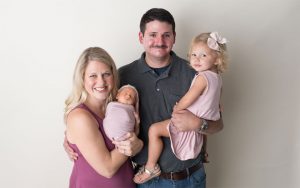
For Betsy Leone, whose daughter, Lily, was 3 when Betsy gave birth to her second daughter, Madalyn, having the option to go home two nights post-C-section was “a beautiful win” for her family.
“I was able to be with both of my children, and that was important to me,” says Leone, 33. “My oldest is a momma’s girl, so she missed me as much I missed her. I wasn’t just a mom to a new baby but I was also the mom to a 3-year-old, and the longer she was out of her routine the longer I felt it would take to readjust.”
Leone didn’t have the easiest pregnancy and delivery. She was diagnosed with Intrauterine Growth Restriction, meaning the baby was measuring smaller than it should, and the baby had a heart arrhythmia. Because of both those conditions, Leone was induced at 37.5 weeks of pregnancy and ended up needing an emergency C-section due to a possible placental abruption.
“I remembering sobbing the whole way to the operating room because I wasn’t prepared for an emergency C-section,” Leone says. ““I was scared about the C-section and what it would mean afterwards since I had a toddler at home. It was traumatic and I was worn out, but the baby was healthy and everything she experienced in utero resolved itself once she was born.”
After a day in the hospital, Leone and her husband started discussing the early discharge program, created a pro’s-and-con’s list and decided it was the right path for them.
“Our thought was if I didn’t have an IV in, there was no point in staying at the hospital,” Leone says. “We kept trying to figure out what the catch was because if we left we got to be home and start adjusting as a family of four, we would get a nurse to come make sure we were OK and we would get a doula to come help with anything we needed. We were told this was all part of the program and for us, there was no reason not to take advantage of the opportunity.”
Two weeks after heading home, when Leone’s firefighter husband was getting ready to head back to work, Dowell came to her house to provide the postpartum doula services. While thinking she would need help cleaning the house, Leone says what she really needed was so much more.
“Lanny didn’t clean a single thing, but instead helped me with breastfeeding,” says Leone. “At that point, Mady was jaundiced and wasn’t eating great so we were in a really bad place, both emotionally and physically. Her help was more powerful than I could have imagined and came at the perfect time.”
A year later, Leone looks back and has no regrets about making the choice to utilize the Early C-section Discharge Program.
“Do it — that’s my advice,” says Leone, who describes her now-1-year-old as a wildflower. “Get home so you can start building your family and your environment.”
For information, visit https://www.gbmc.org/labor-and-delivery.

John Singer wants to help Marylanders of all economic backgrounds to afford ankle foot orthoses.
Colorectal cancer rates are climbing among young people and Ashkenazi Jews.

The donation will be directed to help foster research conducted by faculty at the University of Maryland School of Medicine and to advance innovative treatments.

The founder and owner of Catonsville Dental Care, "Dr. B" maintains a spirit of optimism that inspires friends, colleagues and patients.