

If Stephanie Rawlings-Blake had spent this much time on television five years ago, she might still be the mayor of Baltimore today.
Baltimoreans wondered where she was in the aftermath of the Freddie Gray killing in April of 2015. But she’s making up for it now.
As protests swept the nation over the police killing of George Floyd, Rawlings-Blake appeared on CNN last Thursday, May 28. On Friday, May 29, she appeared on MSNBC.
In matters of street protests, she is now considered something of an expert — and something of a victim. She paid a heavy political price for not showing up on television when she should have, in the aftermath of the Freddie Gray death. Her absence angered so many that it cost Rawlings-Blake her job.
It’s a lesson worth remembering as Baltimoreans simultaneously brace themselves over street disturbances around the country, and go to the polls this week to elect new leaders at City Hall.
This time around, Rawlings-Blake has been talking about the protests going on in cities all over America and recalling the street convulsions in Baltimore five years ago. Back then, other politicians — the late Rep. Elijah Cummings, the future Mayor Catherine Pugh, and others — walked the streets and tried to restore calm.
But where was Rawlings-Blake?
It’s because she seemed so absent from TV back then, as the streets of West Baltimore’s North and Pennsylvania avenues filled with protesters, that she was accused of sleeping through the job when the city needed her most.
The criticism was so widespread that she decided not to run for another mayoral term.
And this set off a chain of events that leads to tomorrow’s Democratic primary election that will effectively give us the next mayor of Baltimore.
It may well be Baltimore’s fifth mayor in the last decade.
Remember, Rawlings-Blake got the job because the previous mayor, Sheila Dixon, had to resign when caught stealing. Dixon’s now running again to get her old job back, hoping that voters have a sense of forgiveness, or amnesia.
Rawlings-Blake was mayor when young Freddie Gray died in police custody in the spring of 2015. In some ways, she got a bum rap. As violence erupted, she spent much of her time at police headquarters, monitoring the disturbances.
But nobody saw her there. And as other leaders walked the streets, her absence seemed inexplicable to many, and inexcusable to enough voters that it discouraged Rawlings-Blake from running for a new term.
That gave us Catherine Pugh as mayor. But Pugh had to resign in disgrace in the “Healthy Holly” book scandal.
That gave us the current mayor, Bernard C. “Jack” Young. He’s gained some new respect in recent days as Baltimore’s street demonstrations have been significantly less violent than those in many cities.
But in recent polling, he’s been running sixth among the six major mayoral candidates, meaning the city may get its fifth mayor of the past decade, depending on this week’s vote (and how long it may take to count the votes, in a time of mail-in ballots, civil unrest and ongoing coronavirus fallout.)
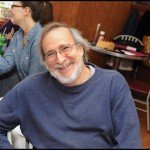
A former Baltimore Sun columnist and WJZ-TV commentator, Michael Olesker is the author of six books, including “Front Stoops in the Fifties: Baltimore Legends Come of Age” (Johns Hopkins University Press).
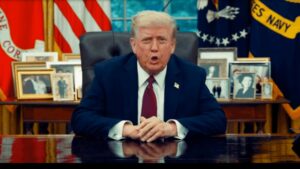
Jmore Publisher Scott Rifkin, M.D., reacts to President Donald Trump's latest poll numbers and the real force behind the growing decline of the Trump movement.
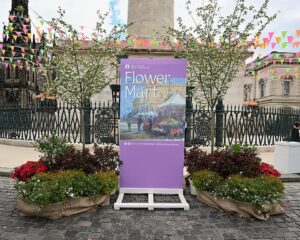
Last weekend's Flower Mart once again demonstrated that there's nothing to fear about downtown Baltimore, writes Michael Olesker.
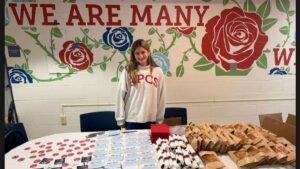
A junior at Roland Park Country School, Katie Grossman writes about a recent experience that spurred her to take action to fight antisemitism.
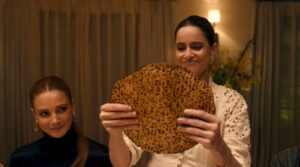
At a time when many Jews fear appearing Jewish in public, seeing Judaism depicted correctly onscreen is reassuring, writes Jewish content creator Rabbi Yael Buechler.