
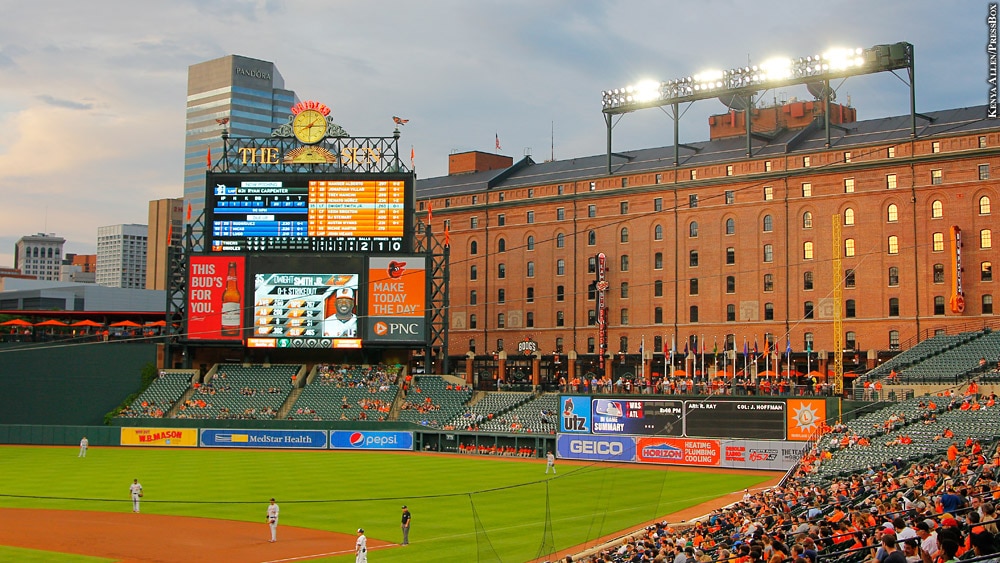
There’s a whole generation of young Baltimore Orioles followers despairing as the current losing streak reaches 14 games and they’re imagining — quite incorrectly — that this is about as bad as a baseball team gets.
They’re too young to remember 1988.
That’s the year the once-proud Orioles opened the season with 21 consecutive losses. They lost to Milwaukee on Opening Day, 12 to nothing. When the losing streak went to six straight, they fired the manager, Cal Ripken Sr., and hired Frank Robinson.

It’s the year they lost their 15th straight, and announcer Bob Uecker quipped, “When they finally win, they’ll get a phone call from the president. Only it’ll be the president of some other country.”
A few days later, President Ronald Reagan telephoned Robinson, extending good wishes. The Orioles promptly went out and gave up nine first-inning runs to Kansas City without getting a batter out.
It was the year a radio disc jockey named Bob Rivers vowed to stay on the air until the Orioles won their first game. He figured, “How long can this go on?”
Long enough, it turned out, that they brought in doctors to check Rivers’ blood pressure every hour, and florists sent bouquets, and fans were wearing “Free Bob Rivers” T-shirts.
It was the year the 0-and-21 streak got so bad that people drove their cars with their headlights on during daylight hours in a show of support that looked eerily funereal. A local bookmaker, checking the odds, said that someone betting $100 for the O’s to lose on Opening Day, and then parlaying his winnings with each successive loss, would have been up $13 million at one point.
It was the year 20 nuns at Villa St. Michael Nursing and Retirement Center said special prayers for the ballclub. Sister Mary Kevin Callahan sent the O’s a letter, saying the nuns had seen many “new beginnings” in their years of service.
The losing got so bad that people all over the world knew about it. The Baltimore Sun’s Beijing correspondent back then, John Schidlovsky, wore his Orioles baseball cap on the streets of that ancient Chinese city.
One day in the midst of the streak, a motorist rolled down his window and hollered at Schidlovsky, “Oh and 14!” Beijing is 12,000 miles from Baltimore, but Schidlovsky said he was getting ribbed about the Orioles – in a variety of languages – almost every day.
Could things be worse than these 2021 Orioles? Yes, they already were.
But as long as we’re studying history, keep something else in mind. That losing streak was 1988. One year later, the ’89 “Why Not?” Orioles fought for an American League pennant until the very last series of the season.
These Orioles are building toward something, just as the stumbling Orioles of the 1950s were building toward the 20-year stretch of 1965, to ’85 in which they had the best cumulative record in all of Major League Baseball, and just as the ’88 O’s were building toward the miracle of ’89.
It looks bleak now, but better days are coming.
And won’t that be fun.

A former Baltimore Sun columnist and WJZ-TV commentator, Michael Olesker is the author of six books. His most recent, “Front Stoops in the Fifties: Baltimore Legends Come of Age,” was reissued in paperback by the Johns Hopkins University Press.
At a time when many Jews fear appearing Jewish in public, seeing Judaism depicted correctly onscreen is reassuring, writes Jewish content creator Rabbi Yael Buechler.

Cruel, inappropriate, egomanical, outrageous and bullying are all attributes that pass for presidential these days, writes Michael Olesker.

Commemorations of the Holocaust must transcend the past to include concerns about the present and future, writes Menachem Z. Rosensaft.