
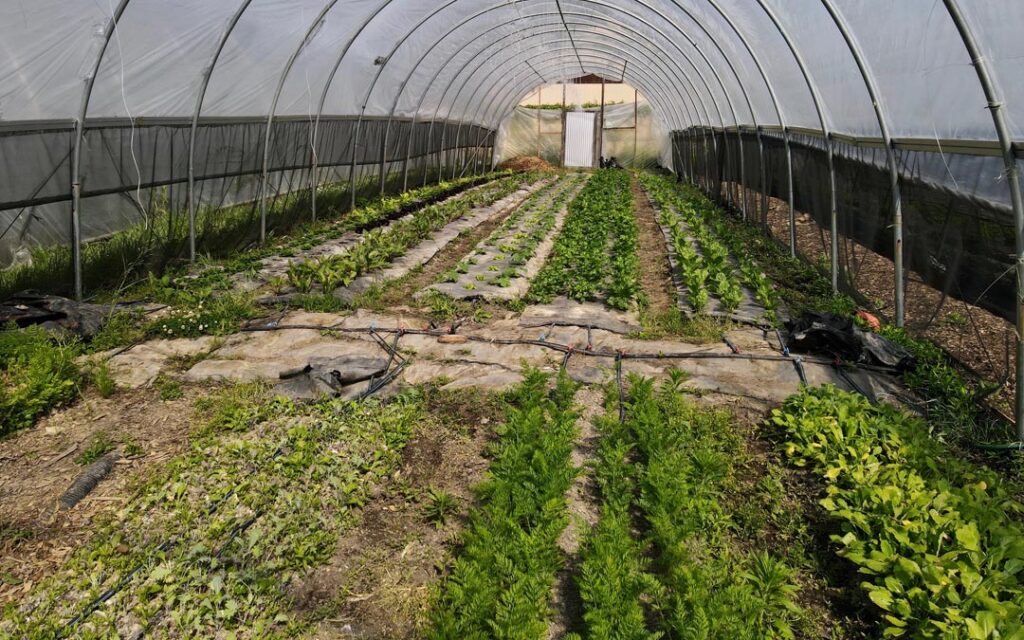
Finding access to healthy food and green communities in urban environments has become increasingly challenging. To meet that growing demand, Civic Works has spent the past 11 years helping Baltimore create a more sustainable, economically viable, environmentally responsible agricultural sector.
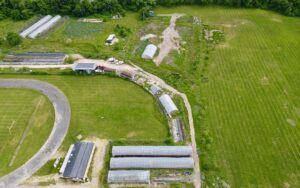
In addition to growing 5,000 pounds of produce and distributing an average of 50,000 pounds of affordable produce annually, the nonprofit transforms vacant lots into community gardens and green spaces. It also provides urban farming education and training, and helps farms apply for grants.
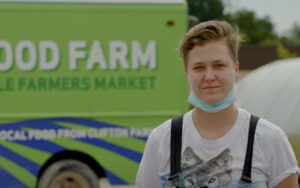
Thinking outside the box, Civic Works – which was founded in 1993 by Del. Dana M. Stein (D-11th) and is based in Northeast Baltimore’s Belair-Edison community — has formed an alliance with Israel’s highly developed agricultural community.
Jmore recently spoke with Gwen Kokes, the associate director of food and farm programs at Civic Works since March of 2019, about this unique collaboration.
Jmore: Baltimore and Israel have distinct geographical and cultural differences. What sparked the idea to work together?
Kokes: It’s always nice to collaborate with other organizations. Taking it on an international level can provide a reflection of what our policies can look like.
Israel seems to be very business-oriented and future-thinking, so it’s great to learn what programs are successful there.
How did the collaboration begin?
In March 2019, Israeli Embassy officials visited us and exchanged information on farming in Israel and our initiatives on urban farming. They kept in touch and facilitated Zoom meetings for us in April 2021 with two Israeli groups, the Association for Urban Farming and LivinGreen.
We discussed various programs and projects during those meetings, and have been sending photos and ideas back and forth ever since.
What are some of challenges affecting farming here and in Israel?
As with many locations around the world today, we’re dealing with climate change and water shortages. Israel has taken the brunt of climate change with droughts, and had to adjust imports and how it prioritizes food access. We foresee that situation coming to Maryland in 10 years.
In the meantime, Israeli business leaders are working on policy to adapt to climate change and take preventative measures on how farmers can contribute to sustainability. The Maryland legislature has been doing a lot to combat climate change, providing some funding for conservation programs and responding to natural disasters that threaten crops.
Here and in Israel, we are adapting to humidity, heat and rainstorms. This requires us to constantly check how to manage crops, what to plant and what seeds can resist high levels of drought.
To compensate for their water shortage, Israel uses hydroponics [a system of growing plants without soil but in sand, gravel or liquid, with added nutrients] to recycle water. In fact, Israelis can buy kits for hydroponics at home. Hydroponics is popping up here in Maryland. Gotham Greens [a U.S. fresh food and urban agricultural company] has a factory [in Sparrows Point], but beyond that we’re behind.
What are some of the Israeli projects you’d like to emulate?
It’s refreshing to hear how food access programs can succeed as for-profit businesses. We can learn from Israel about how to create more reliable funding for food and greening programs by marketing to everyone, selling consultation work and having more volunteer events sponsored by the corporate sector.
It’s also great to see how Israeli companies are putting their profits into social enterprises, such as installing roof gardens at schools and installing gardens for people with disabilities.
What can the Israelis learn from us?
Agriculture used to fuel a large part of [the Israeli] economy. Now, it’s minimal. The vast majority of their food is imported and they export more than they used to, but it’s not captured in their economy.
They also have to get more inventive with farming because it used to be subsidized by the government as part of border control.
What are the next steps in your relationship with Israel’s farming community?
We are still in discussion with the Association for Urban Farming and LivinGreen, and the embassy hopes to receive funding for exchange programs so we can further collaborate.
For information about Civic Works, visit civicworks.com.
Caryn R. Sagal is a Baltimore-based public relations consultant and freelance writer.

Israeli-Americans Rachel Goldberg-Polin and Jon Polin talked about the pain of losing their 23-year-old son, who was kidnapped and later murdered in the Oct. 7th tragedy.

A committed philanthropist and community leader, Russel was president of R&H Motors.
The mother of four was a native of Winchester, Virginia, who spent most of her life in Northwest Baltimore.
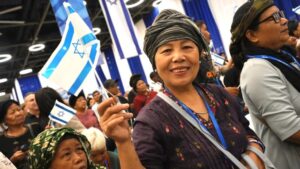
The remaining 6,000 members of the community are expected to immigrate by 2030.