
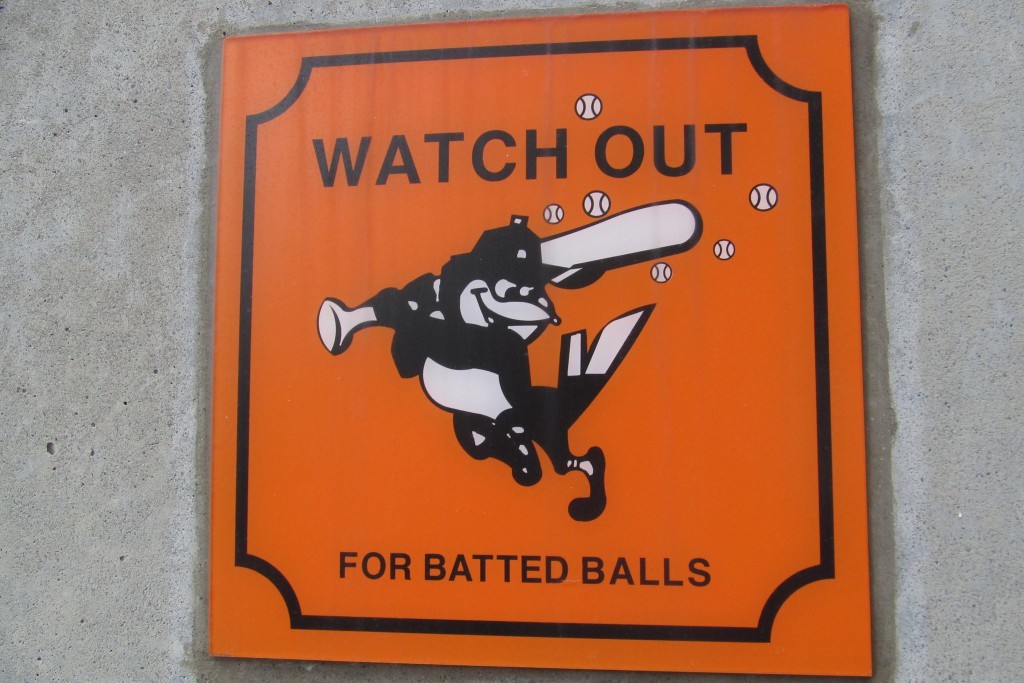
Is it OK to come out of our homes now without being clobbered by home run blasts dropping from the sky? Is it safe to take the blindfolds from our eyes now, and risk seeing the remaining carnage down at Oriole Park?
In other words, is the 2021 Baltimore baseball season really over?
Relax, this is not the beginning of a rant about dem O’s — although, let’s face it, the past seven months have been a bummer. What else can you say about a season worse than 1988, when the club opened with 21 straight losses, and yet lost fewer games that year (107) than this year’s team (110)?
But I’m not here to rant, I’m here to remember — and to offer sincere hope.
I’m old enough to remember the early days of kids named Brooks Robinson and Ronnie Hansen, Milt Pappas and Steve Barber. They were the beginnings of hope. And I’m remembering some others, named Boog Powell and Don Baylor, Jim Palmer and Dave McNally. They were here when the hope became reality.
And I’m remembering a fellow who started putting them all together, whose name was Paul Richards. He was both manager and general manager when the Orioles were pitiful, and he set off a 20-year reign in which Baltimore was the classiest, and winningest, team in all of major league baseball.
He built those Orioles teams the same way they’re being rebuilt today — from the bottom up. He did it patiently, until it became known as the Oriole Way.
And they’re doing it today because there is no Other Way to do it, not in the modern financial climate, in which the big guys like New York and Boston and Los Angeles can spend barrels of money and the little guys like Baltimore can’t begin to match those numbers.
So we can live with the reality, or moan about it.
And here’s how I’m looking at it: We cherished those old Orioles teams not only because they won, but because we knew those guys. We felt like we watched them grow up since, in a sense, we did. Brooks Robinson was 18 when he first arrived here. Jim Palmer was barely out of his teens, and so was Boog Powell.
Part of the joy in watching those old Orioles was the familiarity of their faces, their histories, their very batting stances over each new summer. They were our kids, our hometown guys.
Many years later, when the former second baseman Davey Johnson returned here as manager, the ballclub had some terrific seasons, though they didn’t reach the old world championship days.
But even in those winning years, it wasn’t quite the same feeling — because we barely knew so many of the players before they were moving on somewhere else. They were rent-a-stars: Roberto Alomar and Bobby Bonilla, Rafael Palmeiro and Randy Myers and Jesse Orosco.
Great players, but not exactly “real” Orioles. We were playing a game it was impossible to sustain, trying to buy our way to victories the way we’d once sneered at the big-market boys for doing it that way. There was a sense that it wasn’t quite fair, that we were part of the rigged game we’d deplored.
Well, we can’t play that game anymore. We have no choice but to go back to the old ways, when we patiently developed a farm system and taught the kids how to do things the right way — and hope, in the modern context, that we can hold onto them long enough before they take flight.

A former Baltimore Sun columnist and WJZ-TV commentator, Michael Olesker is the author of six books. His most recent, “Front Stoops in the Fifties: Baltimore Legends Come of Age,” was reissued in paperback by the Johns Hopkins University Press.
Allow me a few paragraphs of time travel, and let’s go back to Johnny Carson’s monologue the night after Neil Armstrong became the first man to set foot on the moon. I’m paraphrasing here, but I think the joke still works 57 years after Carson first delivered it. “The good Read more

As he gets ready to leave for California, Rabbi Daniel Cotzin Burg looks back on his time in Baltimore and his 10 years writing for Jmore.
Michael Olesker pays tribute to WJZ’s retiring Marty Bass, a longtime fixture on local TV screens.