
I got a late start learning about the Holocaust, owing to my year of birth and my elders’ sensitivities. In the immediate post-war years, the killing of the Jews was still too raw to talk about in front of kids. Parents spoke about it in whispers. Even the Hebrew schools avoided it back in the ‘50s.
I’ve caught up since then. I’ve devoured dozens of books on the war and the genocide. I co-authored a book, “Leap Into Darkness,” about one man — Leo Bretholz — and his desperate attempts to hide from the Nazis. I’ve seen enough documentaries that my wife calls my TV watching “the all-Hitler network.”
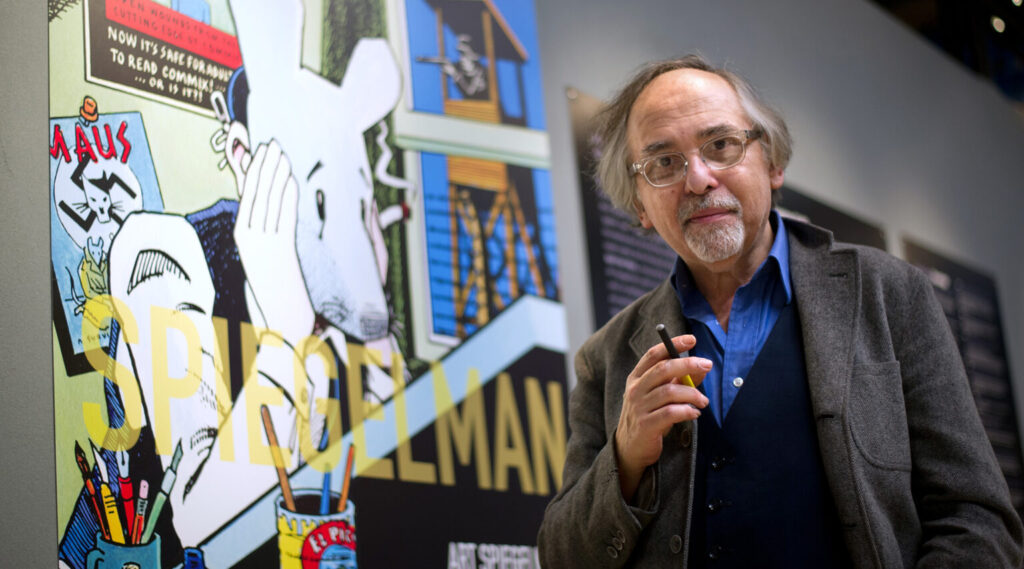
I’m familiar with the Holocaust narratives, and I can tell you that few stories have felt as powerful and as intimate to me as “Maus,” the Art Spiegelman graphic novel that won him a Pulitzer Prize but has now lost him the children of McMinn County, Tenn.
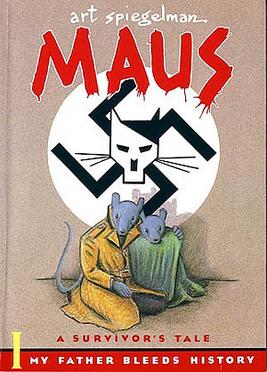
“Maus” recounts Spiegelman’s parents’ struggles during the Holocaust. They survived Auschwitz. Spiegelman’s traumatized mother died by suicide.
You’ve read about this new Tennessee madness, no?
The 10 members of the McMinn County school board voted unanimously to remove “Maus” from its eighth-grade curriculum. According to minutes of its Jan. 10 meeting, the board said the book was inappropriate for students because of “some rough, objectionable language” and a naked character.
“Maus” portrays Jews as mice and Nazis as cats. It’s a naked mouse that the school board finds so troubling. It’s a couple of curse words they find so disturbing. It’s a little unclear if they find the millions who were murdered so disturbing.
But isn’t that the point of teaching the Holocaust to students — to disturb them?
As Spiegelman told the New York Times, when he heard about the board’s decision, “This is disturbing imagery. But you know what? It’s disturbing history.”
Spiegelman said he felt the school board members were asking, “Why can’t they teach a nicer Holocaust?”
He apparently said this with tongue in cheek. A “nicer” Holocaust, indeed. But the thought has occurred to others, who are appalled by the school board’s decision and have suggested, in a spirit of diplomacy and compromise, that the Tennessee schools replace “Maus” with “The Diary of Anne Frank.”
But Anne’s diary, inspirational to millions, brings us a distinctly different story — and message. We don’t learn the horrors of the war, or the camps, from Anne. Her diary’s left behind in the attic by the time she’s dying at Bergen-Belsen.
In her diary’s most famous passage, she assures us that, “In spite of everything, I still believe that people are really good at heart.”
It’s a lovely thought — but truthfully, Anne didn’t see the worst of it until the end, and thus inadvertently leaves a lot of the guilty off the hook. We’re left with a wonderful, precocious girl, full of sunlit promise. She’s aware how fortunate she is to be alive and warm while others face the war’s barbarism, but she knows only hints of those who have suffered the worst of it.
“Maus” knows the rest of it. That’s why it ought to be taught to these eighth graders. They’re teenage kids. They’ve heard curse words. They’ve seen nudity, and not just naked mice.
They live in a time when new wars are threatened, and they ought to know the awfulness of all war, and of blind hatred — even if it’s told to them in comic book fashion, with naked human beings disguised as mice.

Michael Olesker’s newest book, “Boogie: Life on A Merry-Go-Round,” will be published this spring. It’s the life story of Baltimore legend Leonard “Boogie” Weinglass, an original “Diner” guy who grew up to create the Merry-Go-Round clothing chain and contribute millions to charity.

As millions mourn the passing of Stephen Colbert from the airwaves, Michael Olesker looks back on the "institution" of late-night TV.

As he gets ready to leave for California, Rabbi Daniel Cotzin Burg looks back on his time in Baltimore and his 10 years writing for Jmore.


Michael Olesker pays tribute to WJZ’s retiring Marty Bass, a longtime fixture on local TV screens.