

Who could believe that the time has come again? We’ve arrived back to the familiar end, which is also a beginning.
It feels too soon, even with the late start of our High Holiday season this year. I’ve seen the leaves blowing in the wind. Every leaf that turns yellow and falls off the tree is a painful reminder that the great juggernaut of endless summer is grinding to a subtle end.
Poor summer, he never sees it coming. One day, he opens his eyes and realizes he’s become an autumn.
And with the autumn comes our great challenge and responsibility. No, not the challenge of paying shul dues, seats and congregational pledges, or the responsibility of listening patiently to a panoply of sermons and familiar prayers.
I speak of the challenge and responsibility for each of us to undertake a full self-audit and spiritual review.
Hand in hand with the High Holiday season is the concluding book of the Torah known as Devarim, or Deuteronomy. In this book, Moshe conveys to the Children of Israel a detailed review of their history during the 41 years since the exodus from Egypt.
Looking back at the stories, Moshe derives lessons and philosophies, warnings and core values that become many of the most important ideas and ideals conveyed in the Torah. He looks back in order to plan for the future.
The High Holidays are no different. They are an end and a beginning simultaneously. The introspection and retrospection that our tradition has prescribed for this holiday season is based on the infinite wisdom that in order to move forward, you must first look back.
Or as Bob Marley once put it, “In this great future, you can’t forget your past.”
How could we ever think that it was possible to move forward with life without first examining and understanding the path we’ve traversed? And yet so few of us do it.
The daunting obstacle that keeps so many of us from taking a real accounting each year is that we just don’t know where to start. So I want to offer some practical suggestions.
- Start by writing each of these questions at the top of a piece of paper — one question per page.
- Which experiences from the past year am I going to remember years from now?
- What were the best things that happened to me this past year?
- What were the worst things that happened to me this past year?
- What mistakes or bad choices did I make this past year?
- What personal gains or accomplishments did I make this past year?
- Who do I owe a thank you, and who do I owe an apology?
- Feel free to add more questions, although I think these six are more than enough.
Go to a quiet, relaxing place where you can look at each of these questions and take a few minutes to think, jotting down thoughts as they come to mind. Try to mine your consciousness for answers that lurk in the deep, dark caverns of your mind.
Once you’ve hit a dead end, don’t stop there. Scroll through the entire year’s memories on your Facebook wall and review the 583 pictures on your phone that you plan to print out at Walgreens “someday.”
Jot down more answers and thoughts on the six papers in front of you. They should be filling up with the fruits of your memories.
Finally, get together, perhaps over coffee, with some of your best friends and your closest family members to see if they have any more insight to help you understand your past year.
The treasure that you now hold in your hands is a complete accounting of your past year. This will be the most important thing you bring with you to shul on Rosh Hashanah and Yom Kippur.
It will be your korban — the sacrifice you offer up before God. You are giving God the gift of your life, something that’s much more precious than any lamb, ram or bull.
More importantly, you will have the tools in your hands to engage meaningfully in the process of teshuva (repentance), and isn’t that the purpose of the whole endeavor?
Rabbi Yerachmiel Shapiro is spiritual leader of Moses Montefiore Anshe Emunah Hebrew Congregation, also known as the Greengate Jewish Center.

"A Beautiful Noise" chronicles the singer-songwriter's rise to musical icon.
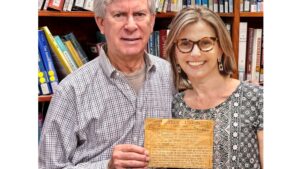
Duke Zimmerman and Lori Gale will talk at Towson University about their new book "People Get Ready" and the role played by Globe Posters in the civil rights movement.

The new exhibition revisits and updates a previous show about ritual hair covering in the observant community.

One of the most competitive local races for public office this political season is for Baltimore County Executive. Jmore recently spoke with four of the candidates about their views on how they hope to enhance life in the county.