
Rescue is a word used often when it comes to animals needing homes, but most people don’t really know where all those animals are rescued from.
Rescued animals mostly come from animal shelters. For example, in our area there are the Baltimore Animal Rescue and Care Shelter in Baltimore City or the Baltimore County Animal Services in Baldwin, Md.
Shelters like BARCS and BCAS need rescue groups. That’s because, as open admission shelters, they must accept every animal that comes through the door, including strays brought in by citizens or animal control officers and animals surrendered by people who can’t or won’t take care of their pets any more.
Day after day, the animals keep coming in, and limited space and resources mean some pets must be euthanized. This is the tragic truth of animal overpopulation.
Because there are never enough adopters, shelters rely on rescue groups that pull animals, place them either with foster families, or in boarding facilities and find them homes.
There are all kinds of rescue organizations. Some take only cats or dogs, or focus on a particular breed or smaller or larger size pets. Others pull primarily those animals that have been abused or neglected.
Rescue operations are run by volunteers who correspond with shelters to identify animals to pull, pick up pets and transfer, foster and take animals to veterinarians and off-site adoption events.
Many of these volunteers also hold full-time jobs. Arika Pevenstein, founder of Animal Allies Rescue Foundation, says it’s tough to juggle it all and the effect is “overwhelming. It feels like the faucet never turns off. It just keeps running and running and running.”
Many of the animals rescued have serious medical issues, requiring extensive veterinary care.
“Our veterinary bills run in the thousands of dollars every single month,” Pevenstein says. “It’s not uncommon to have a $10,000 veterinary bill just for one month.”
Where does the money come from? Mostly fundraising, but rescues also charge adoption fees to cover some of their costs.
So why do they do it? The answer is simple. These are people who love animals and want to be part of the overpopulation solution. Their hearts are broken by the way many pets are treated and discarded, and by the tragedy of unnecessary euthanasia.
So they pull animals, market them online, raise money, provide veterinary care and find adopting homes.
AARF is a very active rescue group in our area, pulling 1,000 animals from shelters in the four years since it was founded. It has a strong group of foster “parents” among its volunteers. Kimberly Colwell is one of them.
“It’s a lot of work, but it’s a lot of satisfaction, too,” Colwell says. “You see a dog go to a good home and the first thing on my mind is, ‘Now I can get another one.’ So you know there’s going to be another one saved. It’s a good feeling.”
Russell Ashton founded Adopt A Homeless Animal Rescue, another active local group. “I always say it’s the greatest joy and the greatest sorrow of my life,” she says. “It’s the greatest sorrow hearing what man does to these poor animals and it’s very hard hearing it constantly, reading it constantly. … But it’s the greatest joy when you’re able to get an animal out of harm’s way to safety and then into a loving home.”
For every animal a rescue pulls, it’s really saving two lives: the one that’s rescued and the one that comes into the shelter that now has an available cage, with a chance to find a forever home.
Rescue operations are a critical link to saving lives. You cannot measure their impact on the animals they connect with loving homes, or on the adopters themselves.
Those adopting families are easy to spot. They’re the ones who often drive cars bearing bumper stickers that read, “Who rescued who?”
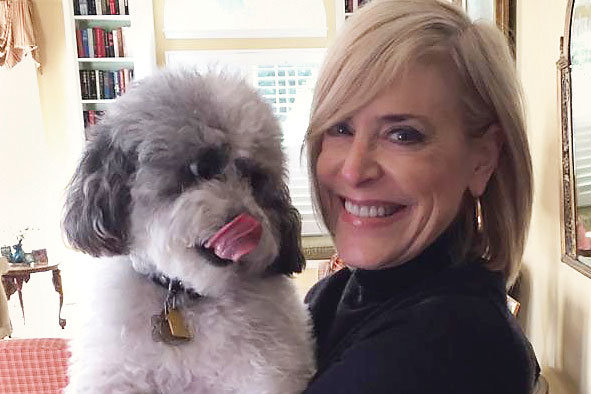
Deborah Stone is a Baltimore-based freelance writer. She previously worked as a reporter and anchor for WJZ-TV.
Photo of Deborah Stone and her dog Dewey courtesy of Deborah Stone
A Norfolk native, Frankle worked at Sinai Hospital, Camp Airy and privately for five decades.
Esther Greenberg, Leora Match, Kathlleen St. Villier Hill and Ben Gershowitz will be recognized for the contributions to the community.
For more than five decades, Dr. Rosenstein was known by local families as a trusted and caring physician for their children.
Jewish Community Services' upcoming "Future-Ready Workplace" event will feature a keynote address from workplace expert and bestselling author Liz Fosslien.