

Shed no tears for Stephanie Rawlings-Blake, who prepares to leave her job as mayor of Baltimore but will probably turn up next on some television network where the whole country can see her.
Maybe it’ll be a cable news station or a familiar spot on one of the Sunday talk shows. She’s smart, telegenic and speaks with authority as the first black woman to head the U.S. Conference of Mayors.
The irony, of course, is that it’s television that killed her career as mayor of Baltimore.
She was brutally criticized for her perceived lack of camera-availability during the Freddie Grey disturbances 18 months ago. She neglected one of the primary rules of modern politics: it’s not just what you do, it’s what voters see (or don’t see) you doing.
Perception is all.
She was so busy dealing behind the scenes, out of camera range, with various police officials – in other words, doing her job, attempting to protect her city – that she neglected to play the anticipated role in the standard street theater of all urban disturbance: get out there, mix with the crowds, show everyone that you’re out there on the front lines.
In the storm of criticism that followed her absence, she announced she would not run for another term as mayor.
Thus ends what was an odd fit to begin with, an accidental administration that commenced when the previous mayor, Sheila Dixon, had to vacate the office for criminal cause,and Rawlings-Blake, previously City Council president, ascended to the job.
But she was never a natural. She is smart, thoughtful and — as the daughter of the late state Del. Howard (Pete) Rawlings, a man of great dignity and intelligence — knows how the game is played.
But she never had the common touch, the instinct to mix easily with those she represents.
One incident comes immediately to mind: a lunchtime crowd at the Belvedere Square market. The mayor arrives. Now, what does any mayor – whether it’s William Donald Schaefer or Kurt Schmoke, or Martin O’Malley or Du Burns or anybody else we’ve had around here – do in such a situation?
Mix it up with the crowd.
Go schmooze with customers, with proprietors, listen to their concerns, share a few views on life, a few laughs.
But Rawlings-Blake went immediately to order a sandwich, sat at a table by herself, took out her phone – and put in earpieces and proceeded to watch a movie, shut off from those around her.
That doesn’t make her a bad person – it just makes her an uneasy political figure, maybe a little shy, a woman whose instinct is more private and cerebral than public and theatrical.
It’s an instinct that might have caused her to overlook her public role during the Freddie Gray troubles. She was so busy doing her real job that she neglected playing to the crowd at home.
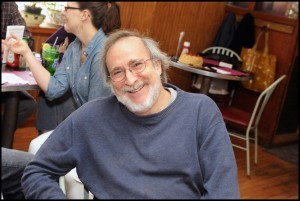
A former Baltimore Sun columnist and WJZ-TV commentator, Michael Olesker is the author of six books, most recently “Front Stoops in the Fifties: Baltimore Legends Come of Age” (Johns Hopkins University Press).
The former Colt, who passed away on May 25 at age 93, achieved immortality during a cold December day in 1958, writes Michael Olesker.

The Jerusalem Orchestra East & West, which arranged the program for young musicians, blends Western orchestral music with Middle Eastern traditions.

The BCO, founded in 1984, will perform the works of Frank Zappa, Beethoven, Mason Bates and Karena Ingram.

For more than 130 years, Sol Levinson & Bros. has been woven into the fabric of Baltimore’s Jewish community.