
See why the 3rd U.S. president loved Charlottesville so much
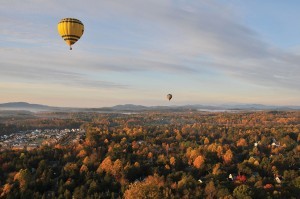 The sophisticated yet down-to-earth university town of Charlottesville, Va., located in the eastern foothills of Central Virginia’s Blue Ridge Mountains, and just a little over three hours from Baltimore, draws people in with its Southern charm and makes it hard to let go.
Whether you’re a history buff, wine connoisseur, arts lover or are just in the mood for some R&R, Charlottesville is well worth repeat visits to its many museums, galleries, wineries, breweries, shops and parks.
Formed by charter in 1762, Charlottesville claims two U.S. presidents — Thomas Jefferson and James Monroe — as native sons. (A third, James Madison, hailed from nearby Orange County.)
Jefferson’s mountaintop home, Monticello, lures approximately 500,000 visitors annually, and along with the University of Virginia, is a UNESCO World Heritage Site.
Jefferson died at home on July 4, 1826, exactly 50 years after Congress adopted his Declaration of Independence. “All my wishes end where I hope my days will end,” he wrote, “at Monticello.” The third president’s presence is still felt so much in Charlottesville that locals call the town “Mr. Jefferson’s Country.”
Charlottesville offers numerous cultural (high- and not-so-high-brow) attractions, proximity to Shenandoah National Park, and various events and festivals throughout the year.
Charlottesville is also known as a haven for both readers and writers alike with numerous bookshops, the annual Virginia Festival of the Book, and the University of Virginia’s Rare Book School, which offers five-day courses on the history of bookbinding, book collecting, the history of the book, and book design.
Here are just a few of my “Don’t Miss!” Charlottesville sights.
Monticello
931 Thomas Jefferson Pkwy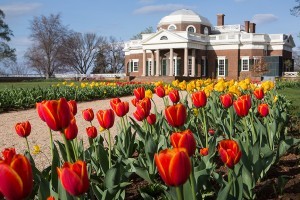
434-984-9822
www.monticello.org
Jefferson began clearing the land for Monticello and leveling the mountaintop in 1768. The building of the house began in 1769. For more than 40 years, Jefferson was constantly involved with the construction and enlargement of the home. He sketched the drawings for the first house himself, based on what he learned from architecture books published in England. Because of his frequent travels, Jefferson’s changes were not completed until 1809. Letters show that even in 1825, just the year before he died, Jefferson was still making alterations to Monticello, calling it his “essay in architecture.” Monticello’s newest offering, “Landscape of Slavery: Mulberry Row at Monticello,” features outdoor mini-exhibitions at key sites, augmented by computer animation and website.
University of Virginia
www.virginia.edu
The original grounds of the university were designed by Thomas Jefferson as an “Academical Village.” Founded in 1819, the university was the first non-sectarian university in the country. The Rotunda, a signature landmark of the University, is one-third the scale of the Pantheon in Rome. A plaque over the door of No. 31 marks the room of Woodrow Wilson. You can take a free guided tour of the Rotunda and Lawn during the regular academic year, or you can wander on your own and soak up the collegiate atmosphere.
 Downtown Pedestrian Mall
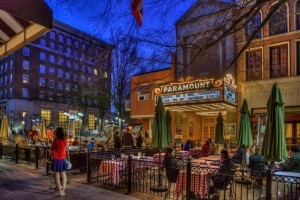
Across the Main Street from the University of Virginia campus, in an area known as The Corner, are the customary eateries and shops catering to students, but keep walking (or better yet, take the trolley) until you get to the Historic Downtown Pedestrian Mall, a brick-lined walkway boasting quirky shops, gelato and cappuccino cafes, casual dining spots, street performers and more. You’ll see a mix of students, faculty, locals, and visitors alike enjoying the small-town “village” feel.
Ash Lawn-Highland
2050 James Monroe Parkway
434-293-9539
www.ashlawnhighland.org
The restored home of James Monroe, the fifth president of the U.S. and a close friend of Jefferson, Ash Lawn-Highland is a 550- acre re-creation of a working farm, complete with spinning and weaving demonstrations, open-hearth cooking demonstrations, and tours of the house and gardens. Don’t miss a stroll through the 200-year-old boxwood gardens.
Monticello Wine Trail
www.monticellowinetrail.com
The Commonwealth of Virginia is the fifth largest producer of wine in the U.S., and the Monticello Wine Trail is its main attraction, with 30 beautiful wineries all within easy access from Charlottesville. Other scenic drives include the Monticello Artisan Trail, which features artists and galleries, and the Jefferson Heritage Trail highlighting the vineyards dotting the route between Jefferson’s two homes, Monticello and Poplar Forest.
Where to stay
There are any number of choices for lodging in Charlottesville, from bed and breakfasts to modern motels and hotels. Two of my favorites are Keswick Hall, close to downtown Charlottesville and just a few minutes’ drive from Monticello, and the Boar’s Head Inn, located a stone’s throw from UVA’s campus.
You can plan your trip with the help of these websites: www.visitcharlottesville.org; www.virginia.org; www.keswick.com; and www.boarsheadinn.com.
Carol Sorgen is a Baltimore-based freelance writer.
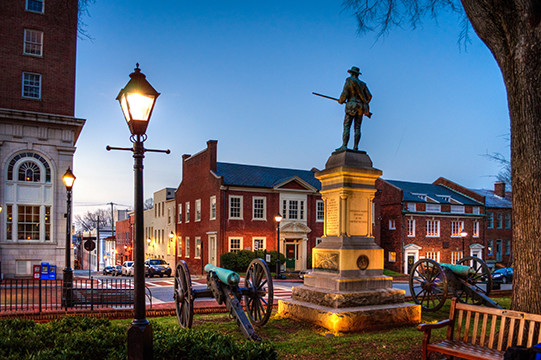
Aerial shot of Charlottesville, photo by Theresa White; Court Square at nightfall, photo by Bob Mical; Monticello in the Spring, photo by Jack Looney; Many shops and restaurants surround the Paramount Theater, photo by Bud Branch. All photos courtesy of Charlottesville Albemarle Convention & Visitors Bureau

The Jerusalem Orchestra East & West, which arranged the program for young musicians, blends Western orchestral music with Middle Eastern traditions.

Pikesville resident and entrepreneur Luna Rosendorff discusses what she's seeing these days in the world of contemporary interior design.

Jewish Community Services' upcoming "Future-Ready Workplace" event will feature a keynote address from workplace expert and bestselling author Liz Fosslien.

The BCO, founded in 1984, will perform the works of Frank Zappa, Beethoven, Mason Bates and Karena Ingram.