
“Insert or swipe?” I ask the cashier. “Insert,” he answers, and I obediently shove my American Express card into the slot. I could’ve swiped, signed and returned to my car in the time it takes for the machine to release my chipped credit card, but the system is new and excruciatingly slow.
As we wait for the card to be read, I reminisce about how in the “olden days,” credit cards used to be swiped manually. I turn to my teenager and tell her about the carbon copies, imprinting the numbers onto the paper with a satisfying click-swoosh of the machine. The cashier chimes in, lending credibility to another one of Mom’s “When I was your age …” stories.
I have many of those stories, and every time I tell one I feel like it is my generation’s equivalent of, “I walked barefoot for 20 miles to and from school every day …”
While the stories may be cliché, they are true. I am a child of the ‘80s, and the rate at which technology has advanced since then is astounding. When I tell my kids about the way things used to be, it probably sounds as alien to them as the barefoot scenario sounded to me.
Their generation has never known Styrofoam containers or ashtrays. I used to have a pretty glass bowl that was actually an ashtray. My kids asked what the little notches were on the rim of the bowl; they had no idea such items existed.
Car windows that roll down manually are vague memories for my oldest. She recalls my 1995 Nissan Sentra with the odd levers she cranked to move the windows up and down.
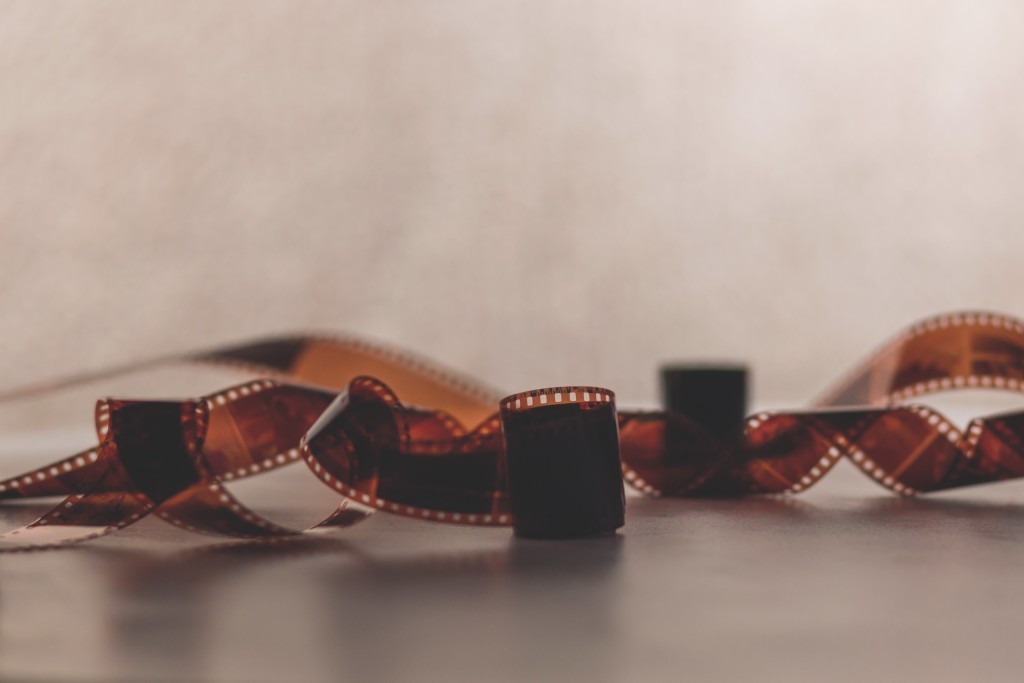
This generation has never known printer paper with perforated edges, a roll of film, riding backward without a seatbelt in the back of a station wagon, or twisting a spiral phone cord around their fingers.
My youngest never learned cursive. During his third-grade year, someone important decided teaching cursive was not necessary. His signature is a bizarre mix of print and illegible swoops.
He also has no memory of cassette and VCR tapes. My 18-year-old remembers our Barney tapes, which we played on a continuous loop until I had a DVD player installed in my minivan in 2003.
Our family likes to play a board game called Wits and Wagers. Each answer is a number, and players wager a guess on that number. Everyone’s answer is shown in numerical order, and then players bet on where the correct answer falls. Some questions are tough for all of us (“In feet, how long was the largest whale ever recorded?”) and some give my husband and me the advantage (“What year did MTV debut?”).
We know MTV; our kids know YouTube. We know the Reagan assassination attempt; our kids know the Paris bombings. We know Blockbuster video; our kids know Netflix.
As my daughter prepared to head to college last August, I wondered how different her experience will be from mine. The admissions process has changed; everything is online, from the application to roommate selection to placement exams.
But I hope that many things will be the same. She has a roommate and met many other girls, and those young women could become friends for life. She takes notes in class, although she can use a laptop instead of a spiral notebook. She does her own laundry, but uses a flex card to pay instead of scrounging for quarters. There is no landline telephone, but she dutifully calls, texts or Snapchats regularly. She meets friends in the dining hall for lunch, and uses her student ID card to pay for the meal.
I haven’t yet asked her whether she inserts or swipes.

A Baltimore native, Dana Hemelt lives in Howard County with her husband and two teenagers. She blogs at kissmylist.com and tweets @kissmylist.
A Baltimore native, Sweren was a collector of artists' books whose own works were displayed in national galleries.

The BCO, founded in 1984, will perform the works of Frank Zappa, Beethoven, Mason Bates and Karena Ingram.

For more than 130 years, Sol Levinson & Bros. has been woven into the fabric of Baltimore’s Jewish community.

Led by local Israel-American cellist Amit Peled, the Mount Vernon Virtuosi aims to inspire people beyond musical enjoyment.